
Art Before Us: The Origins of Creativity
When we think about art, images of vibrant canvases, grand sculptures, and intricate designs often come to mind. Yet, the story of human creativity stretches far beyond modern art galleries and into the distant past, where our ancient ancestors first began to leave their mark on the world—literally.
The First Artists: Neanderthals and Early Homo Sapiens
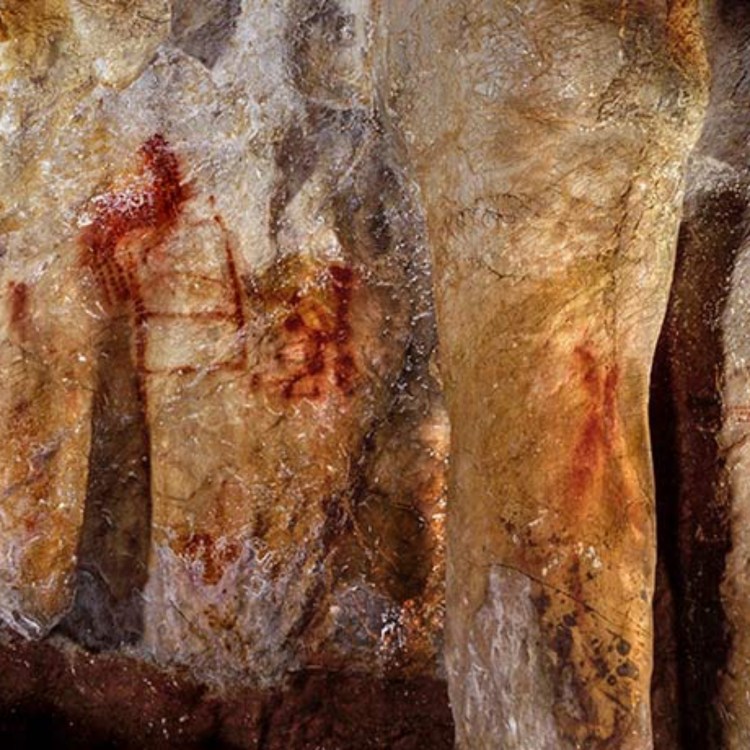
For years, art was considered the hallmark of Homo sapiens, a defining feature of our species’ cognitive and cultural superiority. This belief persisted largely because early archaeological research focused on artifacts created by modern humans, often overlooking or underestimating evidence of symbolic expression in other hominin species. Recent discoveries, however, have challenged this narrative by uncovering evidence of symbolic behavior in Neanderthals and even earlier hominins, expanding our understanding of creativity and its evolutionary roots. For example, studies of red ochre markings in Spanish caves, dated to over 64,000 years ago, and symbolic carvings attributed to Homo naledi have provided compelling evidence of complex cognitive abilities in early hominins (Hoffmann et al., 2018; Dirks et al., 2021). Red ochre markings in Spanish caves, dated to over 64,000 years ago, suggest that Neanderthals had the capacity for symbolic thought—a crucial element of creativity.
Meanwhile, early Homo sapiens created some of the most awe-inspiring art the world has ever seen. The caves of Lascaux in France and Altamira in Spain showcase intricate depictions of animals, dated to around 17,000 years ago. These works reveal a deep understanding of the natural world and suggest complex social structures, as creating such art likely required shared knowledge and cooperation. In Africa, cave art displays an earlier and more diverse range of expressions, with regions such as Namibia’s Apollo 11 Cave featuring painted slabs dating back at least 25,000 years. This highlights how art evolved differently across the globe while retaining symbolic depth.
Art Beyond Homo Sapiens
The discovery of an engraved shell attributed to Homo erectus on Java, dated to around 500,000 years ago, pushes the origins of symbolic expression further back in time. This intricate zigzag pattern suggests an early capacity for abstract thinking and intentionality, challenging the assumption that such behaviors were exclusive to later hominins.
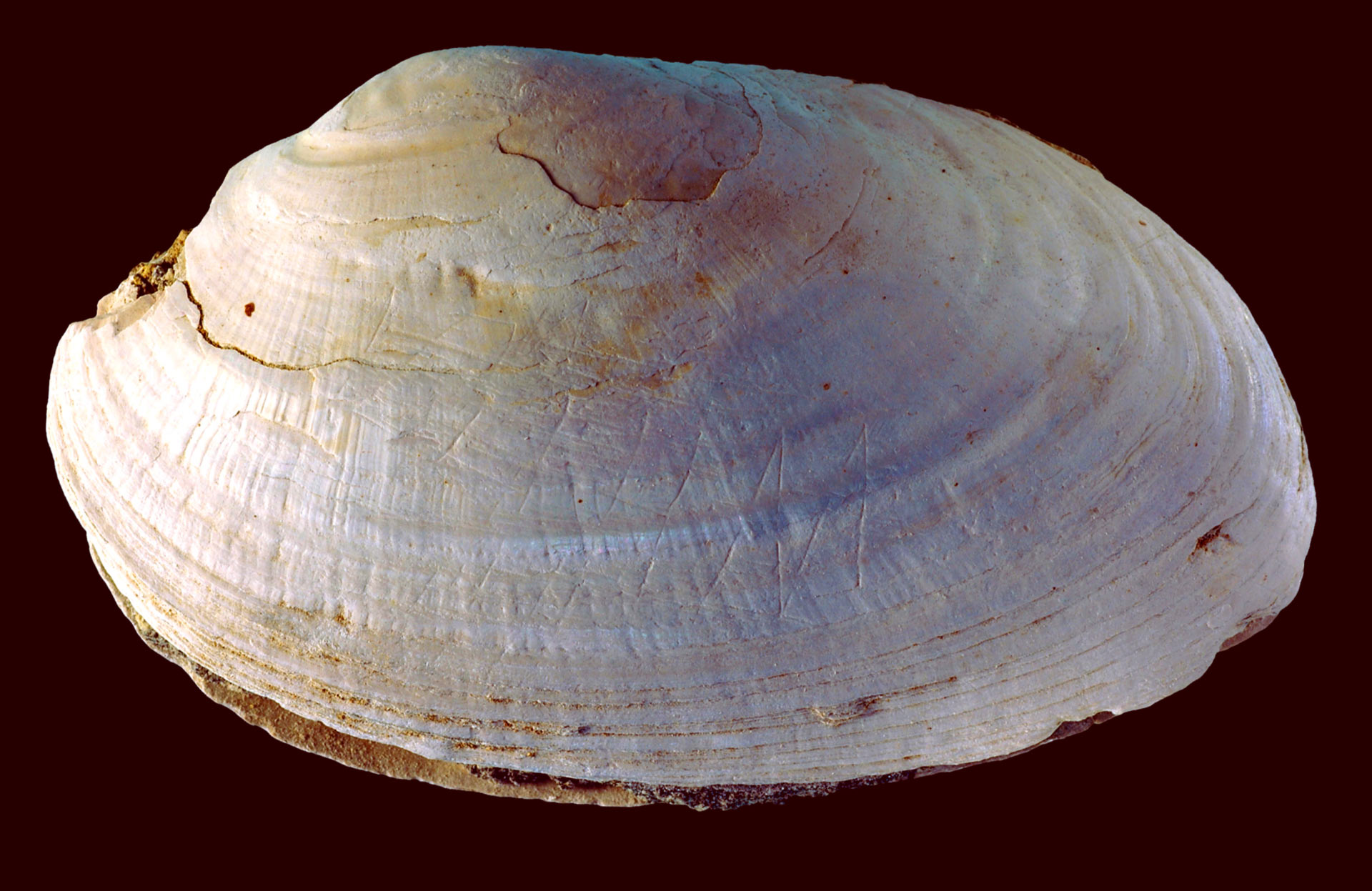
It implies that early hominins engaged with their environment in ways that went beyond mere survival, hinting at the roots of symbolic thought and artistic expression. Similarly, recent claims propose that Homo naledi, despite their smaller brain size, may have created symbolic carvings in deep caves. These findings challenge traditional assumptions about the link between brain size and creativity, indicating that symbolic thought might be more widespread in our evolutionary family than previously believed.
What Counts as Art?
Art, at its core, is a means of communication. It allows individuals to express ideas, emotions, and beliefs beyond the confines of spoken language. Ancient art took many forms: rock carvings, pigment markings, bead necklaces, and even the arrangement of bones and tools. For example:
- Blombos Cave, South Africa: Engravings on ochre blocks, dated to around 73,000 years ago, represent some of the earliest known examples of abstract art.
- Sungir, Russia: Burials adorned with thousands of painstakingly crafted beads highlight the symbolic and aesthetic values of early humans.
- Apollo 11 Cave, Namibia: Stone slabs painted with animal figures, dating back at least 25,000 years, demonstrate a clear artistic intention.
Despite these differences, it is crucial to understand that no one form of ancient art is inherently more complex or valuable than another simply because it appears more aesthetically pleasing to modern eyes. For instance, intricate rock art from Southern Africa, which may seem abstract to modern viewers, often conveys deep symbolic meaning tied to spiritual beliefs, just as the more representational cave paintings of Europe do. Modern biases can lead us to undervalue such works because they don’t align with contemporary notions of beauty or realism, highlighting the need to evaluate ancient art on its own cultural and contextual terms.
Why Did Art Begin?
The origins of art are deeply tied to the evolution of human cognition. As our ancestors developed larger brains and more complex social networks, they began to explore new ways to convey ideas and emotions. Art may have served several purposes:
- Ritual and Spirituality: Many early artworks are found in sacred or hard-to-reach locations, suggesting they were part of rituals or spiritual practices. This symbolic nature of art hints at a deep connection between creativity and early religious beliefs.
- Social Cohesion: Shared artistic projects could strengthen group bonds, creating a sense of identity and unity.
- Knowledge Transmission: Depictions of animals and hunting scenes might have served as teaching tools for younger generations.
- Personal Expression: Just like today, ancient artists may have created purely for the joy of expression.
What Did the World Look Like to Our Ancestors?
Imagine a world where survival depended on a profound understanding of nature. Picture towering forests alive with the rustle of leaves, sprawling grasslands where herds of animals roamed freely, and shimmering rivers that provided life-sustaining water. Every sound, from the call of a distant bird to the crack of a twig underfoot, carried meaning. The vast night sky, untouched by artificial light, sparkled with constellations that might have guided their movements or inspired their myths. To our ancestors, this was not just a backdrop—it was a living, breathing world, rich with resources, dangers, and spiritual significance. The animals depicted in cave art—majestic bison, swift horses, and elusive deer—were not just prey but integral parts of their world. Art served as a bridge between the tangible and intangible, allowing them to capture their environment and beliefs in a way that transcended time.
What Does This Mean for Us?
Understanding the origins of art connects us to our ancestors in profound ways. Moreover, it offers contemporary artists a rich tapestry of inspiration, reminding them that creativity transcends time. Ancient art forms, from abstract engravings to representational cave paintings, challenge modern notions of innovation and beauty, often sparking dialogue about the universality of human expression. For art movements today, these ancient works provide a foundation to explore themes of identity, spirituality, and the environment—concepts that remain as relevant now as they were thousands of years ago. Their creativity laid the foundation for human culture, allowing us to build complex societies, share knowledge, and explore the depths of our imagination. Every brushstroke, every melody, every word we create today carries echoes of those first tentative marks made on cave walls.
As a paleoanthropologist, I’m constantly in awe of the ingenuity of early humans. As Dr. April Nowell, a leading expert in Paleolithic art, once remarked, “The marks left by our ancestors on cave walls and objects are the first whispers of the human mind expressing itself.” These insights remind us that the creativity of early humans wasn’t just a means of survival but a profound expression of their emerging identities and shared humanity. These ancient artists remind us that creativity is not a luxury; it’s an essential part of what makes us human. This creativity not only enabled them to navigate and thrive in their environments but also laid the groundwork for the cultural and societal advancements that define modern human life. From storytelling and art to scientific innovation, the creative spark of our ancestors continues to shape the way we build connections, solve problems, and imagine new possibilities today. By studying their works, we gain a deeper appreciation for the resilience and brilliance of our shared heritage.
Join the Conversation
What do you think drove our ancestors to create art? Were they driven by practical needs, spiritual beliefs, or a deep sense of connection to their world? Do you believe their motivations were purely practical, or could they have been inspired by spiritual beliefs or social needs? How do you think their environment shaped their creative expressions? Share your thoughts in the comments or connect with me on social media to explore these fascinating questions further! Share your thoughts in the comments or connect with me on social media to explore the fascinating world of human creativity. Let’s uncover the stories our ancestors left behind and continue the legacy of artistic expression together!
Bibliography
- Dirks, P. H. G. M., Roberts, E. M., Hilbert-Wolf, H., Kramers, J. D., Hawks, J., Dosseto, A., … & Berger, L. R. (2021). The age of Homo naledi and associated fossils in the Rising Star Cave, South Africa. eLife, 6, e24231. doi:10.7554/eLife.24231
- Hoffmann, D. L., Standish, C. D., García-Diez, M., Pettitt, P. B., Milton, J. A., Zilhão, J., … & Pike, A. W. (2018). U-Th dating of carbonate crusts reveals Neandertal origin of Iberian cave art. Science, 359(6378), 912-915. doi:10.1126/science.aap7778
- Nowell, A. (2010). Defining behavioral modernity in the context of Neandertal and anatomically modern human populations. Annual Review of Anthropology, 39, 437-452. doi:10.1146/annurev.anthro.012809.104536
- Zilhão, J. (2013). Symbolic use of marine shells and mineral pigments by Iberian Neandertals. Proceedings of the National Academy of Sciences, 107(3), 1023-1028. doi:10.1073/pnas.0914088107
- Henshilwood, C. S., & Dubreuil, B. (2011). The Still Bay and Howiesons Poort, 77-59 ka: Symbolic material culture and the evolution of the mind during the African Middle Stone Age. Current Anthropology, 52(S4), S361-S400. doi:10.1086/661253
- Bednarik, R. G. (1998). The origins of symbolic thought. Journal of Human Evolution, 35(5), 605-617. doi:10.1006/jhev.1998.0236
- Conard, N. J. (2009). A female figurine from the basal Aurignacian of Hohle Fels Cave in southwestern Germany. Nature, 459(7244), 248-252. doi:10.1038/nature07995
 World of Paleoanthropology
It seems to me that some of what we consider art may have been used as communication. And later would seem like it should develop into spiritual representation.
LikeLiked by 1 person
Absolutely!
LikeLike
Please send pictures of the paintings. Thanks, Rebeca
LikeLike