Imagine stumbling upon an ancient skull hidden deep within a well—a secret preserved for nearly a century, now poised to rewrite the entire story of human evolution. This remarkable discovery from Harbin, China, known as the “Dragon Man” skull, has finally granted scientists and humanity our first comprehensive glimpse into the elusive Denisovan lineage (NationalContinue reading “Unveiling the Dragon Man: A Breakthrough in Understanding Our Denisovan Ancestors”
Author Archives: sethchagi
Father Time: Rediscovering the Essential Roles of Fathers Through Human History
Reframing the Narrative of Fatherhood The concept of fatherhood has often been simplified and overshadowed by societal archetypes emphasizing masculinity primarily through the lens of the hunter or provider. However, recent anthropological, psychological, and sociological research—most notably encapsulated in the seminal work Father Time by Sarah Blaffer Hrdy (2024)—reveals a far richer and more nuancedContinue reading “Father Time: Rediscovering the Essential Roles of Fathers Through Human History”
A Touch Across Time: The Neanderthal Fingerprint That Changed Everything
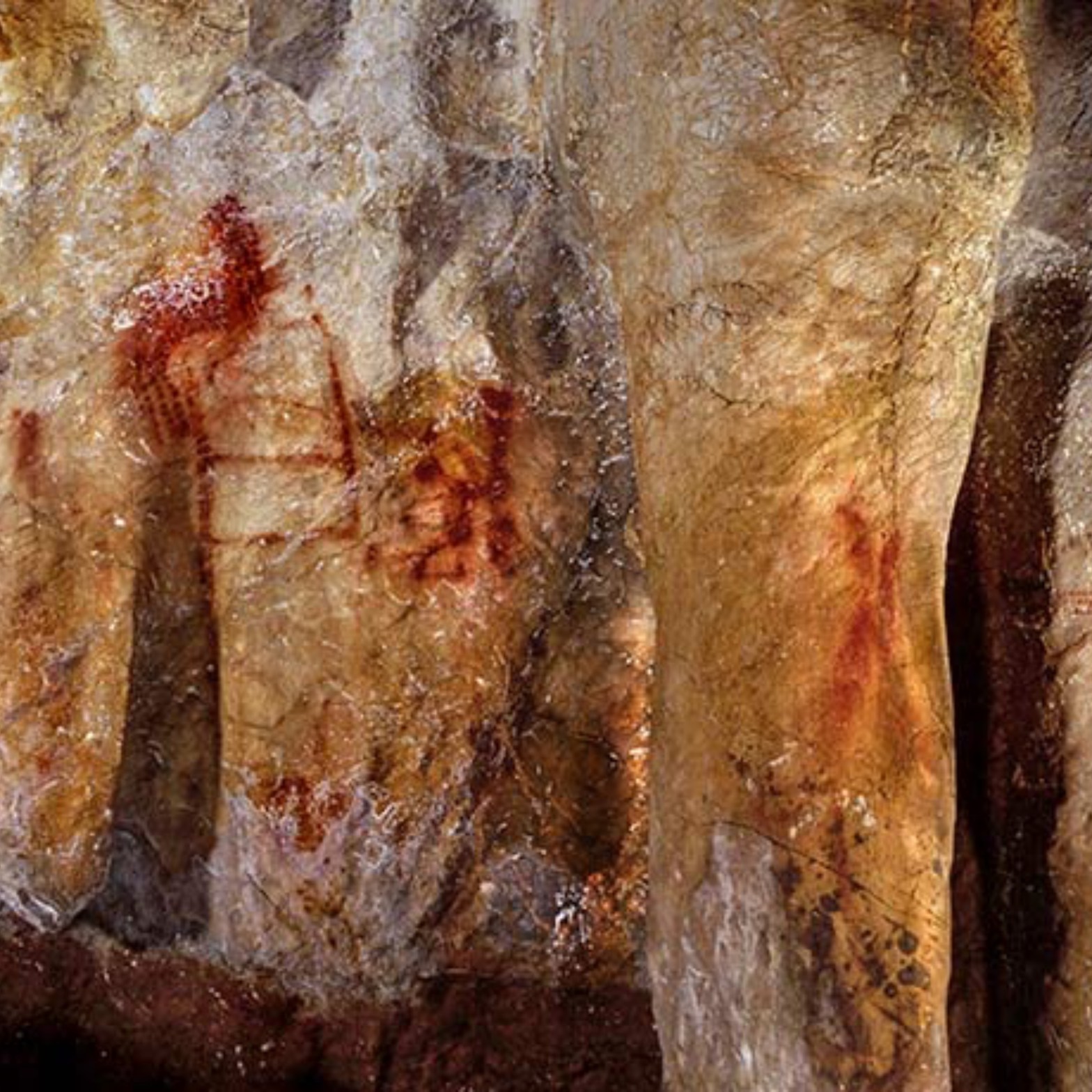
Archaeologists in San Lázaro, Spain, discovered a 43,000-year-old Neanderthal fingerprint, challenging perceptions of their cognitive abilities. The red ocher mark suggests intentionality and symbolic thought, previously attributed only to modern humans. This find promotes a reevaluation of Neanderthal culture, revealing their potential for complex cognition and creative expression.
Exploring the Mind Through Time: My Upcoming Master’s in Prehistoric Archaeology and Rock Art in Portugal
I’m thrilled to share that I’ll soon be beginning an incredible new chapter in Portugal—pursuing my Master’s in Prehistoric Archaeology and Rock Art through the International Master in Quaternary and Prehistory (IMQP) program at the Instituto Politécnico de Tomar (IPT). Why Rock Art? This unique program centers on Quaternary studies—the most recent geological period, markedContinue reading “Exploring the Mind Through Time: My Upcoming Master’s in Prehistoric Archaeology and Rock Art in Portugal”
The Role of Imagination in Human Evolution

The article explores the evolution of humans, highlighting the role of imagination as a crucial factor distinguishing Homo sapiens from other great apes. It argues that imagination facilitated significant cognitive advancements, enabling the mastery of fire, tool-making, and the development of language, ultimately allowing humans to thrive where other species stagnated.
What Did Neanderthals Think About Before Bed?
Imagine a world that looks nothing like the one we know today. It’s a place where surviving the day isn’t a metaphor—it’s a real struggle. When the sun goes down, it gets truly dark, much darker than anything we’re used to. As night falls, your priorities change. You’re not thinking about homework, crushes, or weekendContinue reading “What Did Neanderthals Think About Before Bed?”
The Lost Canvas of Humanity: What the World Would Look Like If Paleolithic Rock Art Survived
The Paleolithic era likely featured abundant rock art beyond caves, illustrating early human creativity and communication. Unfortunately, much of this open-air artwork has been lost due to weathering and erosion. Remaining sites, like those in the Coa Valley, reveal a glimpse of what once existed, suggesting a vibrant, artistic society. If more had survived, our understanding of prehistoric people would be richer, showcasing art as a vital part of daily life. This loss highlights the transient nature of human expression and its enduring significance despite impermanence.
When did we become Human?

The exploration of what it means to be human reveals a complex evolution marked by gradual adaptations rather than a singular event. Key milestones include bipedalism that freed our hands, the development of tool making, and the mastery of fire, which enhanced cognitive growth. Symbolic thinking is evidenced through art and social structures, not only in Homo sapiens but also in Neanderthals. Our humanity is shaped through ongoing innovation and connections, continually influenced by discoveries that deepen our understanding of our shared past.
Mothers of Humanity: The Profound Role of Mothers in Human Evolution and Culture
Mother’s Day is an opportunity to pause and reflect deeply on the incredible journey mothers have undertaken throughout human history. In paleoanthropology—the scientific study of ancient humans—we discover that motherhood has profoundly shaped not only individual lives but also the evolution of our species. In celebrating mothers, we honor the essential architects of humanity’s past,Continue reading “Mothers of Humanity: The Profound Role of Mothers in Human Evolution and Culture”
Humanity’s Canvas: From Cave Walls to AI Art
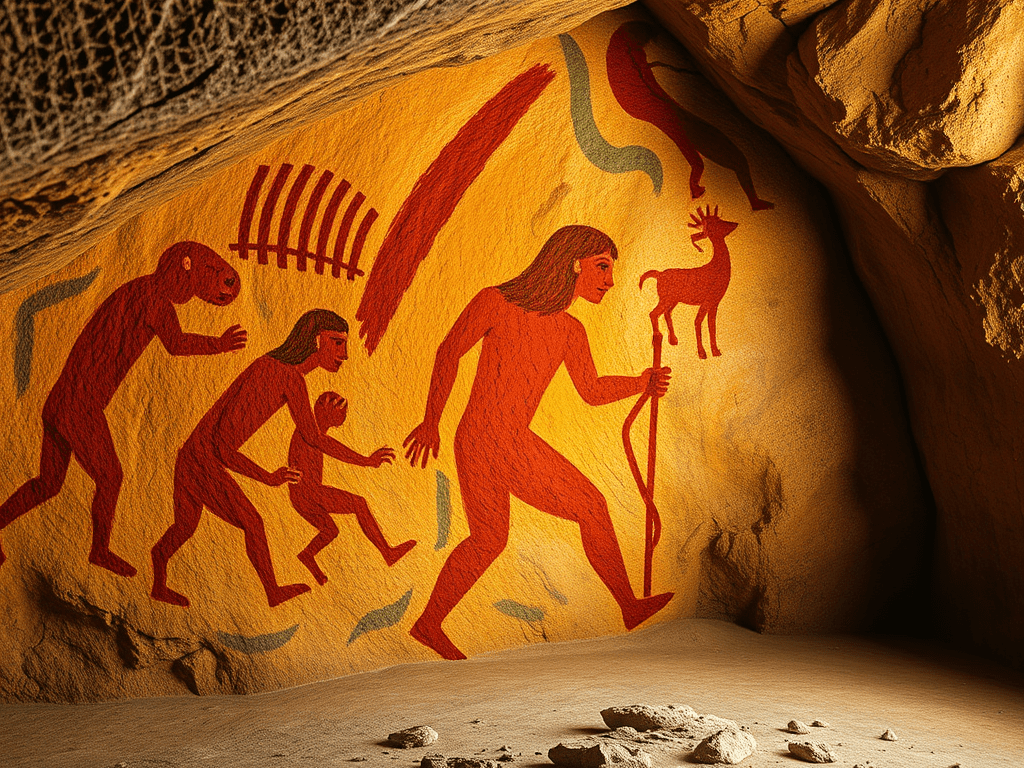
From the echoing chambers of Paleolithic caves to the digital canvases of AI, this article traces the evolutionary arc of human creativity. Discover how early art shaped cognition and community—and how today’s technological tools echo those ancient impulses, transforming the way we express, connect, and understand what it means to be human.
 World of Paleoanthropology