Have you ever heard a news story about a paleogenetics breakthrough, a new cave art discovery, or an announcement about an ancient hominin fossil that changes everything? But you’re not sure what that means? Well, the Paleo Post Podcast is here to help! Join us – Genevieve von Petzinger and Seth Chagi, your friendly neighborhood Paleoanthropologists – as we give you the background and the context to be the most interesting person at your next dinner party.
We’ll be covering the big news stories in the field every week, so make sure to tune in every Friday on your Apple Podcasts and other services to follow!
Our mission is to make science fun and accessible, so you can expect to learn cool things about the deep history of humanity, mixed in with lots of nerdy enthusiasm and the occasional bad Paleo pun (what can we say? Paleoanthropology rocks! ha ha ha).
Want to know more about us?
Genevieve von Petzinger is an internationally-recognized Paleoanthropologist studying Ice Age cave art. Her work focuses on geometric signs and what they can tell us about the origins of art, symbolism, and the modern mind. Genevieve has worked at over 100 cave art sites on three continents and officially loves her “job”. The unique database she first built to study the signs at Europe’s 400+ cave art sites is now being expanded to track the movement of people and ideas across the ancient world. Genevieve is a National Geographic Explorer and a TED Senior Fellow, and her TED talk has over 9 million views. She is passionate about science communication and regularly works in media, including print, radio, and television, and has recently been expanding her online outreach with projects like Cave Art 101 and our awesome new podcast 🙂
Seth Chagi is the Project Director and Founder of the Science Communication Project dubbed “The World of Paleoanthropology,” where he gathers news and current events and breaks them down in a fun and educational way for anyone interested. Currently a student, Seth is studying how Hominin brains have evolved and what that has meant for their morphology and behavior. Seth has given several lectures and is an After School Academy Instructor in California. Seth is currently applying to Grad School and looking for his best options, he is very excited for the bright future in Paleoanthropology and Science Communication ahead!
Much of the time in paleoanthropology, all we have are fossils. Though we can certainly learn lots about an organism, such as what it looked like, how it lived, and how it evolved, there are some things which simply can not be fully determined just by fossils. Some examples of this are the sex of an organism and its evolutionary relationships.
The sex of an organism is much easier to tell, as many animals possess large amounts of sexual dimorphism, and it is easy to differentiate the sexes based on fossils, but it isn’t always so cut and dry. It is common for mistakes to be made here, such as fossils of two different sexes of the same species being confused for two different species.
Similarly, evolutionary relationships can be told by fossils, but there are many factors which can affect this. For example, two fossils of different species can look very similar, leading people to conclude that they are closely related, but it is always possible that these two species are a result of convergent evolution, and the similar traits are homoplasies rather than synapomorphies, meaning that they evolved independently in the two species.
The best way to determine these things is with ancient DNA (aDNA). Being able to collect, sequence, examine, and compare the DNA of hominins is very useful, but it is rare. We mostly have aDNA from recent, closely related hominins, such as Neanderthals. Even then, much of the Neanderthal genome that we have comes from our own genome, as a result of interbreeding between the two species.
DNA is more accessible from these species because they lived and died much more recently, giving less time for DNA to decay. However, in rare cases, DNA, or at least proteins, can survive for much longer. This is the case for new enamel proteins uncovered from 2 million year old Paranthropus robustus fossils from South Africa, which can have a big impact on the lives and evolution of this strange species.
What is Paranthropus?
Paranthropus is a unique genus of hominin which lived from 2.7-0.1 million years ago (mya). This genus is unique for several reasons. It possessed very specialized cranial anatomy, such as post canine megadontia, large zygomatic bones, and a sagittal crest, all adaptations for a very powerful bite.
These powerful jaws were adapted for chewing through tough vegetation. This is further supported by radiocarbon isotope analysis.
Paranthropus possessed 3 species, P. aethiopicus and P. boisei in eastern Africa, and P. robustus in South Africa. This distribution resulted in them living alongside many other hominins, though this likely wasn’t a problem as they were seemingly eating different things mostly,, resulting in little competition, something known as niche partitioning.
Along with all this, Paranthropus possessed very high levels of sexual dimorphism. Females of all 3 species were much smaller than males, and seem to have lacked notable features of the genus, such as the sagittal crest. I have recently done an article covering everything you need to know about this topic, so you can check that out on this website for more information.
As stated previously, fossils can’t be completely reliable for telling sexual dimorphism, but DNA and proteins can, for the most part. That is where this discovery comes in.
The Paranthropus robustus specimen SK 48, found in the same locality as the subjects of this article
Preservation of DNA and Proteins
The genetic material from Paranthropus is the oldest genetic material from any hominin, being about 2 million years old, but not the oldest genetic material from any hominin ever. Ancient environmental DNA (eDNA) has been collected from faunal and floral assemblages in Kap København Formation in North Greenland. These assemblages were dated to about 1.9-2.1 million years old.
The eDNA showed that the area possessed an open boreal ecosystem, with many different plants, such as poplar, birch and thuja trees, along with various types of Arctic and boreal shrubs and herb. Many of these were not previously recognized in the area from fossils and pollen records.The eDNA also revealed the presence of many different animals, such as mastodons, rodents, hares, and geese. The DNA was preserved in sediments, which preserves DNA better than in bone due to the absorption of minerals which can modify the DNA conformation and prevent enzymatic degradation.
The previous oldest hominin DNA belonged to a 400,000 year old Neanderthal specimen from Spain. Proteins however, which are more resilient than DNA, can survive for longer, but there are many factors for protein preservation. Burial environment, fossil chemistry, time, and temperature are all very important.
Protein sequences have been obtained from ostrich (Struthio camelus) shells in Tanzania dating to 3.8 mya. These proteins were able to preserve for so long because they were encased in the minerals from the eggshells.
800,000 year old tooth proteins have been sequenced from Homo antecessor in Spain, and some from Homo erectus from the Republic of Georgia dating to 1.8 mya.
Genetic Material from Paranthropus robustus
4 dental specimens (SK 850, SK 835, SK 830, and SK 14132) from Swartkrans belonging to Paranthropus robustus cave were sampled. By using mass spectrometry, hundreds of amino acids from the tooth enamel of the specimens. One significant protein found is amelogenin-Y. This protein is produced by the AMELX gene.
A grouping of images, showing the Swartkrans cave site, and the four dental specimens, along with other relevant images.
This protein is very important formation of tooth enamel. There is one copy of this gene on each sex chromosome. Amelogenin-Y is produced by the AMELY gene on the Y chromosome, but has no effect on enamel formation.
The specimens SK 850 and SK 835 were identified as male based on the presence of amelogenin-Y. This is significant as one of those specimens was originally thought to have been female due to its small size. SK 835 matched the local strontium isotope signal associated with male Paranthropus in the area, making it more likely that this individual was male.
However, Amelogenin-Y was not found in SK 830 and SK 14132. Rather, the X chromosome version of amelogenin-Y, amelogenin X, was found in these specimens.The absence of the amelogenin-Y gene in these specimens doesn’t mean they were automatically female however, as it is possible that it was not detected on them because the proteins were too far out of the detection limit of the instrument used to sequence the proteins.
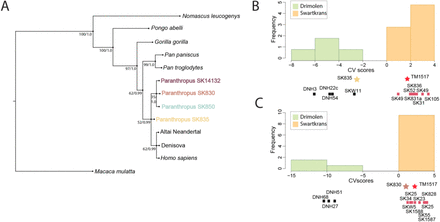
About 400 of the amino acids sequenced were found in all 4 specimens, showing that modern humans, Neanderthals, and Denisovans are more closely related to each other than any are to Paranthropus, which is not a surprise. Sequence differences were found in one enamel protein, showing genetic variability in the species too. The SK 141132 specimen especially seems to be more unrelated to the rest of the specimens.
Though it is theoretically possible to reconstruct phylogenetic trees of ancient hominins using these proteins, it most likely won’t add much. This is because proteins aren’t very useful for reconstructing evolutionary relationships, and we don’t have any genetic material from other hominins from the time to compare it to. It is best to rely on fossils and skeletal morphology as of right now for determining this.
A phylogenetic tree of the 4 Paranthropus specimens, with other primates
Conclusion
Proteins are much more resilient when it comes to ancient preservation, so it isn’t that much of a surprise that some were preserved in Paranthropus teeth, a place with plenty of minerals to preserve them in, similar to the 3.8 million year old ostrich protein sequences taken from eggshells.
It is not abnormal for genetic material to be preserved in hominin remains, as there is genetic material as old as 400,000 years old all the way up to 1.8 million years old. It is abnormal however for such old genetic material to be preserved in such an ancient species, making this find especially important.
This discovery has big implications for the sexual dimorphism and biology of Paranthropus. This shows that smaller Paranthropus individuals weren’t necessarily female, meaning that body, cranial, or tooth size may not be as sexually dimorphic as previously thought. This may mean that a reexamination of other Paranthropus specimens may be needed.
It is important to note that the paper this article is based off of is still in preprint, and has not yet been peer reviewed and published, meaning that some of the information may be inaccurate or need revisions. Once it has been reviewed and published, we can truly see the findings of this study and its implications for the lives and evolution of the unique genus of hominin, Paranthropus.
Kjær, H. K., Pederson, W. M., Sanctis, D. B., Cahsan, D. B. (2022). A 2-million-year-old ecosystem in Greenland uncovered by environmental DNA. Nature, 612, 283-291. https://doi.org/10.1038/s41586-022-05453-y
Demarchi, B., Hall, S., Roncal-Herrero, T., Freeman, L. C. (2016). Protein sequences bound to mineral surfaces persist into deep time. eLife, 5:e17092. https://doi.org/10.7554/eLife.17092
Madupe, P. P., Koenig, C., Patramanis, I., Rüther, L. P., et al. (2023). Enamel proteins reveal biological sex and genetic variability within southern African Paranthropus. Preprint at BioRxiv. https://doi.org/10.1101/2023.07.03.547326
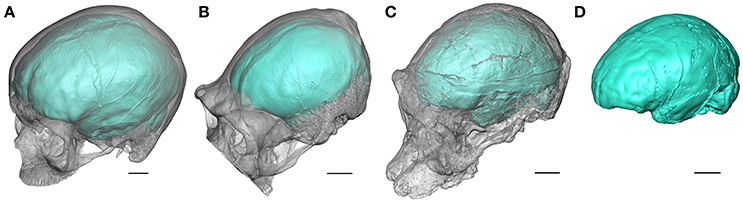
Endocasts of Homo sapien, Pan troglodytes, and Australopithecus africanus (Beaudet A., 2017).
How are the remains of hominins found at archeological sites used to make inferences about them? We shall walk through the journey of a hominin fossil after it is discovered at a site and processed at a lab with the help of a crude example.
Paleoanthropology is the study of hominins, through their bodily and artefactual remains. It largely relies on making comparisons between the fossils of extinct and extant hominins and sometimes hominids, due to the relative paucity of extinct hominid remains. There are certain tasks before such comparisons can be made.
Digitization and (Re)construction
After the steps necessary for its conservation are undertaken, fossils these days are digitized to virtually slice open and peer through them, allowing the collection of data which would otherwise be inaccessible. This is best done with the help of volumetric scanners, such as Computed Tomography (CT), microCT, Magnetic Resonance Imaging (MRI), and synchrotrons, varying in image resolution and feasibility. Lesser expensive techniques include using surface scanners such as the Breuckmann scanner, laser scanners, or even your phone camera (photogrammetry)!
These scanned 3-D files can be worked on using certain software such as Slicer to manipulate, correct distortions, and reconstruct missing parts of the fossils and in some cases, soft tissue based on patterns seen in the same fossil, or through reference collections. These can also then be exchanged and printed into casts, making it safer and more convenient to study and transmit knowledge among experts and the public.
Once such information is extracted through a single specimen, begins the process of anatomical comparisons using geometric morphometrics. This is a modern-day technique to minimize the influence of variation in the absolute size of crania and that of the scanned 3-D models itself (because of differing reference scales) on the comparative study.
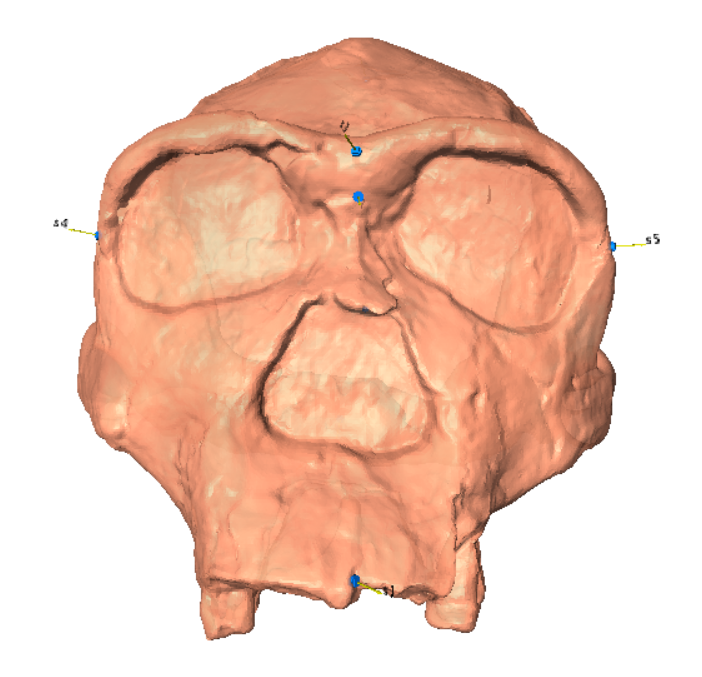
To make the comparisons between fossils of the same bone/complex between specimen, corresponding points on the fossils, called ‘landmarks’ are first defined. These can be based on unique biological characteristics of the bone, geometric features on the bone, or those dependent on other landmarks.
An Example
Skulls belonging to gorilla, chimpanzee, modern human, Paranthropus boisei, Homo ergaster, and fossil Homo sapien are compared investigating phylogenetic relationships and cranio-morphological differences.
3-D scans of contemporary and fossil crania from the open-source online repository MorphoSource were used for the analysis. These included 10 samples of Gorilla gorilla, 10 samples of Pan troglodytes (chimpanzee), 10 samples of modern humans from various geographical distributions, and a sample each of Paranthropus boisei (OH 5), Homo ergaster (KNM ER 3733), and a fossil of Homo sapien (from Skhul, Israel).
Ten landmarks were selected across the crania to provide comprehensive information on skull shape. These landmarks are located on the following anatomical points.
N.
Landmark
Description
1.
Prosthion
Anterior and inferior midpoint of the maxilla.
2.
Nasion
Midpoint of the nasofrontal suture.
3.
Glabella
Midpoint most protruding above the nasofrontal suture, between the arches orbital.
4.
Orbital Frontomalar (L)
Left point located on the orbital rim, on the anterior part of the suture frontozygomatic.
5.
Orbital Frontomalar (R)
Right point located on the orbital rim, on the anterior part of the suture frontozygomatic.
6.
Bregma
Upper and middle point of the frontal, usually located at the junction of the sutures coronal and sagittal.
7.
Opisthocranion
Median point of the skull furthest from the glabella.
8.
Basion
Anterior midpoint of the foramen magnum.
9.
Porion (L)
Highest point of the superior border of the left external auditory meatus, forward and level of the spina supra meatum.
10.
Porion (R)
Highest point of the superior border of the right external auditory meatus, forward and level of the spina supra meatum.
Table 1: Landmarks used on crania.
Fig. 1: Anterior, lateral, and inferior views of the Homo ergaster KNM ER 3773 cranium with landmarks.
The software Landmark Editor v3.0.0.7 by IDAV was used to plot and calculate each landmark’s absolute X-Y-Z coordinate values, although better suited software are available. To optimally align corresponding landmarks across crania against each other and make accurate comparisons, we use Generalized Procustes Analysis.
Generalized Procrustes Analysis (GPA)
Generalized Procrustes Analysis (GPA) is a statistical method used in multivariate analysis and data alignment. It is often used in shape analysis but can also be applied to other types of data. In GPA, multiple sets of data, often representing different shapes or configurations, are aligned to a common coordinate system. This is achieved by scaling, rotating, and translating the data points so that they best fit together. The method finds the optimal alignment of the data by minimizing the sum of squared differences between corresponding points across all the datasets.
GPA has been used in this study to minimize the influence of variation in the overall size of crania and that of the scanned 3-D models itself (because of differing reference scales) on the comparative study. The GPA-transformed coordinates of the landmarks are solely based on the variation in shape of the crania and are hence a more accurate measure of inter-species variability.
The software Paleontological Statistics (PAST) v4.03 was used to first transform the previously measured landmark coordinates using 3D procrustes to remove the influence of size and orientation of landmarks on the scanned crania, and then visualized in a Principal Component Analysis plot.
Principal Component Analysis (PCA)
Principal Component Analysis (PCA) is a statistical technique used to simplify complex data, visualize high-dimensional data, and identify underlying patterns in data. PCA is used to identify patterns and relationships in a dataset by transforming the original data into a set of linearly uncorrelated variables called principal components. Reduction in the number of variables in a dataset while retaining as much of the original variation as possible is achieved by identifying the principal components that explain the most variance in the data. The first two principal components are the directions of greatest variance in the data and are hence primarily used in the plot.
In the present study, the GPA-transformed coordinates of landmarks were used in PCA to qualitatively assess inter-species variation among various hominids of the past and present based on the chosen landmarks.
Results
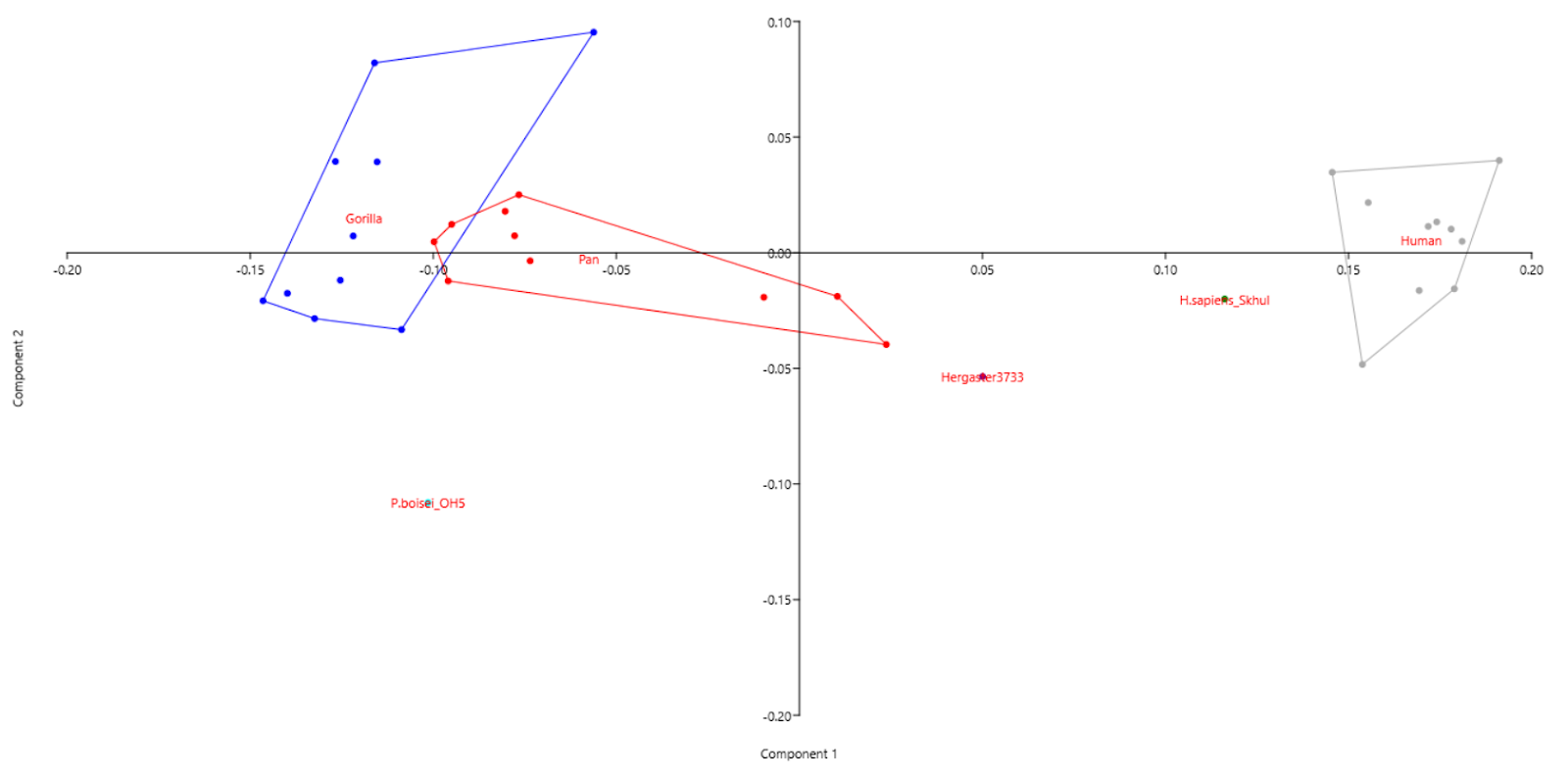
The resulting scatter plot using PCA termed morphospace (Fig.s 2 and 3) is mostly consistent with the generally accepted phylogeny. There is a clear clustering of gorilla, chimpanzee, and modern human groups of individuals, although a slight overlap exists between gorilla and chimpanzee.
The P. boisei from OH 5 is located roughly between, although below gorilla and chimpanzee. serves to disprove the linearity of evolution, especially that of humans. Being the most robust of its genus, “Zinj” lived approximately 1.8 million years ago and had developed powerful jaw muscles and large molars capable of grinding hard foods, although it was likely a generalist. In contrast, chimpanzees diverged from the hominin line 6-8 million years ago but evolved craniofacial features “statistically closer” to sapiens than P. boisei did, also evidenced to being omnivores.
The 80000–120000-year-old sapien from Skhul is the closest fossil used in this study to modern humans. However, it is not within the convex hull of modern humans indicating that significant changes have occurred in sapien crania ever since, questioning the usage of the term “anatomically modern humans” to refer to all sapiens after 300000 years.
H. ergaster from Koobi Fora is located almost exactly midway between P. boisei and sapien (Skhul) on the morphospace, which is expected, given that it lived approximately 1.6 million years ago and was a member of our genus.
Fig. 2: Scatter plot of PCA without biplot.
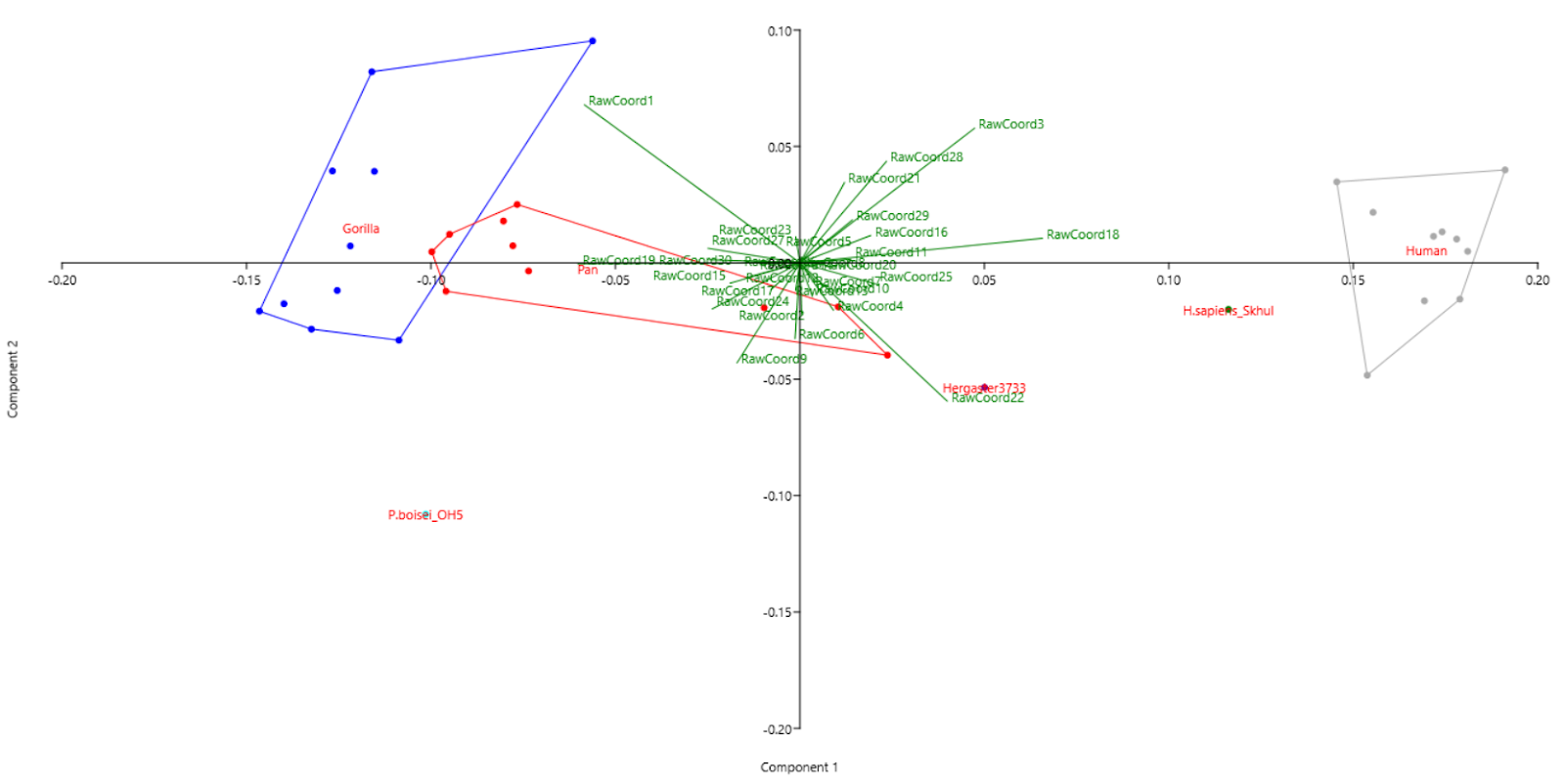
Further, it can also be seen in Fig. 3 that raw coordinates 19, 20, and 30 vary the most along PC 2 and hence are the greatest differential between gorilla, chimpanzee and modern humans. These correspond to X and Y-coordinates of opisthocranion and the Z-coordinate of the right porion. The high inter-species variability in X and Y-coordinates of the opisthocranion is indicative of the expansion of the occipital lobe in our genus and species, which is responsible for visual processing and recognition.
Among the fossils, raw coordinates 15, 16, 17, and 18 seem to vary the most, which correspond to the Z coordinate of the right orbital frontomalar and all 3 coordinates of the bregma. Raw coordinates 1, 4, 7, 10, 22, 23, and 27 vary the least, which correspond to the X-coordinates of prosthion, nasion, left orbital frontomalar, basion, Y-coordinate of basion, Z-coordinates of glabella and left porion.
Fig. 3: Scatter plot of PCA with biplot.
Fig. 4: Coordinate axes.
Among fossil hominins especially, as we move from P. bosei to H. ergaster to H. sapien (Skhul) the progressive decrease in the Y-coordinates of bregma is due to the loss of the sagittal crest and keel. The increase in X and Z-coordinates indicates an expansion in the parietal and frontal lobes, which are associated with sensing, motor function, memory, and supposedly uniquely human traits such as language.
Thus, the study of our deep past today requires modern and futuristic tools while relying on multiple disciplines such as biology, geometry, statistics, and in less crude examples, computer programming.
References
Beaudet A (2017) The Emergence of Language in the Hominin Lineage: Perspectives from Fossil Endocasts. Front. Hum. Neurosci. 11:427. doi: 10.3389/fnhum.2017.00427.
Update: The reception of this documentary from the public has been great. It’s been awful from scientists. Why? It’s not because they do not wish to see the science being communicated, they, including the journal reviews, feel that this announcement, was rushed, and could possibly damage future research. Why was this done? Various reasons are being given, from the malignant to the innocent. What is plain is that MORE WORK NEEDS TO BE DONE. How this will all affect open science, time will tell. WhT this documentary does NOT do, is tell the science behind the evidence. It’s a show, it’s for entertainment.
Do your own research, and read what other researchers, both on and off the team not in the documentary what they think!
For many, the ever-evolving story of Rising Star is not new but a gift that keeps on giving, revealing new secrets and moments of utter fascination to the world each time Dr. Berger et al. comes out with a new announcement. This month has been no different in that sense, but quite different in what was revealed and, more importantly- how.
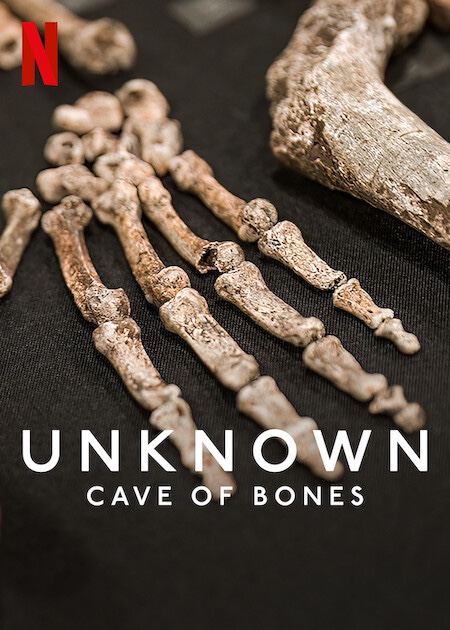
Today, July 17th, 2023, Netflix is releasing the next episode in their new series called “Unknown” with an episode titled Cave of Bones, about, you guessed it! The Rising Star expedition, especially in the last few field seasons. This documentary was created because massive announcements were made this month concerning the enigmatic species of Homo naledi. Today we will take a quick trip into Rising Star to discuss this episode and whether or not it is worth your watch. As Dr. Berger has not even seen it yet, I am proud to say that I was allowed an early viewing, and I am very excited about what I saw.
Briefly, let’s review what was announced over the past few months.
Announced in three preliminary papers, with the peer reviews coming out during the past week, we were told some fantastic things. Homo naledi is supposedly responsible for purposefully, and even “ritualistically” interring, burying their dead, in shallow graves deep in the cave system, throughout various chambers. However, even this had been thought of and was not the biggest of the news that was to come. Of course, more work needs to be done to confirm any of this. We also learned that there are potential engravings above the graves and in other locations purportedly made by naledi, showing possible “meaning-making” symbols whose meaning will forever be lost to time. Finally, we now have solid evidence of fire use through the caverns without the issue of losing too much oxygen or any such problems. All of this is fascinating and constitute very bold claims with a fair amount of evidence. To be honest, though, the summary of the reviewers of the papers concluded that there is not sufficient evidence or methodologies used to support these claims,
All of that being said, what it means is that there is a lot more work to do! And you better believe that the work is being lined up, assigned to people, and is getting started!
This season’s expedition just started before my interview with Dr. Berger!
The episode starts with a brief history lesson on Human Evolution and the History of naledi and Rising Star. We meet the team from Doctorates John Hawks, Agustin Fuentes, and of course, Lee Berger and all of the talented, hard-working researchers, archaeologists, and paleoanthropologists under them.
The filming is beautiful, the music is set perfectly, and the mood of the documentary is fitting for a trip deep underground, as well as back in time. The problems and challenges of the cave system are genuinely shown to the public for the first time, the tight squeezes, impossible drops, and unknown passageways. For the first time, as members of the people, we are taken into another world, a subterranean one, where science is being done on levels and with challenges that few outside those who work in Space and the Deep Sea.
With each big announcement, we get to see what was presented to the explorers as they first saw them; we hear their thoughts and opinions on the finds. Combined with the papers, and now the peer reviews, as well as the multitude of media coverage, along, of course, with the work I have been doing trying to figure out what I can about what is going on in that chamber, this is one of the best ways to experience Rising Star that has yet been available for the general populous.
I will be honest; I am not a big fan of Netflix; I think most of their shows are cheap, but I do not like them. They even support trite like Graham Hancock with his series Ancient Apocalypse. Netflix is not looked happily upon by most serious researchers. I do not know the story behind this documentary, how it landed on Netflix, or why, but I am happy it did. The production quality is impressive, the editing perfect, and the storytelling provided by those that we see is stunning.
If you have a Netflix account or access to one, I highly suggest watching this documentary, as if you are a fan of Human Evolution, Archaeology, or exploration, you will want to take advantage of this!
This article put forth 10 recommended documentaries covering a variety of topics about human evolution, but it’s about time for more.
The following links go to 10 documentaries from recent years which can be easily accessible on YouTube. Some of them are professional documentaries, while others are made by individual educational channels.
The conditions of the original article still apply, such as some links may not work for you if you are outside the United States, they are not listed in any some of the Documentaries may not cover everything and might get some details wrong, but they are all still very educational, informative, and useful to anyone who wants to learn about the history of our species.
As said in the previous article, education can be accessible if you know where to look!
And there it is! These are the best paleoanthropology documentaries, or at least informational videos, from the past few years. These documentaries cover a wide range of topics, but all are very interesting and educational, and make for great videos to listen to in the background or something to take time to thoroughly watch and learn from. I hope you enjoy!
On this special episode of “The Story of Us”, I am joined by none other than Prof. Lee R. Berger from the University of Witwatersrand!
We are going to be talking about Homo naledi, of course, and the many challenges and astonishing discoveries that the cave system has thus far revealed.
More than that, however, we are going to be asking Dr. Berger some critical questions that I have heard swirling around the academic corridors. I want Dr. Berger to talk straight to you, the people, and explain why these discoveries are important not only to what it means to be human but also to what it means for the science, and why things were done in the way that they were.
Please enjoy, and of course, remember to Never Stop Exploring and that There is Always More to Learn!
The video will go live at the announced time! You can watch it here or visit my Youtube to find it!
“Geometric Signs: a brief history of space and time.” Pilar wanted to know about the time period of the signs as well as where they are found around the world.
In this first episode, the questions that was asked was – “ What is the time period, and geographical location in which most of the signs were found?”- Pilar
**People are also welcome to ask follow up questions if this answer makes them think of more questions**
Were Humans Eating Each Other Over One and a Half Million Years Ago?
This past week a new paper came out in “Scientific Reports” by lead author Dr. Briana Pobiner, detailing the possible evidence of early cannibalism, or consumption of meat of some kind, of an early hominin, by another hominin, nearly 1.5 million years ago. It is a fascinating paper that I think people are overthinking, which is being misunderstood by the public, partly thanks to how mass media informs on it. So I would like to take a moment to correct some of the thinking I am seeing so that this paper and its implications are better understood. So, let’s put our paleoanthropology hats on, step back into our time machines, and travel to the African savannahs of modern-day Koobi Fora, Kenya.
At this time during our history, we, like our cousins today, were a part of the African landscape, we were not at the top of the food chain, and in many cases during the Pleistocene, we see our taxa being predated upon by many other carnivores. We have solid evidence that hominins were preyed upon by various big cats and other predators during this time, just as we sometimes find ourselves today. We can tell this in a few ways; one is the direct tooth marks of a predator on the bones of a hominin that is found, often in a den of some sort, among many other bones of the victims of the predators that called that area home, likely for millennia. While we may be at the top of the food chain now, it is relatively new in our history, and we should keep that in mind.
So during this time, we had more than one type of “Human,” and even those less related to us, walking around the Turkana/Koobi Fora area of Kenya 1.45 million years ago, the period to which the fossil we will be talking about comes from. During this period, four known hominins are walking around, on two feet even! Paranthropus boisei, Homo habilis, Homo rudolfensis, and Homo erectus. All very capable hominins, of course, in their ways, all known to be possible stone tool users. So if we were to find a fossil with tool marks, can we be sure who made them? Not, which is partly what makes this new paper so fascinating. Is wondering who made these marks and why, but I think the fascinating thing about this, as you will see, is, in fact, important because those cut marks were found on the leg bone of another hominin.
Is this a case of early Cannibalism? Is that even what is the most crucial factor to consider here? Let’s take a brief moment to review.
1.45 million years ago, during the Pleistocene, a leg bone of an unknown hominin species showed cut marks made from a stone tool, which could have only been either another individual of the same species, or another hominin species, are found on this bone. They showed that the flesh was removed and most likely eaten. We cannot tell whether this individual was hunted down, seen as a scavenged item, or a victim of cannibalism.
While it would be exciting if these were some of the first signs of cannibalism among our kind, I think it would be far more exciting and insightful if this showed that one hominin species was hunting and even eating another hominy species. So not cannibalism, but predation of one hominin species over another. This brings a new idea of how some of our earliest ancestors may have hunted, eaten, and operated. Imagine one group of hominins, whether habilis or erectus; it is essential to think of one of them, following, tracking, and deciding that this creature, this animal that in so many ways seems similar to itself, to eat its flesh. What drives this decision? There are many possibilities, and we need real-time machines to know the truth, but we can research and figure out as much as possible.
Figure 6. Close up photos of three fossil fauna specimens from archaeological surface finds and excavations in the Okote Member of Koobi Fora (Pobiner47), showing similar cut marks to those found on KNM-ER 741. (a) FwJj14B 5097, a bovid size 3 mandible with cut marks on the inferior margin, found in situ (b) FwJj14A 1016- 97, a bovid size 3 radius midshaft with cut marks, found on the surface (c) GaJj14 1056, a large mammal scapula with cut marks along scapular margin, found on the surface. Scale =1 cm.
What I want you all to learn from this paper is that if this is a case of cannibalism. It is one of the earliest signs, then that is what matters to anthropologists, the fact that this might be a “first” of activity in Human behavior, which makes us all so excited! Beyond that, if this is another species of hominin hunting down or scavenging another hominin, I think the potential cultural implications are far more critical to our understanding of what this find may mean.
I encourage you all to read the paper, which is Open-Access and is a pretty easy read, there are some out there, such as the New York Times, that are making claims this is nothing more than clickbait, but that is from a severe lack of understanding on their part, as well as the commenters, of this find, and its implications.
With that, I will leave you to read and find out the special meaning of this find on your own!
A common misconception about biological anthropology and human evolution is that ancient hominins are purposefully reconstructed to appear more ‘human-like.’ Many creationist organizations, such as Answers in Genesis, claim that scientists give reconstructions of hominins specific traits, in a dishonest effort to make them look more human, to make them appear as if they evolved.
A common example of this is the color of the sclera. It is often claimed that hominin reconstructions are given white sclera (the whites of the eyes) to make them appear more friendly and human-like. It is said that this is dishonest as they claim white sclera is exclusive to humans, and no apes possess this feature. This however, is untrue.
What is the Sclera?
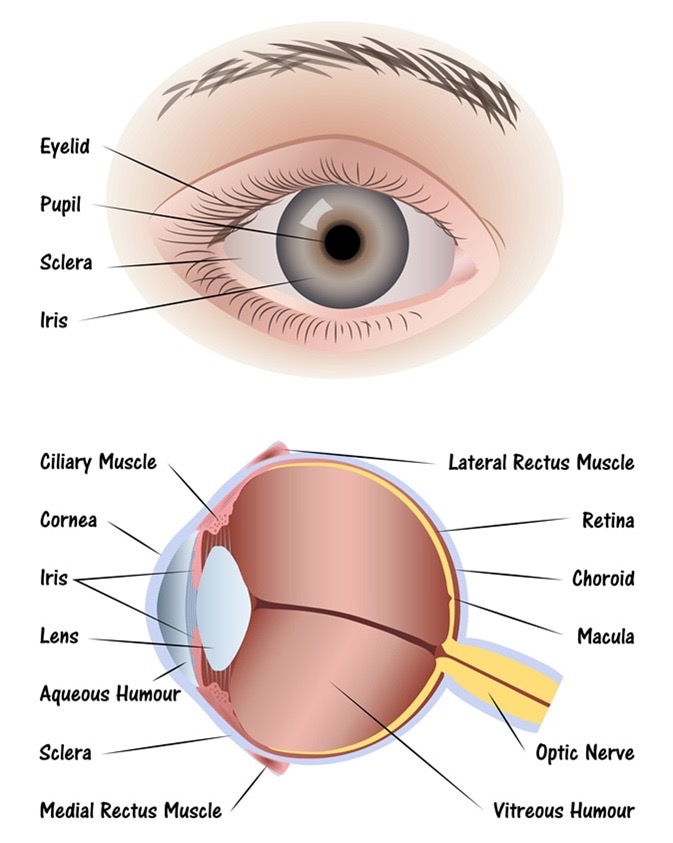
Sclera are the surface of the outside of the eye (excluding the pupil and iris), making 85% of this portion of the eye. It is composed mostly of water and collagen, and is the main connective tissue of the eye, giving more support to the eye wall.
A diagram of human sclera
All humans (except for rare cases, such as melanosis) possess depigmented sclera, making them appear white in color. Most other apes, such as chimpanzees and gorillas, typically have pigmented sclera, making them appear more brown, but this isn’t always the case.
White Sclerae in Nonhuman Apes
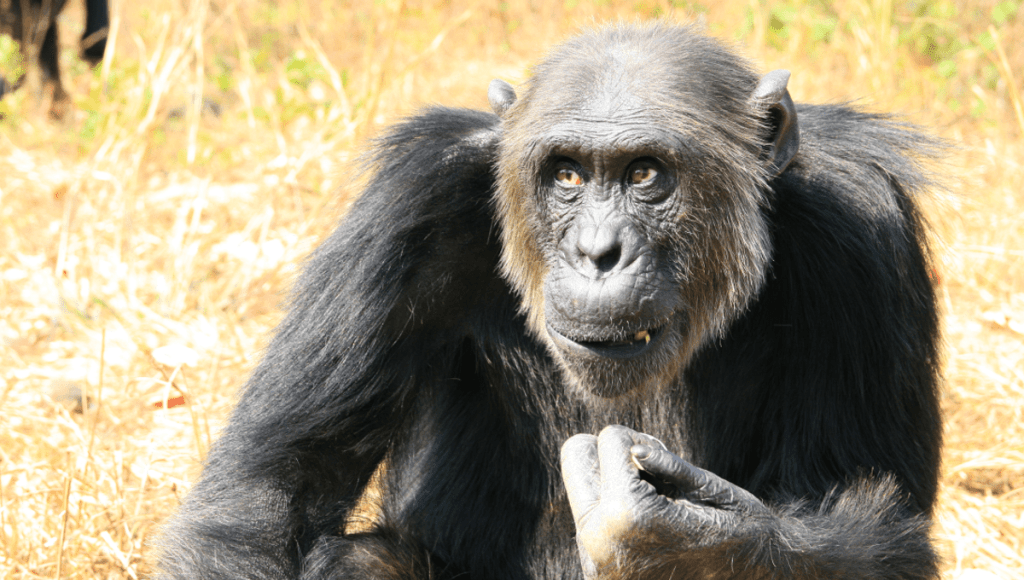
White sclerae is indeed a part of the normal variation of other apes. In a chimpanzee population in Kibale National Park, Uganda, 34 out of 250 individuals possessed white sclera, making up roughly 15% of the population. Depending on the species or population, it may be more common. For example, bonobos typically have brighter sclera than chimpanzees, lowland gorillas have brighter sclera than mountain gorillas, and sumatran orangutans have brighter sclera than bornean orangutans.
Just like any other trait, white sclera naturally occur in certain populations of apes, depending on whether the mutation for it is present and positively selected for. In this case, there are several benefits for white sclera.
A male chimpanzee from Chimfunshi, Zambia, possessing white sclera
Benefits of Scleral Depigmentation
Having white sclerae allows for gaze following, being able to see the direction of a conspecifics gaze from far away. This is known as the cooperative eye hypothesis, or the gaze signaling hypothesis. Young children use gaze following to locate certain items and interact with their parents, and adults of both humans and other apes find it easier to follow gazes when the other individuals have brighter sclera. Because humans are such a social species, it would make sense why this would be so beneficial for us. It also explains why it is beneficially selected for when it appears in the gene pool of other ape species.
Along with this, white, brighter sclerae have been shown to make an individual appear more friendly, young, and trustworthy, which is also beneficial for social ape species. It has also been shown that young children prefer to be around other children with brighter sclera.
It has been often considered that darker sclera is beneficial for other apes however, as it conceals their gaze from conspecifics. This is known as the gaze camouflage hypothesis. However, in recent years this idea has become much less common. New studies show that darker sclera does not effectively conceal one’s gaze, and the gaze is still visible up to 10 meters, effectively ruling out this hypothesis.
Did Hominins Have White Sclera?
Hominins are very often reconstructed with white sclera. From everything shown in research on this topic, that is very reasonable. As it is a part of the natural variation of modern nonhuman apes, it is very likely our own ancestors possessed this as well. Considering how close these animals were to us, in behavior, genetics, and morphology, it very well could have been the norm. Though it likely wasn’t seen in every ancient hominin, it was likely very common.
A reconstruction of Australopithecus afarensis possessing white sclera
Conclusion
Despite what is often claimed by creationist organizations, many nonhuman apes do indeed possess white sclera. It is a part of their natural genetic variation, and is positively selected for when it appears in a population. This is because it allows for an individual to follow a conspecific’s gaze from far away, and makes individuals appear more friendly and trustworthy.
Because of how closely related and similar extinct hominins, such as Australopithecus, were to modern humans, it is very likely that the majority of individuals had white sclera. It is for this reason that reconstructing hominins with white sclera is not dishonest.
Boote, C., Sigal, A. I., Grytz, R., Hua, Y., Nguyen, D. T., Girard, A. J. M. (2020). Scleral structure and biomechanics. Prog Retin Eye Res, 74: 100773. 10.1016/j.preteyeres.2019.100773
Clark, R. I., Lee, C. K., Poux, T., Langergraber, E ,K., Mitani, C. J., Watts., D., Reed., J., Sandel, A. A. (2023). White sclera is present in chimpanzees and other mammals. Journal of Human Evolution, 176, 103322. https://doi.org/10.1016/j.jhevol.2022.103322
Wacewicz, S., Perea-García, O. J., Lewandowski, Z., Danel, P. D. (2022). The adaptive significance of human scleral brightness: an experimental study. Scientific Reports, 12, 20261. https://doi.org/10.1038/s41598-022-24403-2
Kano, F., Kawaguchi, Y., Hanling, W. (2022). Experimental evidence that uniformly white sclera enhances the visibility of eye-gaze direction in humans and chimpanzees. eLife, 11:e74086. https://doi.org/10.7554/eLife.74086
Tomasello, M., Hare, B., Lehmann, H., Call, J. (2007). Reliance on head versus eyes in the gaze following of great apes and human infants: the cooperative eye hypothesis. Journal of Human Evolution, 52(3), 314-320. https://doi.org/10.1016/j.jhevol.2006.10.001
Caspar, R. K., Biggemann, M., Geissmann, T., Begall, S. (2021). Ocular pigmentation in humans, great apes, and humans, and gibbons, is not suggestive communicative functions. Scientific Reports 11 12994. https://doi.org/10.1038/s41598-021-92348-z
Perea-García, O. J., Kret, E. M., Monteiro, A, Hobaiter, C. (2019). Scleral pigmentation leads to conspicuous, not cryptic, eye morphology in chimpanzees. PNAS, 116(39), 19248-19250. https://doi.org/10.1073/pnas.1911410116
Perea-García, O. J., Danel, P. D., Monteiro, A. (2021). Diversity in External Eye Morphology: Previously Undescribed Traits and Their Potential Adaptive Value. Symmetry, 13(7), 1270. https://doi.org/10.3390/sym13071270
Kano, F., Furuichi, T., Hashimoto, C., Krupenye, C., Leinwand, G. J., Hopper, M.,L,., Marin F. C., Otsuka, F., Tajima, T. (2022). What is unique about the human eye? Comparative image analysis on the external eye morphology of human and nonhuman great apes. Evolution and Human Behavior, 43(3), 169-180. https://doi.org/10.1016/j.evolhumbehav.2021.12.004
Amazing work by one of my mentors, and friend of WOPA, paleo dietary expert, Dr. Briana Pobiner!
While of course this “doesn’t change everything we know” as no one single find shall, the added information, and idea that hominin could have been, or did feed on their fellow hominin, is, in my mind a new thought. Cannibalism sure, but possibly hunting down other species as prey?
Hehe…food for thought.
Click out the image below to see the Smithsonian (where Briana works) reporting in the news.











 World of Paleoanthropology