Hand stencils, created by ancient humans using natural pigments, represent some of the earliest expressions of identity and belonging. These artworks, found in various locations worldwide, highlight the cognitive sophistication of early societies and reflect complex social structures. Evidence suggests that women and children actively participated in creating these stencils, emphasizing cultural transmission and inclusivity. The presence of deliberate details, like missing fingers, indicates a deeper symbolic significance often linked to spirituality. Discoveries of Neanderthal-made stencils challenge previous perceptions of these early humans, showcasing their creative capabilities. Ultimately, handprints serve as a timeless connection to our shared humanity and urge reflection on our desire for recognition and permanence.
Tag Archives: #Paleoanthropology
A Touch Across Time: The Neanderthal Fingerprint That Changed Everything
Archaeologists in San Lázaro, Spain, discovered a 43,000-year-old Neanderthal fingerprint, challenging perceptions of their cognitive abilities. The red ocher mark suggests intentionality and symbolic thought, previously attributed only to modern humans. This find promotes a reevaluation of Neanderthal culture, revealing their potential for complex cognition and creative expression.
The Role of Imagination in Human Evolution

The article explores the evolution of humans, highlighting the role of imagination as a crucial factor distinguishing Homo sapiens from other great apes. It argues that imagination facilitated significant cognitive advancements, enabling the mastery of fire, tool-making, and the development of language, ultimately allowing humans to thrive where other species stagnated.
What Did Neanderthals Think About Before Bed?
Imagine a world that looks nothing like the one we know today. It’s a place where surviving the day isn’t a metaphor—it’s a real struggle. When the sun goes down, it gets truly dark, much darker than anything we’re used to. As night falls, your priorities change. You’re not thinking about homework, crushes, or weekendContinue reading “What Did Neanderthals Think About Before Bed?”
When did we become Human?

The exploration of what it means to be human reveals a complex evolution marked by gradual adaptations rather than a singular event. Key milestones include bipedalism that freed our hands, the development of tool making, and the mastery of fire, which enhanced cognitive growth. Symbolic thinking is evidenced through art and social structures, not only in Homo sapiens but also in Neanderthals. Our humanity is shaped through ongoing innovation and connections, continually influenced by discoveries that deepen our understanding of our shared past.
Humanity’s Canvas: From Cave Walls to AI Art
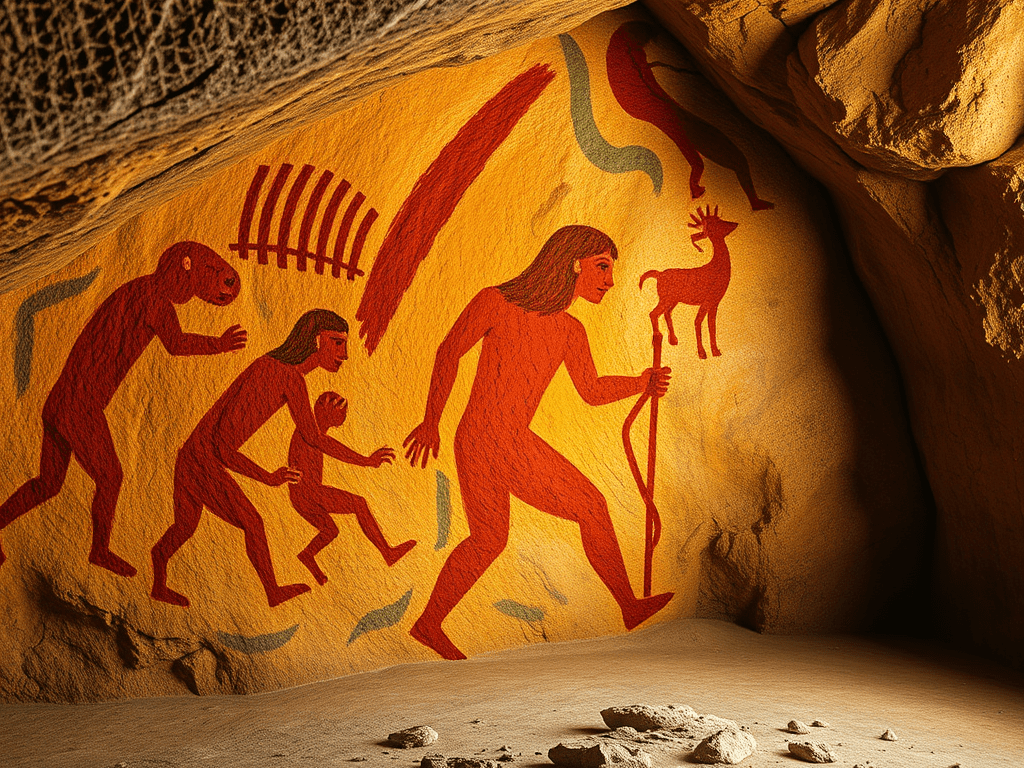
From the echoing chambers of Paleolithic caves to the digital canvases of AI, this article traces the evolutionary arc of human creativity. Discover how early art shaped cognition and community—and how today’s technological tools echo those ancient impulses, transforming the way we express, connect, and understand what it means to be human.
Beyond the Grave: Burial and the Human Condition in Deep Time
In the remote depths of caves from Iraq to Spain and South Africa, our ancient relatives confronted the mystery of death—and in doing so, revealed the first stirrings of what it means to be human. From Neanderthals laying flowers beside their dead in Shanidar Cave, to the “Pit of Bones” at Sima de los Huesos, to the enigmatic chamber of Homo naledi in Rising Star Cave, early burial practices speak volumes about empathy, symbolism, and social bonds in deep time. Join us as we explore how these funerary rituals illuminate the origins of memory, grief, and the human soul.
Unearthing “Pink”: A Transformative Discovery in Human Evolution – The Oldest Face of Western Europe
So I missed reporting on this news recently; and it’s pretty significant so I wanted to make sure that I addressed it. I also plan on making a quick summary video about it for sharing and educational enjoyment ASAP. Please learn, like, share, and subscribe! In the depths of northern Spain’s Sierra de Atapuerca, anContinue reading “Unearthing “Pink”: A Transformative Discovery in Human Evolution – The Oldest Face of Western Europe”
The World of Paleoanthropology (WOPA): A Journey of Discovery, Passion, and Purpose

The World of Paleoanthropology (WOPA) was created to make the fascinating field of human evolution accessible to everyone. Founded by Seth Chagi, WOPA began as a personal project to share knowledge and has grown into a global platform that bridges the gap between academic research and public understanding. By creating engaging content—such as videos, podcasts, and blog posts—WOPA brings the story of our ancient ancestors to life. Our mission is to foster curiosity, promote scientific literacy, and build a community of learners interested in our shared evolutionary heritage. Looking ahead, WOPA plans to expand its reach by organizing in-person events, partnering with educational institutions, and developing new digital tools for immersive learning. We invite everyone to join us on this journey, whether by participating in discussions, contributing content, or simply sharing our passion for paleoanthropology. Together, we can make the story of human origins accessible to all!
New Evidence for Ritualistic Burial by Homo Naledi

The journey of Homo naledi began with its discovery in the Rising Star Cave system, where these ancient remains have sparked debates about their significance in human evolution. Over time, new findings have added layers to our understanding, with the latest research proposing that Homo naledi may have engaged in purposeful burial practices. This challenges previous notions about cognitive abilities and cultural behaviors in early hominins, opening new avenues for exploration in the field of paleoanthropology.
 World of Paleoanthropology