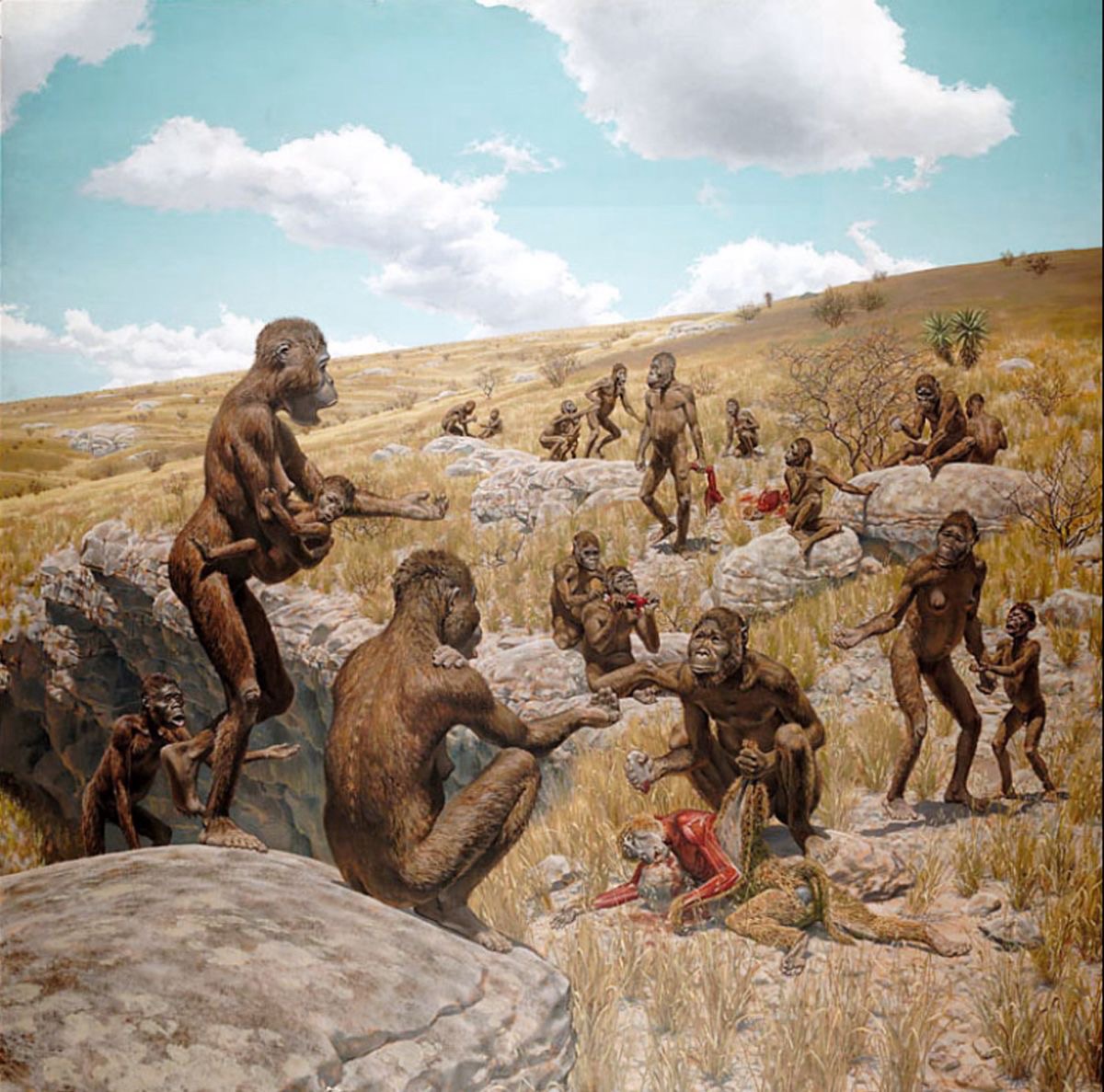
When we think about the origins of humankind, our minds often travel to the iconic sites of East and South Africa. Places like the Great Rift Valley, Olduvai Gorge, and Sterkfontein have given us the majority of our understanding of early hominins—those distant ancestors who walked the Earth millions of years ago. But what if I told you that our focus on these areas might have left out a significant chapter of our story? The vast expanse of West Africa remains a largely unexplored territory in paleoanthropology, and it could hold the key to unlocking a fuller understanding of our evolutionary history.
Why Have We Overlooked West Africa?
The reasons for the lack of paleoanthropological research in West Africa are complex and multifaceted. Firstly, the geological conditions in West Africa are less conducive to fossil preservation compared to the East African Rift Valley. Fossils need specific conditions to survive the passage of millions of years—think of stable environments, with little disturbance from tectonic activity or erosion. East and South Africa, with their arid climates and ancient, stable landscapes, have provided just that. In contrast, West Africa’s tropical climate and dense vegetation accelerate decomposition and make fossil discovery more challenging.
Another factor is the historical focus of paleoanthropological research. For decades, the spotlight has been on East and South Africa due to the early and monumental discoveries in these regions. From the discovery of Australopithecus afarensis (“Lucy”) to Homo habilis, these finds have naturally attracted more attention and resources. Consequently, West Africa has not been seen as a priority, despite its potential.
Political and economic factors have also played a role. Many West African countries have experienced periods of instability that make long-term, large-scale research projects difficult. Additionally, the funding for such research is often directed toward regions where there is a higher likelihood of success based on previous findings—meaning East and South Africa continue to dominate.
What Might Be Waiting in West Africa?
Despite these challenges, there is reason to believe that West Africa could hold significant, yet undiscovered, hominin fossils. The region has a rich archaeological record of later human activity, including evidence of early tool use, art, and complex societies. This suggests that ancient humans or their ancestors were indeed present, and where there were people, there might be fossils.
Moreover, the genetic evidence points to a complex population history in Africa, with different groups contributing to the gene pool over time. West Africa, with its unique environmental conditions and geographical isolation from the East, might have hosted populations that we have yet to discover. These populations could fill in crucial gaps in our understanding of how humans evolved and migrated across the continent.
The discovery of fossils in West Africa could also challenge the prevailing “Out of Africa” model, which posits that modern humans evolved in East Africa before spreading outwards. If significant hominin fossils are found in West Africa, it might suggest a more pan-African model of human evolution, where different populations across the continent contributed to the development of modern humans.
The Potential Impact of New Discoveries
If West Africa yields new hominin fossils, it could revolutionize our understanding of human evolution. First and foremost, it would broaden our view of the hominin family tree, which is currently based on a limited number of fossils from a small geographical area. We might discover new species or subspecies of hominins that lived in isolation from those in East and South Africa, leading to unique adaptations and evolutionary paths.
This could also have implications for our understanding of human diversity. The genetic diversity seen in modern humans might be traced back to different populations that evolved in various parts of Africa. Discovering fossils in West Africa could provide a direct link between these ancient populations and modern humans, helping us to understand the roots of our genetic diversity.
Moreover, such discoveries would have a profound impact on the field of paleoanthropology itself. It would encourage researchers to look beyond the traditional “hotspots” of human evolution and explore new areas. This could lead to more inclusive research practices, where the focus is not just on a few key regions but on the entire continent of Africa.
What Are the Challenges?
However, the path to these potential discoveries is not without its challenges. As mentioned earlier, the tropical climate of West Africa makes fossil preservation difficult. The dense vegetation and high levels of rainfall lead to rapid decomposition, meaning that fossils are less likely to survive over millions of years.
Even if fossils do exist, finding them will be no easy task. The region’s thick forests and difficult terrain make excavation efforts challenging. Researchers would need to develop new methods and technologies to effectively search for fossils in such environments. This might include remote sensing technologies, ground-penetrating radar, and other innovative approaches that can detect fossils buried deep underground.
Funding and resources are another significant hurdle. Paleoanthropological research is expensive, requiring significant financial investment for excavation, analysis, and conservation of fossils. Given the uncertainty of finding fossils in West Africa, securing funding for such projects can be difficult. However, the potential rewards of uncovering new fossils that could change our understanding of human evolution might attract new interest and investment in the region.
Looking to the Future
Despite these challenges, the potential of West Africa as a new frontier in paleoanthropology is too significant to ignore. As our understanding of human evolution continues to evolve, it is crucial that we explore all possible avenues to gain a fuller picture of our past. West Africa holds the promise of new discoveries that could reshape our understanding of where we come from and how we became who we are today.
The future of paleoanthropology lies not just in the continued excavation of well-trodden sites in East and South Africa but in the exploration of new and unexplored regions. West Africa, with its rich history and untapped potential, could be the key to unlocking new chapters in the story of human evolution.
In conclusion, while the challenges of conducting paleoanthropological research in West Africa are significant, the potential rewards are even greater. By expanding our focus beyond the traditional “cradles of humanity,” we can gain a more comprehensive understanding of our origins. Who knows what new species or evolutionary paths we might uncover in the vast, uncharted territories of West Africa? The only way to find out is to look—and the time to start is now.
 World of Paleoanthropology