Homo naledi, a species discovered deep within the Rising Star cave system in South Africa, has fascinated the scientific community and the public alike since its discovery in 2013. This small-brained hominin, with a unique blend of primitive and advanced features, has challenged our understanding of human evolution.
The discovery team, led by paleoanthropologist Lee Berger, initially unearthed over 1,500 fossil elements, representing at least 15 individuals. These findings were remarkable not just because of their age—estimated at around 250,000 years—but also due to the location. The fossils were found in the Dinaledi Chamber, accessible only through a narrow, nearly vertical chute, suggesting that these remains might have been intentionally placed there by other members of the species. This led to the provocative hypothesis that Homo naledi might have engaged in ritualistic behavior such as deliberate disposal of the dead—a behavior previously thought to be exclusive to much later hominins like Homo sapiens and Neanderthals.
Since the initial discovery, several papers and studies have contributed to our understanding of Homo naledi. The anatomy of H. naledi is a mosaic of traits: their hands and feet are surprisingly modern, capable of tool use and efficient bipedal locomotion, while their small brain and upper body retain more primitive characteristics. These traits raise questions about how they fit into the larger picture of human evolution.
The most recent paper, which is on preprint servers and is not pubished yet, has added a new layer to this ongoing debate. This study presents previously unpublished evidence that further supports the idea of intentional burial. The research includes detailed sedimentary analyses, showing clear signs of rapid burial, and the discovery of new articulated skeletons. The skeletons’ positioning suggests deliberate placement, which, along with advanced micro-CT scanning data, provides compelling evidence for this hypothesis. This new research strengthens the argument that Homo naledi may have engaged in complex behaviors that we previously believed were unique to later hominins.
If this hypothesis is confirmed, it could revolutionize our understanding of human cognitive evolution. The idea that a species with such a small brain could engage in such sophisticated behavior suggests that cognitive complexity and symbolic thinking may have evolved independently in different hominin lineages, or that these behaviors appeared earlier than we thought.
For the field of paleoanthropology, these findings underscore the importance of remaining open to new interpretations and the need for continued exploration of sites like Rising Star. As we uncover more about Homo naledi and other early hominins, our understanding of the human story becomes richer and more complex.
• Berger, L. R., et al. (2015). Homo naledi, a new species of the genus Homo from the Dinaledi Chamber, South Africa. eLife.
• Dirks, P. H., et al. (2015). Geological and taphonomic context for the new hominin species Homo naledi from the Dinaledi Chamber, South Africa. eLife.
• New paper: “New evidence for purposeful burial by Homo naledi in the Rising Star Cave System” (2023).
Hair exclusively on the top of the head has become one of the defining characteristics of being human. As such a visible trait, it raises questions as to how and why it evolved this way. It is a long story, with questions of convergence and unique population stressors, but there is not a lot of research into the specifics, especially compared to other traits such as skin pigmentation. What we do know, so far, is that modern hair can tell a story of adaptation, gene flow and sexual selection.
Homo erectus, 2 million years ago, had roughly the same body size and shape as modern humans, except for the brain. At some point during the following one million years, something happened that meant cranial capacity could expand hugely, paving the way for the larger brained specimens we are today.
Many arguments have been put forward as to why; nutrition, fire, all may have played a part in the expansion of brain size, but one which is not covered as frequently is hair on the scalp.
Running a large brain requires a lot of energy and produces extra heat in the head. Add to this the heat of the sun in Africa, and early humans were beginning to overheat. Sweat glands offered a way to cool down the body, but it came at the high price of water and precious electrolytes. Natural selection’s options were to restrict the size of the brain, which is what it had been doing so far, or find a new solution.
The solution it found was curly hair. Scientists have examined the functionality of hair, especially curly hair, and found that it helps a great deal with thermoregulation. Having tight curls protects from the sun’s radiation and will keep the head cooler than if the head were bald. Straight and moderately curly hair protects as well, but not as efficiently as tight curls. They found that it was the layer of air between the coiled hair and scalp which created an extra layer of protection.
And these coils not only protect from radiation, but minimise the amount of sweating an individual must do to cool to the same degree. In fact, bald men are found to sweat twice as much on their head to make up for the lack of hairy protection. In an environment where the sun is strong and water a precious resource, tight curls offer the perfect solution to overheating.
With the evolution of tight curls of hair on the top of the head, the brain was protected from overheating and could continue to create the extra heat as the brain became larger. It also allowed humans to forage in the midday heat, unlike the predators of the time.
We don’t know for sure the order of evolution here. Did curly hair occur after the loss of body hair, or did it evolve at the same time? Did it appear once, or convergently in multiple populations? Hopefully one day, more research into the evolution of hair can give us these answers.
A few irregularities do crop up in the history of humans though. If having hair on our scalps is so important to thermoregulation, why is male baldness so prevalent? It is genetic and hair loss occurs in half of the male population by the time they are 50 years old. The answer may be more hair. The presence of beards may account for the loss of scalp hair. With both in place, thermoregulation becomes harder and overheating is a risk. By removing one section of hair, the head is back to its steady cooling. According to a study which compared balding rates in different ethnicities, white (British and Irish) men had the highest rates of complete balding, which makes sense in a land where radiation from the sun is not as strong and overheating due to the sun is less of an everyday issue.
Across the globe, hair now exists in more than just tight curls, it ranges in shape, length and colour, and can be loosely tracked through populations. Gene flow contributes heavily to this distribution, but mutations have led to a few very interesting instances.
In the Solomon Islands, a single random mutation created blonde hair in the island’s community. This single mutation was easily carried through the small population and now 10% of the population now has blonde hair, and 26% carry the recessive gene. This blonde hair occurred separately to the blonde hair found in Northern Europe and provides evidence that blonde colouration occurred at least twice in the evolution in human hair.
Sean Myles via Loury 2012
But Europe is where we see a big range of colour and where most of the research into the evolution of hair has taken place.
The theory of why there is so much variation here, and why it has been retained in the North and East, goes back to when humans first entered ige-age Europe. 35,000 years ago, hunter-gatherers were expanding into new territories in Eurasia. 20,000-15,000 years ago, the glacial maximum split the population in two, creating two very different environments. In the East, life continued as normal, and the risks involved in hunting remained unchanged.
In the West, hunting was now risky and many males in a society with sexual division of labour did not make it back from long, dangerous hunting trips. This created an unequal balance of sex and while this often leads to a polygynous society, gathering in the tundra was scarce and males were unable to provide for more than one female, so monogamy became the only sustainable lifestyle for these groups. This meant that there was intense selection for the best mates from females. The theory goes that because of the restricted options, sexual selection was strong, and in this case, leant toward the “rarer” traits as they stood out more. In these populations, that meant lighter hair began to be specifically chosen and consequently spread throughout the continent.
Frost 2006
Based on research into the DNA which codes for hair, only red hair has been linked to lighter skin pigmentation, other colours seem to have no genetic benefit, suggesting it really was only sexual selection which made it so prolific in certain areas.
Hair itself has become a powerful tool for many, for expressing identity, for concealing or displaying their power and an identifier to those around them. In fact 72% of women surveyed in North America say that they feel empowered when they feel good about their hair. However, there has been limited research into the evolution of hair, both the spread of certain colours and textures, and any genetic benefits to having diverse hair across the globe. It might be that the answer is a lifting of selection pressures and a move into sexual selection, but without investigation, we won’t know for sure. It seems like this defining trait which holds so much power to individuals deserves a little more explanation.
Cabanac, M., & Brinnel, H. (1988). Beards, baldness, and sweat secretion. European Journal of Applied Physiology and Occupational Physiology, 58(1–2), 39–46. https://doi.org/10.1007/bf00636601
Frost, P. (2006). European hair and eye color: a case of frequency-dependent sexual selection?. Evolution and Human Behavior, 27(2), 85-103.
Lasisi, T., Smallcombe, J. W., Kenney, W. L., Shriver, M. D., Zydney, B., Jablonski, N. G., & Havenith, G. (2023). Human scalp hair as a thermoregulatory adaptation. Proceedings of the National Academy of Sciences, 120(24). https://doi.org/10.1073/pnas.2301760120
Yildirim, A. M., Yousaf, A., Fang, W., & Kolodney, M. S. (2022, November). A cross-sectional study of male balding patterns in people of color. Journal of the American Academy of Dermatology. https://www.ncbi.nlm.nih.gov/pmc/articles/PMC9511210/
Homo floresiensis, a strange species of hominin from the Indonesian island of Flores, has had its origins debated since its first descriptions in 2004. Some new fossils, discovered in 2013 but just now described, have added some new insight on the topic of where this species came from. The fossils, consisting of 2 teeth and a partial humerus, dated to about 700,000 years old (700 kya), provide evidence that H. floresiensis was a dwarfed species descended from Homo erectus, which inhabited the nearby island of Java, rather than descending from more basal hominins from Africa such as Homo habilis like what was previously thought by most.
Background on Homo floresiensis:
Homo floresiensis was a dwarf hominin species from the Indonesian island of Flores, which had an average height of 1 meter (~3 feet). It isn’t unusual for hominins to be this short, as many early hominins weren’t much larger than this, but this height is unusual considering the age of the species. The original specimens, including the type specimen, come from a site called Liang Bua cave, and were dated to about 80 kya, which is very recent. These remains from Liang Bua consist of 2 partial skeletons (LB1 and LB6/1), along with other postcranial elements like carpals and arm bones.
Stone tools associated with H. floresiensis are known from as old as 190 kya to as recent as 50 kya, however older material is known from a second site, called Mata Menge, with remains as old as 700 kya. The fossil and archaeological record of H. floresiensis is quite complete, and our understanding of the species is good, but one aspect that is still heavily debated is its origins. It is unclear whether or not this species originated from Homo erectus, a species that inhabited the nearby island of Java, that simply underwent insular dwarfism (evolving to be smaller-bodies on an island with limited resources), or if it originated from an earlier hominin species, such as Homo habilis, which left Africa earlier.
It makes more sense to think that H. floresiensis descended from H. erectus due to how close the 2 groups were to one another at around the same time, and the 2 species do share some traits such as a maximum cranial breadth at the supramastoid region, but certain traits found in the skeleton call this into question. The overall skeleton of H. floresiensis is very primitive looking, and is more similar to earlier Homo species or even earlier australopiths.
It had a small cranial capacity of ~380 cc and a small body size. These traits can be explained by insular dwarfism, but its limb proportions and features of the wrist bones are traits only found in hominins earlier than H. erectus. Analysis of the skeleton of H. floresiensis suggests that it diverged from earlier hominins sometime around the time of H. habilis.
Newly described material from Mata Menge gives a clearer look into earlier H. floresiensis, showing some unexpected traits and giving further insight on the origins of this strange species.
The LB1 Homo floresiensis partial skeleton
The New Fossil Material:
As mentioned, the original remains from Homo floresiensis come from a site called Liang Bua cave, dated to about 80 kya. This is very recent, but older fossils from Mata Menge may represent more basal H. floresiensis at around 700 kya. Up until this point, the only fossils described from this site consisted of one mandible fragment and 6 isolated teeth.
The new fossils consist of a partial adult humerus and 2 teeth. These remains come from the same sandstone layer (layer II) as the other remains from Mata Menge, and therefore are around the same age. The humerus (SOA-MM9) is remarkably small, measuring only 88 mm (~3 in) in length. However, it is a partial humerus, and so the length of the whole complete bone in life is estimated to be between 206-226 mm (~8-9 in). This is about 9-16% shorter than the humerus of LB1, the type specimen of H. floresiensis from Liang Bua. This humerus is the smallest known adult hominin humerus ever discovered. Despite its short length, it is clearly an adult humerus, making its size unique even for its species.
The SOA-MM9 humerus compared to the LB1 humerus
When compared to other hominin humeri other than H. floresiensis, it is shown to be even more unique. SOA-MM9 is distinct from the distal humerus of Australopithecus as it lacks aspects in the supracondylar ridge and crest and curvature in the sagittal plane, traits characteristic of Australopithecus distal humeri. In the cross-sectional shape of the humerus, it is most similar to basal Homo, such as Homo naledi and later H. floresiensis.
As for the teeth, the first tooth described is a maxillary canine tooth called SOA-MM10. This tooth is also very small, and is similar to Homo erectus and Australopithecus in its low distal shoulder. The second and more important tooth (SOA-MM11) is a mandibular 3rd molar. It is small, and very close to the teeth of Javan H. erectus due to its mesiodistally short crown. This is different from what is seen in Homo habilis, which is known to have a more mesiodistally elongated crown. Along with being very similar to Javan H. erectus, it is also somewhat unique from later H. floresiensis from Liang Bua. It possesses 5 cusps described as being in a ‘+’ arrangement, whereas Liang Bua Homo floresiensis possesses 4 cusps, giving them a more derived dentition.
The SOA-MM11 molar compared to the LB1 and LB6/1 Homo floresiensis molars, Sangiran 22 Homo erectus molars, and OH 13 Homo habilis molars
Implications:
There are several implications from these new fossils. First off, their smaller size and older age demonstrates that Homo floresiensis was small very early on in their evolution, potentially smaller than later members of the species. These fossils represent a basal early population of H. floresiensis that is less derived than the later specimens from Liang Bua. The molar is very similar to Javan Homo erectus, more so than it is to Australopithecus and Homo habilis, so this population may represent a dwarfed H. erectus population before the more derived dentition appeared in later H. floresiensis.
Under this, if H. floresiensis was closer to early pre-H. erectus Homo, then it must have convergently evolved to be more similar to the neighboring H. erectus population. This makes it very convincing that H. floresiensis is a dwarfed species descending from H. erectus.
This is plausible, as H. erectus is known in Java by at most 1.5 million years ago (1.5 mya). It’s very possible that H. erectus was in Flores by 1 mya (likely via accidental rafting), giving a 300k year period for the dwarfing to occur, leading up to the dwarfed Mata Menge material at 700 kya. Definitive H. erectus fossils from Flores must be found on Flores by at least 1 mya to further support this.
Conclusion:
This research by itself presents a convincing case that Homo floresiensis is a dwarfed descendant of Homo erectus, but it doesn’t explain the more basal features found in the postcrania that associate it with earlier Homo species. This doesn’t 100% prove H. floresiensis is a descendent of H. erectus, but it is another piece of the puzzle, a very large and messy puzzle. As it stands right now, H. floresiensis is a messy mix of basal and derived characteristics, making its origins very unclear. Further evidence will be needed to ‘prove’ either hypothesis, but this research certainly brings us closer to figuring out the origins of H. floresiensis.
Sources:
Kaifu, Y., Kurniawan, I., Mizushima, S., Sawada, J., Lague, M., Setiawan, R., Sutisna, I., Wibowo, P. U., Suwa, G., Kono, T. R., Sasaki, T., Brumm, A., van den Bergh, D. G. (2024). Early evolution of small bodied size in Homo floresiensis. Nature Communications, 15, 6381. https://doi.org/10.1038/s41467-024-50649-7
Orr, M. C., Tocheri, W. M., Burnett, E. S., Awe, D. R., Saptomo, W. E., Sutikna, T., Jatmiko, Wasisto, S., Morwood, J. M., Jungers, L. W. (2013). New wrist bones of Homo floresiensis from Liang Bua (Flores, Indonesia). Journal of Human Evolution, 64(2): 109-129. https://doi.org/10.1016/j.jhevol.2012.10.003
van den Bergh, D. G., Kaifu, K., Kurniawan, I., Kono, T. R., Brumm, A., Setiyabudi, E., Aziz, F., Morwood, J. M. (2016). Homofloresiensis-like fossils from the early Middle Pleistocene of Flores. Nature, 534, 245-248. https://doi.org/10.1038/nature17999
Argue, D., Morwood, J. M., Sutikna, T., Jatmiko, Saptomo, W. E. (2009). Homo floresiensis: a cladistic analysis. Journal of Human Evolution, 57(5): 623-639. https://doi.org/10.1016/j.jhevol.2009.05.002
At The Story of Us, our mission has always been to bring diverse perspectives to the forefront of discussions about human origins and anthropology. We believe that every voice matters in the quest to understand our shared history, and today, we are reaching out to early career researchers from Africa to join us in this journey.
Why Your Voice Matters
For too long, the voices of African researchers, especially those early in their careers, have been underrepresented in global conversations about anthropology and human evolution. This lack of representation means that the rich knowledge and unique perspectives from the very continent that is the cradle of humanity are not being fully shared with the world. We want to change that.
Who We’re Looking For
We are seeking early career African researchers in anthropology, archaeology, paleontology, genetics, and related fields. Whether you are conducting groundbreaking research on the origins of Homo sapiens, exploring the rich archaeological sites across the continent, or studying the diverse cultures that make Africa so unique, we want to hear your story.
What You Can Expect
The Story of Us is not just a podcast—it’s a platform where your research, your insights, and your voice can reach a global audience. By coming onto the show, you will have the opportunity to:
• Share Your Research: Discuss your work, its implications, and why it matters on a global scale.
• Highlight Your Perspectives: Bring to light the unique challenges and opportunities you face as a researcher in Africa.
• Inspire the Next Generation: Encourage young Africans and others around the world to pursue careers in anthropology and related fields.
How to Get Involved
If you’re an early career researcher from Africa and you’re interested in being a guest on The Story of Us, we’d love to hear from you. Please contact us at worldofpaleoanthropology@gmail.com with a brief introduction of who you are, your area of research, and what you would like to discuss on the show.
Join Us in Making History
This is more than just an opportunity to share your work—it’s a chance to make history. By amplifying the voices of African researchers, we can contribute to a more inclusive and comprehensive understanding of our past, and in turn, help shape a more informed and connected future.
We look forward to hearing from you and bringing your voice to the global stage.
I’m thrilled to share some exciting updates and future plans for the World of Paleoanthropology (WOPA). Our mission has always been to make the fascinating field of paleoanthropology accessible and engaging to a diverse audience. With these new initiatives, we are set to expand our reach and impact even further.
Expanding Our Reach
Our primary goal is to reach a broader audience and bring the wonders of human evolution to everyone, from students to enthusiasts. We plan to achieve this through a multi-faceted approach:
1. Educational Programs: We are developing comprehensive educational programs tailored for schools and community groups. These programs will include interactive sessions, workshops, and virtual tours of significant paleoanthropological sites.
2. Digital Content: We’re enhancing our digital presence with more video content, podcasts, and online articles. The success of our YouTube series, “The Story of Us,” has shown us the power of digital media in spreading scientific knowledge. Expect more in-depth episodes, interviews with experts, and live Q&A sessions.
3. Community Engagement: We’re launching initiatives to engage directly with communities. This includes public lectures, community science days, and collaborations with local museums and educational institutions.
Leveraging Technology
In line with our commitment to innovation, we’re incorporating advanced technologies to enrich our content and reach:
1. Virtual Reality (VR) Experiences: Imagine walking through ancient hominin habitats or witnessing a day in the life of early humans. Our VR experiences will make this possible, providing immersive learning opportunities.
2. Artificial Intelligence (AI) and Machine Learning (ML): We’re exploring the use of AI and ML to enhance our educational tools. From interactive quizzes to AI-driven content recommendations, these technologies will make learning more personalized and effective.
3. Interactive Platforms: We are developing interactive platforms where users can explore fossil databases, participate in virtual digs, and contribute to citizen science projects.
Inspiring the Next Generation
A key focus of our expansion is to inspire the next generation of scientists and science communicators. We’re launching initiatives aimed at students and young researchers:
1. Mentorship Programs: We will connect budding paleoanthropologists with experienced mentors in the field. This will provide invaluable guidance and support to the next generation.
2. Research Opportunities: Through partnerships with universities and research institutions, we aim to offer research opportunities for students. This includes fieldwork, lab work, and collaborative projects.
3. Youth Science Communication: Encouraging young people to share their passion for science is crucial. We will provide training and platforms for students to develop and showcase their science communication skills.
A Personal Note
As I near the completion of my Bachelor of Arts (BA) program at Arizona State University, I am excited to dive deeper into paleoanthropology. My undergraduate thesis explores how AI and ML can be used to reach underprivileged communities with science education, further aligning with our mission at WOPA. Moving forward, I plan to continue my education in graduate school, where I hope to expand my research and contribute even more to the field of paleoanthropology.
Join Us on This Journey
I invite you all to join us on this exciting journey. Whether you’re a seasoned researcher, a curious student, or simply someone fascinated by human history, there’s a place for you at WOPA. Together, we can uncover the secrets of our past and inspire a future generation of explorers.
Thank you for your continued support, and stay tuned for more updates and opportunities to get involved!
I plan on making a long form video on this topic soon, not only to update everyone on what is going on, as thee is a big conference going on right now in South Africa as I write this surrounding Homo naledi and its research. So there is more to come, and I want to explain the entire situation from start to finish.
For now, I want to say this about what has been said.
Homo naledi is an ancient hominin species, dating to around 300kya, found only in the Rising Star Cave System by Steven Tucker and Rick Hunter. Berger et al spent years excavating, being careful about their claims of what happened, being meticulous.
Something very special is going on down in Rising Star, there is no doubt about that. Naledi was doing amazing things. But what were those things, and more importantly, what evidence do we have for them vs. narrative?wo
Less team claims they carved symbols on the walls, which we have seen supposed images of (and there are plenty more), and that they controlled fire (the least debatable), and that they even, in the literal sense, buried their dead ritualistically.
Many former researchers on the #naledi team think that purposeful mortuary practice was done here, and that bodies were potentially ‘placed’ in certain areas, as the fact that all dentition belongs to one sex is very meaningful. It means a lot. But what?
Even if Naledi did not do all the things the team is claiming, or at least not in the same way, and we will not know until more empirical work is done (which is being done now, I can assure you), we will know no more. Until then, no, Naledi did not ‘bury’ their dead.
The tale of Homo naledi will go on for many decades, I am sure, and it is our duty to report on what is going on from all sides, to inform the public, to pull back misconceptions, and inform on new truths. That’s the way forward.
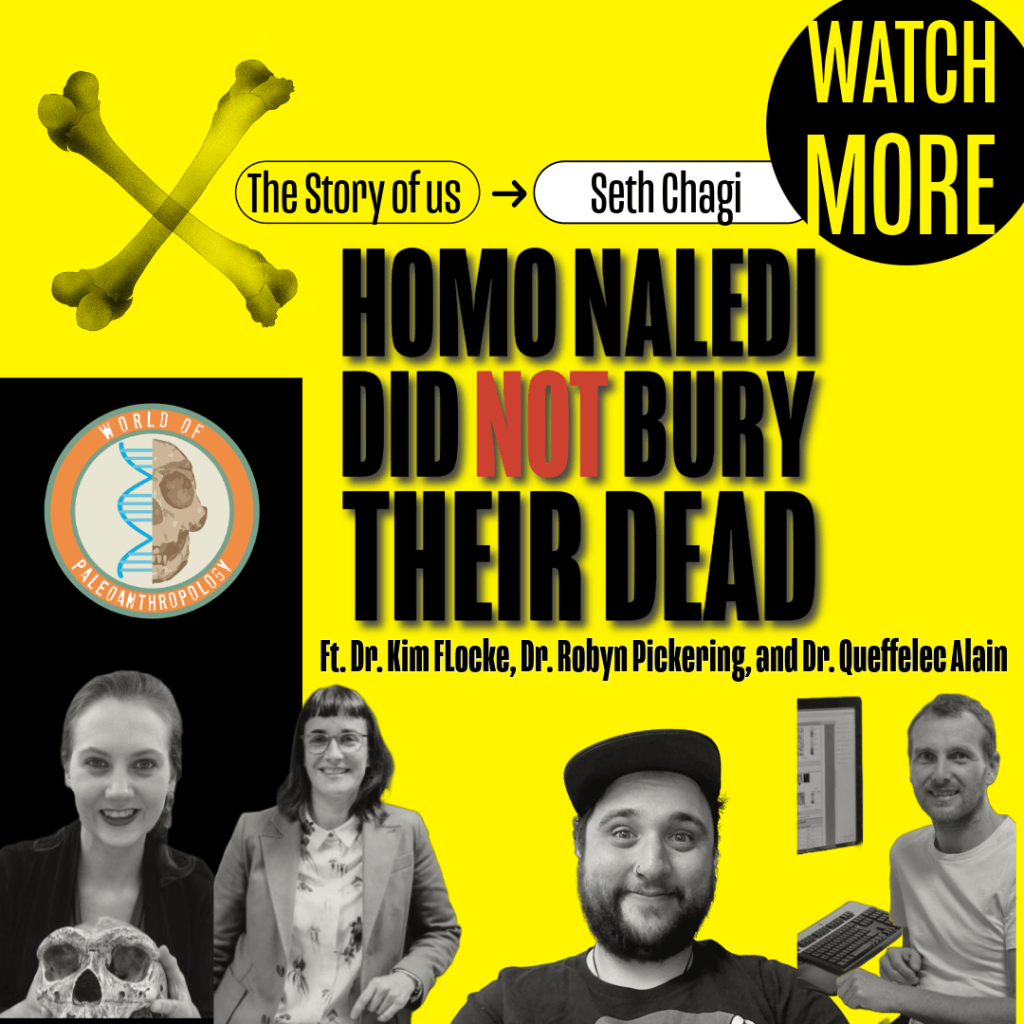
On August 7th, I am hosting three researchers who have looked at the data and concluded that there was not proper evidence to support a true burial. Placement, however, as we see with #Leti and #Neo, is a different story. #RisingStar is an amazing site. No need for fluff.
This does not excuse the poor way in which the science was done, or shown off to the public, and there is no excuse for firing fossils off into space as Berger did, but as far as the actual site goes, all egos taken out of it, there is so much to discover and learn.
If one were to ask me, out of all the things that were going on, we have a species that was navigating these caves, doing something, somehow, for some purpose. They didn’t just end up there. We know that. So now the question is how and why.
Will we ever have adequate answers? Not as long as the peer review process is skirted by the team, having their papers rejected by respected journals so they could “publish preprints” for the public for comment prior to revisions or peer review, giving the public a false idea of what was going on, not to mention the awful Netflix documentary, that I can only recommend if you want to see what it’s like in Rising Star – for that it’s great.
Time will tell how much of this is snake oil, and how much is the largest paleoanthropological discovery of the century!
Hello fellow explorers of the human mind! Today, we’re going to delve into a topic that’s both fascinating and controversial—IQ scores and why they might not be the best measure of intelligence. As a science communicator, I’ve always been intrigued by how we measure the abstract concept of intelligence. Let’s embark on this journey to unravel the mysteries behind IQ scores.
The Quest to Define Intelligence
Before we critique IQ scores, let’s take a moment to understand what we’re trying to measure. Intelligence is often thought of as the ability to learn, understand, and apply knowledge to solve problems. However, defining intelligence is like trying to capture smoke with your bare hands—slippery and elusive.
**Why is defining intelligence so challenging?**
1. **Multifaceted Nature:** Intelligence encompasses a wide range of cognitive abilities, including memory, reasoning, problem-solving, and creativity.
2. **Cultural Differences:** Different cultures may value certain cognitive skills over others, making a universal definition difficult.
3. **Subjective Interpretations:** What one person considers intelligent, another might not.
Since intelligence is complex and not universally defined, how can we expect a single test to measure it accurately?
The Birth of the IQ Test
The IQ (Intelligence Quotient) test was originally developed in the early 20th century by Alfred Binet to identify children in need of educational assistance. It was never intended as a definitive measure of intelligence but rather as a tool to assess certain cognitive abilities.
**How did IQ tests become so prominent?**
– **Standardization:** IQ tests provided a standardized way to compare cognitive abilities across individuals.
– **Quantification:** People love numbers, and IQ scores offered a quantifiable measure of intelligence.
– **Misinterpretation:** Over time, society began to view IQ scores as a direct representation of a person’s intellectual capability.
The Limitations of IQ Tests
IQ tests primarily focus on logical reasoning, math skills, and language comprehension. While these are important cognitive skills, they represent only a fraction of what constitutes intelligence.
**Here are some critical limitations of IQ tests:**
1. **Narrow Scope:** IQ tests do not account for emotional intelligence, creativity, or practical problem-solving.
2. **Cultural Bias:** Many IQ tests are designed based on Western education systems and may not accurately reflect the intelligence of individuals from different cultural backgrounds.
3. **Test Anxiety:** Some people do not perform well under test conditions, which can affect their scores.
4. **Fixed Mindset:** IQ tests suggest a fixed level of intelligence, disregarding the idea that intelligence can grow with experience and education.
Intelligence Beyond IQ
If IQ isn’t the whole story, what other factors contribute to intelligence? Let’s explore a few:
– **Emotional Intelligence (EI):** This involves the ability to understand and manage emotions, both your own and others’. High EI can lead to better relationships and effective problem-solving in social contexts.
– **Creative Intelligence:** The capacity to think outside the box and generate innovative solutions. This form of intelligence is vital in arts, sciences, and everyday life.
– **Practical Intelligence:** Sometimes called “street smarts,” this is the ability to handle real-world challenges effectively.
– **Multiple Intelligences:** Howard Gardner’s theory of multiple intelligences suggests there are various kinds of intelligence, such as musical, bodily-kinesthetic, and spatial intelligence.
Each of these aspects of intelligence provides a more holistic view of human cognitive abilities, highlighting the limitations of relying solely on IQ scores.
Why We Need a New Approach
The fixation on IQ scores can lead to several negative consequences:
– **Limiting Potential:** Believing that intelligence is fixed can discourage people from trying to improve or learn new skills.
– **Discrimination:** IQ scores have been used to justify discrimination and inequality, ignoring the diverse talents and abilities people possess.
– **Misleading Indicators:** High IQ scores might not translate to success in real-life scenarios, where emotional intelligence and adaptability often play a crucial role.
Moving Forward: Embracing a Broader View of Intelligence
It’s time to shift our perspective on intelligence. Here’s how we can embrace a more comprehensive understanding:
1. **Diversify Assessment Methods:** Use a combination of tests that measure different aspects of intelligence, including emotional and practical intelligence.
2. **Encourage Growth Mindsets:** Foster environments that emphasize learning and improvement rather than fixed abilities.
3. **Value All Intelligences:** Recognize and appreciate the unique talents and skills individuals bring to the table, beyond traditional academic abilities.
4. **Cultural Sensitivity:** Develop assessment tools that are culturally inclusive and respect the diverse ways intelligence manifests worldwide.
By adopting a more inclusive and multifaceted approach to understanding intelligence, we can better appreciate the richness of human capabilities.
Conclusion
As we wrap up this exploration of IQ scores and intelligence, remember that intelligence is as diverse as humanity itself. An IQ score might give a glimpse into certain cognitive abilities, but it doesn’t capture the full spectrum of what it means to be intelligent. Let’s continue to explore, question, and expand our understanding of intelligence in all its forms.
Remember, fellow explorers, intelligence isn’t just about numbers; it’s about the myriad ways we learn, adapt, and innovate in our ever-changing world. Keep questioning and keep learning!
Sources
1. Gardner, H. (1983). *Frames of Mind: The Theory of Multiple Intelligences*. Basic Books.
2. Goleman, D. (1995). *Emotional Intelligence: Why It Can Matter More Than IQ*. Bantam Books.
3. Sternberg, R. J. (1985). *Beyond IQ: A Triarchic Theory of Human Intelligence*. Cambridge University Press.
Mark your calendars for the week of August 8th! Join us for a great conversation as top authors reveal groundbreaking insights on Homo naledi. Did they bury their dead or not? Don’t miss the chance to hear all three authors discuss their latest findings and interpretations. It’s going to be an enlightening and thrilling event!
Be there to explore these fascinating revelations with us!
My name is Seth Chagi, and I am a passionate science communicator and paleoanthropologist dedicated to making the study of human origins accessible to a diverse audience. As the founder of the World of Paleoanthropology and host of “The Story of Us,” I aim to bridge the gap between scientific research and public understanding.
I’m reaching out to you, esteemed educators and professors, to help me in a new and exciting initiative. As we know, the next generation of scientists holds the key to future discoveries and innovations. To celebrate and encourage this new wave of talent, I am inviting graduate students to join “The Story of Us” podcast. This is a fantastic opportunity for emerging scholars to share their research, insights, and enthusiasm with a broader audience, right alongside established researchers.
Here’s how you can help: Please share this invitation with your students who are passionate about paleoanthropology, human evolution, or related fields. Let’s give them the platform they deserve to contribute to the ever-evolving story of humanity.
I firmly believe that showcasing young voices will not only enrich our discussions but also inspire others to pursue scientific exploration and communication. Together, we can support the next generation of researchers and communicators.
Interested students can reach out to me directly at worldofpaleoanthropology@gmail.com.
Thank you for your support in nurturing the future of science!
Warm regards,
Seth Chagi Host, The Story of Us World of Paleoanthropology
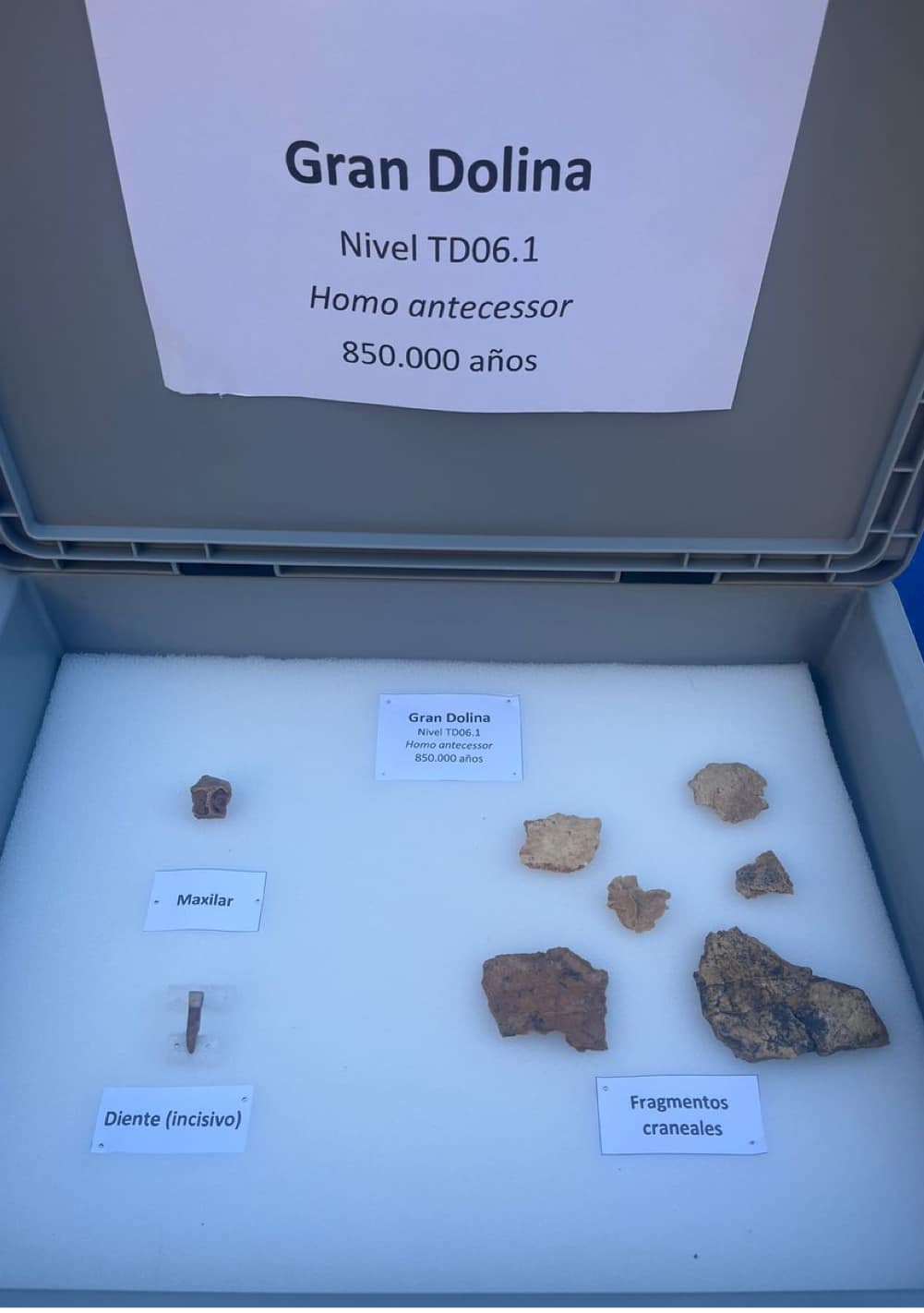
This week, there is an air of excitement within the paleoanthropology community as groundbreaking discoveries have been made at the Gran Dolina site in Atapuerca, Spain. Researchers have unearthed remarkable new Homo antecessor remains, providing fresh insights into the evolutionary journey of our early ancestors.
Key Discoveries
New Fossil Finds
The team has uncovered several well-preserved fossils, including partial skulls, jawbones, and teeth. These remains offer invaluable insights into the physical characteristics and developmental stages of Homo antecessor, a species that existed approximately 800,000 years ago.
Implications for Human Evolution
The new discoveries at Gran Dolina carry significant implications for several reasons:
1. Anatomical Insights: The well-preserved fossils enable scientists to study the anatomical features of Homo antecessor in greater detail, aiding in the understanding of the evolutionary links between earlier hominins and modern humans.
2. Evolutionary Timeline: These findings contribute to refining the timeline of human evolution, providing a clearer picture of when and how different hominin species emerged and interacted.
Captivating Stories from the Past
Imagine standing in the same place where Homo antecessor once roamed, utilizing tools to navigate a challenging environment. These discoveries transport us back in time, helping us piece together the story of our ancient relatives. The meticulous work of the researchers at Gran Dolina not only unearths fossils but also breathes life into the tales of our past.
Stay Tuned for More Updates
The discoveries at Gran Dolina herald the beginning of a new chapter in our comprehension of human evolution. As researchers delve into the findings, we can anticipate further revelations about Homo antecessor and their position in our family tree. Stay tuned for updates and detailed analyses as the narrative unfolds.
For a deeper immersion into the realm of paleoanthropology and to stay informed about the latest discoveries, ensure to follow our blog and subscribe to our newsletter. Together, we’ll continue to explore the captivating journey of human evolution.










 World of Paleoanthropology