Predation Upon Hominins-Who Ate Our Ancestors?-Guest Post By Mekhi

Introduction

The natural world is very often seen as dark and violent, a ‘dog-eat-dog world’. Though this isn’t always an accurate representation of nature, it isn’t entirely false either. Predatory animals will hunt and eat whatever they need to survive, to the extent of what they can hunt. We humans often like to think that we’re safe from these dangers, that we’re above the other animals and aren’t in danger from other predators we share this planet with. However, even a deep look into this will show that this isn’t the case, and never has been.

Shark Attacks are rare today in humans, but not completely unseen. Roughly 10 people a year are killed in shark attacks worldwide. Oftentimes these are surfers, who the sharks mistake as seals or sea lions, an animal they do commonly hunt. Archaeological evidence of shark attacks are even rarer. However, one example was described in 2021.

Evidence of a 3,000 year old shark attack has been uncovered from Japan, going back to the hunter-gatherer Jōmon period of the Japanese archipelago. This individual’s remains, known as Tsukumo 24, were buried at the Tsukumo site near Japan’s Seto Inland Sea, where modern shark attacks are relatively common to this day. From their remains, 790 perimortem injuries were found, characteristic of shark attacks. These injuries include deep bone gouges, punctures, cuts, and blunt force fractures. Most of the damage was on their pelvis, legs, shoulder, and arms. Along with this, their left hand and right leg were missing. 

The right leg was present, but was upside down in the grave, and was not in articulation with the rest of the body. The distribution of the wounds suggest that the individual was alive during the attack, rather than being scavenged. The attack was fatal, and this individual was likely eventually killed due to blood loss and shock. The shark species responsible for the attack was most likely either a white shark (Carcharodon carcharias) or a tiger shark (Galeocerdo cuvier). Whatever remained of this individual’s body seems to have been retrieved and buried after. 

The Remains of a 3,000 Year Old Japanese Shark Victim

This is a good example of humans being hunted in recent archaeological history, but even today, humans aren’t safe from other predatory animals. 600-800,000 human deaths are caused by tigers in Asia every year.

In Some places in India, leopards are massive threats, killing more people than all other cats combined. African cats aren’t as much of a threat, with cheetahs almost never hunting people, and lions rarely (but not never) hunting people, but it is a big problem in Asia.

A big reason for why predation is decreased in modern humans is because of our shelter and technology, protecting us from these dangers. Our other primate cousins however, do not have these luxuries, and face many more dangers. Not just our modern cousins however, but also our extinct ancestors and relatives. Examples of predation upon our ancestors are very prevalent throughout the fossil record. 

The Predators of Extant and Extinct Primates 

One of the most common predators of primates today are leopards. In Ethiopia, 7 encounters were recorded over a span of 6 years between geladas (Theropithecus gelada) and leopards (Panthera pardus).

Actual predation was rare, only being observed 1 time, but interactions occurred multiple times, typically ending with fear responses from the geladas, including distress calls and fleeing. Predation is rare towards baboon species due to their large social groups, known as multilevel societies, in which there are many individuals present. This suggests that having large social groups is advantageous to keep away predators. This lines up with the tendencies of leopards to hunt galadas in smaller social groups. Leopard hunting has also been observed in olive baboons (Papio anubis) as well, along with vervet monkeys (Chlorocebus pygerythrus). 

Leopards hunt baboons most commonly at night. During the late Miocene to the Pliocene, around 3-7 million years ago, this would have provided a reason for our hominin ancestors to stay in the trees at night, to avoid these nocturnal predators. This didn’t save every hominin however. 

SK 54

The skull cap fragment of a juvenile Paranthropus robustus, an extinct hominin relative, was uncovered in 1949, in a South African cave called Swartkrans, dating to 1.8-1.3 mya. On the back of the skull cap, near the lambdoid suture of the occipital bone, there are two puncture marks, matching the bite marks of a leopard. It seems that this individual was dragged away by the head by a leopard.

In the same deposit as SK 54, the mandible of a leopard was uncovered, known as SK 349. The canines of SK 349 fit in perfectly to the punctures of SK 54.The species of leopard that did this was a modern leopard (Panthera pardus), the same species that hunts modern primates today. This species arose in Africa during the Pleistocene, and would very soon migrate out of Africa to colonize places throughout Eurasia, with only the African variants still around today. 
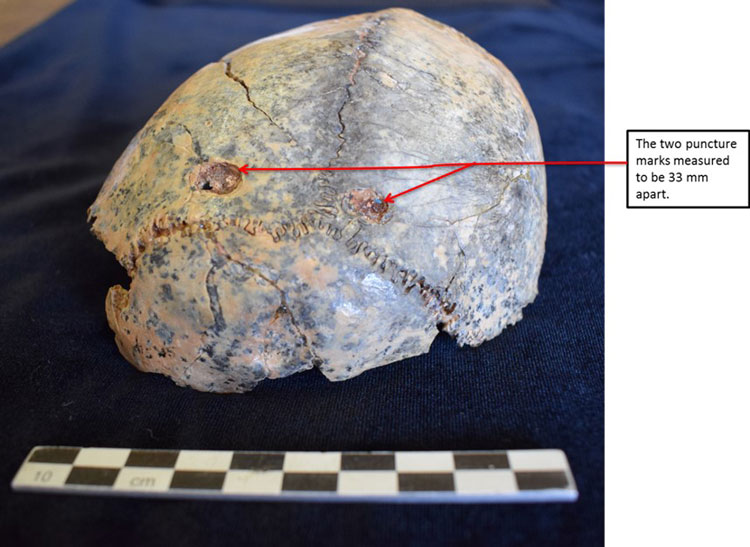
The SK 54 Paranthropus robustus Skull Cap

Off the ground, another predator of primates today and extinct hominins is the African crowned eagle. 

The Taung Child 

A very big threat to African primates are predatory birds, specifically the African crowned eagle (Stephanoaetus coronatus). These eagles are very powerful and capable of killing mammals larger than themselves, including baboons.

In a 37 month study from Ngogo, Kibale National Park, 81% of the kill samples were monkeys. Redtail monkeys (Cercopithecus ascanius) were especially common, making up 66% of the identifiable monkey remains. Other research from the Tai Forest has collected 1,200 remains of animals hunted by these eagles. 669 of these were primate remains.

These eagles leave consistent taphonomic signatures, making them easily identifiable. The hind limbs and cranial bones often preserve well, while other parts, such as the ribs, vertebrae, carpals, and tarsals do not. Understanding the taphonomy of modern primates caused by crowned eagles, we can identify when this was the cause of death for extinct primates. 

The skull of a juvenile Australopithecus africanus from South Africa, dating to 2-3.2 million years ago, who was about 3 years old when it died, unfortunately seems to have been killed by this species of eagle. 

This skull is very significant for understanding human evolution, especially the brain development of our early ancestors, but is also important for understanding how these species interacted with their environments, and the threats they faced there.

The skull, known as the Taung Child, possesses talon marks in its orbits, identical to those left by crowned eagles in modern primates. Scratch marks are also present on the rest of the skull, including the frontal, temporal, parietal, and occipital bones. It seems that the Taung Child was carried off by a predatory eagle, and was eaten in its nest, where the skull would fall to the ground and be preserved.
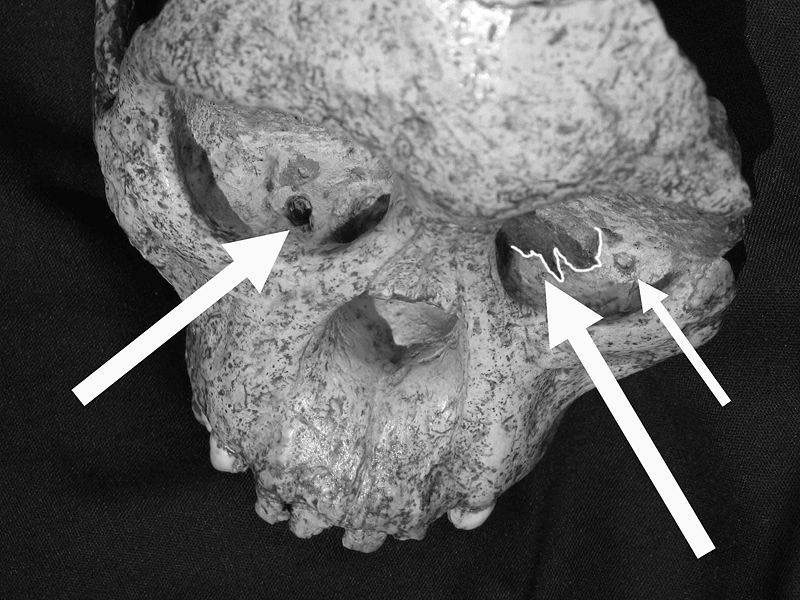
The Taung Child Cranium With Eagle Talon Marks in the Orbits

OH 8

Another very common predator in Africa are crocodiles. 

Crocodiles do hunt primates, but not as common as other large mammals. When they do hunt primates, they typically ambush them from the waters edge, just like what they do with other mammals. One example was observed in Indonesia in 1984.In this case, a juvenile crab-eating macaque (Macaca fascicularis) was ambushed by a crocodile when sitting at the edge of a river bank. This seems to be what happened to a juvenile Homo habilis.

The OH 8 specimen is a foot belonging to a subadult or juvenile Homo habilis, based on the fusion of the metatarsals. This specimen is very important for understanding the locomotion of Homo habilis, as the arches in the feet are very significant for bipedal walking.The specimen is also possibly associated with the OH 7 mandible and the OH 35 leg bone. More interesting however, is the evidence of a crocodile attack in these fossils. 

The foot, along with the possibly associated leg bone, bear extensive tooth marks indicative of a crocodile attack. The foot seems to have been disarticulated and torn from the rest of the body by the crocodile. The leg bone was found in a different deposit, and therefore may not belong to the same individual. 

The fossils come from the FLK 22 FLK NN 1 fluvial sediments from the Olduvai paleo lake bed from Tanzania, dating to 1.8 mya. The crocodile that hunted OH 8 could have been a modern species of crocodile, but also could have been one of the many extinct crocodile species from the area. During the Pliocene and Pleistocene, there was a great diversity of crocodilians. One example of this is a species of horned crocodile from Oldovai Gorge, Tanzania, right where OH 8 was discovered. This species is characterized by large triangular ‘horns’ over its ears, along with a deep snout.

This species is very similar to modern crocodiles in the genus Crocodylus. The fossils also date to 1.8 million years ago, right alongside OH 8.This is the largest species of crocodile in the area, and very likely was the species that hunted our ancestors who lived alongside it. 

Along with extinct crocodiles, there were many other extinct predators that are no longer alive today that would have been big threats to extinct hominins.

The OH 8 Homo habilis Foot Specimen

All the predators we’ve discussed so far, aside from the crocodile, are animals that are still alive today. However, there were plenty of animal species that our ancestors lived alongside that would have posed a major threat to them. 

Ancient Predators

Most of the extinct predators from eastern and southern Africa were carnivorans, mainly big cats, but also including hyenas, canids (dogs), genets, mongooses, and extinct predatory otters. One site in Kenya preserved remains of all these animals, including orolutra sp., Enhydriodon (2 species), Genetta sp., Helogale sp., Homotherium sp., Dinofelis petteri, Felis sp., and Parahyaena howelli, dating to aout 5.3 mya. Some of these species are still around today, and not all would have hunted our ancestors, but the carnivoran diversity of eastern Africa during the Pliocene is nonetheless clear.

Enhydriodon, a Lion-Sized Otter Species From the Miocene-Pliocene of Ethiopia

Down in South Africa, in Cooper’s Cave, a cave site known for Paranthropus robustus remains, many carnivoran remains are known as well.

These include mostly felids, such as Megantereon, Dinofelis, Panthera, Acinonyx, along with the small genera Caracal and Felis. Some of the most dangerous species from this site include the saber-toothed cats, Megantereon, Dinofelis, and Homotherium.

The saber-toothed cats belong to the group machairodontinae, a very diverse and successful felid lineage. Basal (early) members of this group include Promegantereon, Machairodus, Nimravides, Dinofelis, Metailurus, while more derived members include Megantereon, Amphimachairodus, Homotherium, Xenosmilus, and most famously, Smilodon

The name eumachairodontinae has been proposed for these later species. Sub groups within this group include the tribes smilodontini, homotherini, and metalurini. The famous saber-teeth are exclusive to the later eumachairodonts, but other traits define the group machairodontinae as a whole. Multiple later machairodonts, or eumachairodonts, were in Africa at the same time as our earlier ancestors, and very likely hunted them.

Megantereon 

Megantereon was a species of machairodontid that lived throughout Afro Eurasia, and even as far as North America, dating from about 2-4.2 million years ago.This species possesses at least 3 species (M.‭ ‬cultridens,‭ ‬M.‭ ‬falconeri and M.‭ ‬whitei) but possibly contains up to 13 species.There has been debate on whether different specimens represent different species, or are just examples of sexual dimorphism.

Their size averaged at about 3 feet long, though it varies slightly between species.Megantereon possessed large upper canines, but not as large as other related species, like Smilodon, giving it the name the “dirk-toothed cat”.This genus was very large and robust, suggesting that it was an ambush predator rather than a pursuit predator like a cheetah. 

The species from Africa, Megantereon whitei, would have been the species that hunted our ancestors. Remains of this species are known mostly from Africa, though some fossils have been found as far as central Italy, showing evidence of faunal dispersal during the Plio-Pleistocene transition. Remains of African Megantereon, from northern Kenya dating to 3.5 mya, have been given the name Megantereon ekidoit, representing a possible second species of this genus in Africa.

A Size Chart Chart Comparing a Human and Megantereon

Dinofelis

Another machairodont in Africa that lived alongside our ancestors was Dinofelis. Dinofelis is known from the same geographical range as Megantereon, dating from 5-1.2 mya. Belonged to the tribe metalurini, along with the other genera Metailurus, Adelphailurus, Stenailurus and Fortunictis.

There are up to 8 species of this genus, including D. cristata, D. diastemata, D. barlowi, D. paleoonca, D. darti, D. piveteaui, D. petteri, and D. aronoki, many of which come from Africa. The African species had a range from north Africa, all the way through down into South Africa. 

Caves in South Africa possess Dinofelis remains alongside other hominins like Australopithecus africanus and Paranthropus robustusDinofelis had teeth very similar to a modern cheetah, specialized for slicing through flesh. Very likely hunted the hominins it lived alongside. 

The Skull of Dinofelis

Homotherium

The last major big cat that hunted our ancestors is the infamous scimitar cat, Homotherium. Homotherium lived for the longest time out of the 3 big cats, living from 5 million years to 10,000 years ago, one of the most successful machairodonts. Along with a large temporal range, Homotherium had a great geographical range, living in the same places as Megantarion and Dinofelis. Later members of the species outside of Africa would have hunted large ice age mammals, like wooly mammoths, and even early Homo sapiens.

Homotherium was very large and robust, with powerful limbs and large teeth, and got up to 7 feet long, weighing 500 pounds.

Homotherium was a very diverse genus as well, with up to 15 species, such as Homotherium latidens, Homotherium ischyrus, Homotherium venezuelensis, and the African species, H. aethiopicum. Homotherium latidens is the species that would have interacted, and hunted modern humans throughout Eurasia.

Throughout the lifespan of this genus, it would have lived alongside our earliest ancestors, such as Australopithecus in Africa, all the way to modern humans in Eurasia, along with some of our other relatives, such as Homo heidelbergensis.

Relatives of cats, hyenas, would have also posed a threat to our ancestors, especially the hunting hyena, Chasmoporthetes. 

Chasmaporthetes and Other Hyenas

Chasmaporthetes was a diverse genus of extinct hyena, which lived from 4.9 million years to 780,000 years ago, living throughout Afro Eurasia and into North America as well. The most well known species was Chasmaporthetes ossifragus, which lived in North America. It was a very fast and powerful hunter, preying upon other mammals like llamas, camels, deer, peccaries, and other small mammals. The species Chasmaporthetes lunensis ruled in Afro Eurasia. Chasmaporthetes often hunted human ancestors as well, including Homo erectus in Asia. 

Hyenas are very prominent carnivores in Africa, but are mainly scavengers. It is possible that hyenas scavenged the hominin remains in the caves in South Africa. These hyenas would have been brown hyenas (Parahyaena brunnea) however, a living species, not the extinct Chasmaporthetes. 

Outside of Africa, humans coexisted with other hyena species, such as the 46-33,000 year old Manot cave in Israel. The hyenas here were spotted hyenas (Crocuta crocuta). Bone assemblages from this cave show that the hyenas were mostly feasting upon fallow deer and mountain gazelles. 

The humans here were also hunting other gazelles, but of different group sizes. The humans may have been hunting in more open areas due to their use of projectile weapons, but this also may be an example of niche partitioning amongst. humans and hyenas. Neanderthals in France were living alongside cave hyenas, exploiting different animal resources, just like the modern humans in Israel. The interactions between humans and hyenas in Europe weren’t always peaceful however. 

In Guattari Cave, Italy, 9 Neanderthal individuals were uncovered. These Neanderthals weren’t living in this cave however, rather they were brought into it by hyenas. Many remains of Hyenas and Neanderthals are known from this cave, dating from 90-50,000 years ago. These hyenas were scavenging the bones of mostly adult males, along with one adult female and one juvenile. Along with Neanderthals, these hyenas were also scavenging on cows, rhinos, deer, bears, elephants, and horses.

A Collection of Neanderthal Remains From Guattari Cave

Drimolen cave, South Africa, which dated to 2-1.5 million years ago, possesses remains of Dinofelis, modern leopards, and Chamaporthetes, showing that these African predators lived nearby to one another. There would have been some competition between these predators, especially the big cats that hunted in the South African environments, which were hunting the hominins in the area, along with baboon species. Chasmoporthetes had a more varied diet however.

Felids and hyenas were the most common predators in South Africa, with hyenas most commonly scavenging the hominins, just like what they do today. This was similar in eastern Africa, with felids being the primary predators.They would be hunting species like Paranthropus boisei and Australopithecus afarensis.

It is very clear that our ancient ancestors faced many dangers during their time from other animals. This begs the question, how did this affect our evolution? What evolutionary pressures did our predators produce? There are several ways these questions could be answered. 

How Our Predators Shaped Us

There are multiple aspects of human biology and behavior that are results of our ancient predators. One big thing is our social structures. 

Just like how other primates live in large social groups to avoid predators, it seems our ancestors did the same. The behaviors of other hominins are best compared to modern baboons as they live in similar environments. Primates that live in more open environments tend to have larger social groups as a predator avoidance tactic. Hominins more closely related to modern humans, like Homo ergaster, also lived in very sizable groups, having big implications for modern human sociality. 

Comparisons with modern primates, mainly chimpanzees and baboons, suggests that Homo ergaster lived in large groups with many males, who would defend the group from predators. Defending against predators could have also developed into cooperative hunting, something very important for modern human behavior. 

One of the reasons humans (and other primates as well) are so social and form such tight social groups could have started out as responses to the predation we faced in the African savanna. This is a human behavior shaped by predation, but there are also physical changes as well. 

Primates have incredible vision compared to other mammals, including humans, at the cost of other senses, such as smell. One reason for this may be the dangers we faced in our past, mainly, snakes, big threats to not just primates, but all animals.

Snake bites are difficult to discern from fossils, but it is very likely that our ancestors faced them. Many dangerous snakes live in Africa, such as cobras, black mambas, vipers, and pythons, all of which pose threats to animals in Africa today, and no doubt would have done the same for our ancestors. 

A Black Mamba (Dendroaspis polyepis)

Snakes and placental mammals have evolved side by side, and snakes likely were one of the first major predators of these animals. Primate groups that have been more exposed to venomous snakes have larger parts of the brain associated with fear. 

Snakes and primates have very interesting relationships. Many species of primates have been observed approaching, mobbing, killing, and even eating snakes. 26 primate species, including species which have attacked snakes, have been observed being killed and eaten by snakes. There is often aggression from both sides. 

Similarly, studies on the Agta Negritos from the Philippines, have shown that these peoples have hunted and eaten pythons, along with deer, pigs, and wild monkeys. These same peoples have also been hunted by the same pythons. 26% of adult males have been reported to have survived python attacks, and 6 deaths were reported between 1934-1973. Though not super common, predation from snakes on primates is prevalent enough to have a possible evolutionary significance. 

Humans and other primates are very sensitive to images of snakes, more so than any other animal. Having increased vision would have been very beneficial for detecting the camouflaged snakes. Mosaic snakes, equivalent to camouflage snakes, stand out to people much more than any other animal. Snakes have even appeared as more threatening than guns and knives, things that are much more dangerous in the present day. 

This suggests that humans have an instinctual fear response to snakes, as a result of visual adaptations to avoid snakes. This idea is known as snake detection theory. This theory is further backed up by the fact that other primates have similar responses to snake images.

Vervet and macaque monkeys respond very strongly to partially exposed images of snakes and images of snake scales more than any other animal, mainly lizards and birds. A natural fear response towards snakes is not only present in humans, but many primates, showing that it’s an ancestral instinct, seemingly from the earliest primates which evolved alongside snakes.

The predation from these threatening reptiles shaped our brains and senses, having effects in our brains even to this day. 

Conclusion 

Though today, we are mostly safe from the predators that hunt the animals that live alongside us, this hasn’t always been the case. Evidence of predation on humans and our ancestors is found from as recent as 3,000 years ago to as long ago as 3 million years ago. From water bound sharks, to land ridden big cats, and to airborne eagles, our ancestors have always been in danger. These predators have had big effects on our evolution as well, altering our sociality, and even possibly our vision. As sad as it is to think about these ancient apes being hunted, we should also be grateful for it, as without these past dangers, we wouldn’t be the way we are today. 

Sources

  1. Tobin, Barry. “Sharks”. Australian Institute of Marine Science (ND). https://www.aims.gov.au/docs/projectnet/sharks-02.html 
  2. Hensley, Justin. “Big cats and you”. LITFL, 06-03-20. https://litfl.com/big-cats-and-you/#:~ 
  3. White, A. J., Burgess, H. J., Nakatsukasa, M., Hudson, J. M., Pouncett, J., Kusaka, S., Yoneda, M., Yamada, Y., Schulting, J. R. (2021). 3000-year-old shark attack victim from Tsukumo shell-mound, Okayama, Japan. Journal of Archaeological Sciences: Reports, 38, 103065. https://doi.org/10.1016/j.jasrep.2021.103065
  4. Weisberger, Mindy. “Oldest-known shark attack discovered in 3,000-year-old skeleton with 800 injuries”. Live Science, 06-25-21. https://www.livescience.com/shark-attack-victim-3000-years-ago.html 
  5. Baxland, B., Dorey, F. “Do we know how some early human ancestors died?” Australian Museum, 03-12-21. https://australian.museum/learn/science/human-evolution/how-do-we-know-how-they-died/ 
  6. Pomeroy, R. “What Hunted Ancient ‘Humans’”. RealClear Science, 04-24-19. https://www.realclearscience.com/blog/2019/01/24/what_hunted_ancient_humans.html 
  7. Lin, B., Foxfoot, R. I., Miller, M. C., Venkatamaran, V. V., Kerby, T. J., Bechtold, K. E., Kellogg, S. B., Nguyen, Fashing, J. P. (2020). Leopard predation on gelada monkeys at Guassa, Ethiopia. American Journal of Primatology, 82(2), e23089. https://doi.org/10.1002/ajp.23098 
  8. Isbell, A. L., Bidner, R. L., Cleave, V. K E., Matsumoto-Oda, A., Crofoot, C. M. (2018). GPS-identified vulnerabilities of savannah-woodland primates to leopard predation and their implications for early hominins. Journal of Human Evolution, 118, 1-13. https://doi.org/10.1016/j.jhevol.2018.02.003 
  9. Tawane, Mirriame. “Fossils and the evidence they provide.” Creative Feel, 04-08-21. https://creativefeel.co.za/2021/04/fossils-and-the-evidence-they-provide-the-tale-of-sk-54-and-sk-349/ 
  10. Paijmans, A. L. J., Barlow, A., Förster, W. D., Henneberger, K., Meyer, M., Nickel, B., Nagel, D., Havmøller, W. R., Baryshnikov, F. G., Joger, U., Rosendahl, W., Hofreiter, M. (2018). Historical biogeography of the leopard (Panthera pardus) and its extinct Eurasian populations. BMC Ecology and Evolution. 18, 156. https://doi.org/10.1186/s12862-018-1268-0 
  11. Sanders, J. W., Trapani, J., Mitani, C. J. (2003). Taphonomic Aspects of Crowned Hawk-Eagle Predation on Monkeys. Journal of Human Evolution, 44(1), 87-105. https://doi.org/10.1016/S0047-2484(02)00196-3 
  12. McGraw, S. W., Cooke, C., Shultz, S. (2006). Primate remains from African crowned eagle (Stephanoaetus coronatus) nests in Ivory Coast’s Tai Forest: Implications for primate predation and early hominid taphonomy in South Africa. American Journal of Biological Anthropology, 131(2), 151-165. https://doi.org/10.1002/ajpa.20420
  13. “Taung Child”. The Smithsonian Institution’s Human Origins Program, 08-30-22. https://humanorigins.si.edu/evidence/human-fossils/fossils/taung-child
  14. Berger, R. L., McGraw, S. W. (2007). Further evidence for eagle predation of, and feeding damage on, the Taung child. South African Journal of Science. 103, 11-12. http://www.scielo.org.za/scielo.php?pid=S0038-23532007000600013&script=sci_arttext 
  15. Berger, R. L. (2006). Brief communication: Predatory bird damage to the Taung type-skull of Australopithecus africanus Dart 1925. American Journal of Biological Anthropology, 131(2), 166-168. https://doi.org/10.1002/ajpa.20415 
  16. “Crowned Eagle”. eBird (ND). https://ebird.org/species/crheag1
  17. Galdikas, F. M. B., Yeager, P. C. (1984). Brief report: Crocodile predation on a crab-eating macaque in Borneo. American Journal of Primatology, 6(1), 49-51.  https://doi.org/10.1002/ajp.1350060106 
  18. DeSilva, M. J., Zipfel, B., Van Arsdale, P. A., Tocheri, W. M. (2010). The Olduvai Hominid 8 foot: Adult or subadult? Journal of Human Evolution, 58(5), 418-423. https://doi.org/10.1016/j.jhevol.2010.03.004 
  19. Susman, L. R., Patel, A. B., Francis, J. M., Cardoso, V. F. H. (2011). Metatarsal fusion pattern and developmental morphology of the Olduvai Hominid 8 foot: Evidence of adolescence. Journal of Human Evolution, 60(1). 58-69. https://doi.org/10.1016/j.jhevol.2010.09.004 
  20. Njau, K. J., Blumenschine, J. R. (2012). Crocodylian and mammalian carnivore feeding traces on hominid fossils from FLK 22 and FLK NN 3, Plio-Pleistocene, Olduvai Gorge, Tanzania. Journal of Human Evolution, 63(2), 408-417. https://doi.org/10.1016/j.jhevol.2011.05.008
  21. Blumenschine, J. R., Stanistreet, G. I., Njau, K. J., Bamford, K. M., Masao, T. F., Albert, M. R., Stollhofen, H., Andrews, P., Prassack, A. K., McHenry, J. L., Fernández-Jalvo, Y., Camili, L. E., Ebert, I. J. (2012). Environments and hominin activities across the FLK Peninsula during Zinjanthropus times (1.84 Ma), Olduvai Gorge, Tanzania. Journal of Human Evolution, 63(2), 364-383. https://doi.org/10.1016/j.jhevol.2011.10.001
  22. “OH 8”. The Smithsonian Institution’s Human Origins Program. 07-01-22. https://humanorigins.si.edu/evidence/human-fossils/fossils/oh-8 
  23. Brochu, A. C., Njau, J., Blumenschine, J. R., Densmore, D. L. (2010). A New Horned Crocodile from the Plio-Pleistocene Hominid Sites at Olduvai Gorge, Tanzania. PLoS ONE, 5(2), e9333. https://doi.org/10.1371/journal.pone.0009333 
  24. “Pliocene (Pt 10): Before There Were Zebras.” Synapsida, 04-17-16. https://synapsida.blogspot.com/2016/04/pliocene-pt-10-before-there-were-zebras.html# 
  25. Werdelin, L., Lewis, E. M. (2020). A contextual review of the Carnivora of Kanapoi. Journal of Human Evolution, 140, 102334. https://doi.org/10.1016/j.jhevol.2017.05.001
  26. Pester, Patrick. “Lion-size otters prowled Ethiopia 3 million years ago”. Live Science, 09-13-22. https://www.livescience.com/lion-sized-otter-unearthed-ethiopia 
  27. O’Regan, J. H., Steininger, C. (2017). Felidae from Cooper’s Cave, South Africa (Mammalia: Carnivora). Geodiversitas, 39(2), 315-332. https://doi.org/10.5252/g2017n2a8
  28. Christiansin, P. (2012). Phylogeny of the sabertoothed felids (Carnivora: Felidae: Machairodontinae). Cladistics, 29(5), 543-669. https://doi.org/10.1111/cla.12008
  29. “Megantereon”. Prehistoric Wildlife (ND). http://www.prehistoric-wildlife.com/species/m/megantereon.html 
  30. Palmqvist, P., Torregrosa, V., Pérez-Claros, A. J., Martínez-Navarro, B., Turner, A. (2006). A re-evaluation of the diversity of Megantereon (Mammalia, Carnivora, Machairodontinae) and the problem of species identification in extinct carnivores. Journal of Vertebrate Paleontology, 27(1), 160-175. https://doi.org/10.1671/0272
  31. Christiansen, P., Adolfssen, S. J. (2007). Osteology and ecology of Megantereon cultridens SE311 (Mammalia; Felidae; Machairodontinae), a sabrecat from the Late Pliocene – Early Pleistocene of Senéze, France. Zoological Journal of the Linnean Society, 151(4), 833-884.  https://doi.org/10.1111/j.1096-3642.2007.00333.x
  32. Sardella, R., Petrucci, M., Rook, L. (2008). The African species Megantereon whitei from the Early Pleistocene of Monte Argentario (South Tuscany, Central Italy). Comptes Rendus Palevol, 7(8), 601-606. https://doi.org/10.1016/j.crpv.2008.09.009
  33. Palmqvist, P. (2015). On the presence of Megantereon whitei at the South Turkwel Hominid Site, northern Kenya. Journal of Paleontology, 76(5), 928-930. 10.1666/0022-3360(2002)0762.0.CO;2 
  34. Madurell, Malapeira, J., Rodríguez-Hidalgo, A., Aouraghe, H., Haddoumi, H., Lucenti, B. S., Oujaa, A., Saladié, P., Bengamra, S., Marín, J., Souhir, M., Farkouch, M., Mhamdi, H., Aissa, M. A., Werdelin, L., Chacón, G. M., Sala-Ramos, R. (2021). First small-sized Dinofelis: Evidence from the Plio-Pleistocene of North Africa. Quaternary Science Reviews, 265, 107028. https://doi.org/10.1016/j.quascirev.2021.107028 
  35. Piegl, Linda, Bothma, Bianca. “Dinofelis – hominid hunter or misunderstood feline?”. Maropeng, 12-20-11. https://www.maropeng.co.za/news/entry/dinofelis_hominid_hunter_or_misunderstood_feline 
  36. Strauss, Bob. “Homotherium”. ThoughtCo, 11-04-19. https://www.thoughtco.com/homotherium-same-beast-1093219
  37. Antón, M., Salesa, J. M., Galobart, A., Tseng, J. Z. (2014). The Plio-Pleistocene scimitar-toothed felid genus Homotherium Fabrini, 1890 (Machairodontinae, Homotherini): diversity, palaeogeography and taxonomic implications. Quaternary Science Reviews, 96, 259-168. https://doi.org/10.1016/j.quascirev.2013.11.022
  38. Antón, M., Galobart, A., Turner, A. (2005). Co-existence of scimitar-toothed cats, lions and hominins in the European Pleistocene. Implications of the post-cranial anatomy of Homotherium latidens (Owen) for comparative palaeoecology. Quaternary Science Reviews, 24(10-11). 1287-1301. https://doi.org/10.1016/j.quascirev.2004.09.008
  39. “The American Hyena (Chasmaporthetes ossifragus)”. Georgia Before People (ND). https://markgelbart.wordpress.com/2013/10/01/the-american-hyena-chasmaporthetes-ossifragus/ 
  40. Arriaza, C. M., Aramendi, J., Maté-González, A. M., Yravedra, J., Stratford, D. (2021). The hunted or the scavenged? Australopith accumulation by brown hyenas at Sterkfontein (South Africa). Quaternary Science Reviews, 273, 107252. https://doi.org/10.1016/j.quascirev.2021.107252 
  41. Orbach, M., Yeshurun, R. (2021). The hunters or the hunters: Human and hyena prey choice divergence in the Late Pleistocene Levant. Journal of Human Evolution, 160, 102572. https://doi.org/10.1016/j.jhevol.2019.01.005 
  42. Dusseldorp, L. G. (2013). Neanderthals and Cave Hyenas: Co-existence, Competition or Conflict? Zooarchaeology and Modern Human Origins, 191-208, https://doi.org/10.1007/978-94-007-6766-9_12 
  43. Luntz, Stephen. “Remains Of Nine Neanderthals Eaten By Hyenas Found In Italian Cave”. Live Science, 05-10-21. https://www.iflscience.com/remains-of-nine-neanderthals-eaten-by-hyenas-found-in-italian-cave-59651 
  44. O’Regan, J. H., Menter, C. G. (2009). Carnivora from the Plio-Pleistocene hominin site of Drimolen, Gauteng, South Africa. Geobios, 42(3), 329-350. https://doi.org/10.1016/j.geobios.2009.03.001
  45. Lee-Thorp, J., Thackeray, F. J., van der Merwe, N. (2000). The hunters and the hunted revisited. Journal of Human Evolution, 3(6), 565-576. https://doi.org/10.1006/jhev.2000.0436
  46. Fourvel, J., Thackeray, Brink, S. J., O’Reagan, H., Braga, J. (2018). Taphonomic interpretations of a new Plio-Pleistocene hominin-bearing assemblage at Kromdraai (Gauteng, South Africa). Quaternary Science Reviews, 190, 81-97. https://doi.org/10.1016/j.quascirev.2018.04.018
  47. Aramendi, J., Arriaza, C. M., Yravedra, J., Maté-González, A. M., Ortega, C. M., Courtenay, A. L., González-Aguilera, D., Gidna, A., Mabulla, A., Baquedano, E., Domínguez-Rodrigo, M. (2019). Who ate OH80 (Olduvai Gorge, Tanzania)? A geometric-morphometric analysis of surface bone modifications of a Paranthropus boisei skeleton. Quaternary International, 517, 118-130. https://doi.org/10.1016/j.quaint.2019.05.029
  48. Badenhorst, S. (2018). Possible predator avoidance behaviour of hominins in South Africa. South African Journal of Science, 114, 7-8. http://dx.doi.org/10.17159/sajs.2018/a0274                                        
  49. Willems, P. E., van Schaik, P. C. (2017). The social organization of Homo ergaster: Inferences from anti-predator responses in extant primates. Journal of Human Evolution, 109, 11-21. https://doi.org/10.1016/j.jhevol.2017.05.003
  50. “The Largest 10 Snakes in Africa”. A-Z Animals (ND). https://a-z-animals.com/blog/the-10-largest-snakes-in-africa/
  51. Isbell, A. L. (2006). Snakes as agents of evolutionary change in primate brains. Journal of Human Evolution, 51(1), 1-35. https://doi.org/10.1016/j.jhevol.2005.12.012
  52. Headland, N. T., Greene, W. H. (2011). Hunter–gatherers and other primates as prey, predators, and competitors of snakes. PNAS, 108(52), E1470-E1474. https://doi.org/10.1073/pnas.1115116108
  53. Kawai, N., He. H. (2016). Breaking Snake Camouflage: Humans Detect Snakes More Accurately than Other Animals under Less Discernible Visual Conditions. PLoS ONE, 11(10), e0164342. https://doi.org/10.1371/journal.pone.0164342 
  54. Van Strien, W. J., Isbell, A. L. (2017). Snake scales, partial exposure, and the Snake Detection Theory: A human event-related potentials study, Scientific Reports, 7, 46331. https://doi.org/10.1038/srep46331 

Netflix fossil researcher accused of ‘exploiting preprint shortcut’

It seems that the Naledi-Berger Saga continues, as if we expected an end in site, however this time we see some more direct actions by other prominent members of the field, specifically attacking Berger for his methods.

Will he respond to the request for comment? Only the future will tell, but be sure that we will be reporting on it, as news comes out. First and foremost, the World of Paleoanthropology is a news source for all things happening in the world of anthropology and Human Origins!

By Linda Nordling, Ft. on ResearchProfessional News

Fellow South African scientists criticise Lee Berger’s conduct and call for community reflection

South African palaeoanthropologist Lee Berger has been accused of “exploiting” preprint publishing models to bypass scholarly peer review.

The accusation comes in an opinion piece published in the South African Journal of Science on 27 March by two other South African palaeo researchers. Berger (pictured, right) had not publicly responded to the allegation as of 3 April.

In their article, Robyn Pickering, an isotope geochemist based at the University of Cape Town, and Dipuo Kgotleng, director of the University of Johannesburg’s Palaeo-Research Institute, criticise how Berger and his team handled findings related to Homo naledi, a hominin discovered in the Rising Star cave system outside Johannesburg. 

The controversial findings—which were featured in a Netflix documentary last year—assert that Homo naledi buried its dead and made art and stone tools.

Berger and his team described these findings in three manuscripts that were published as preprints on the BioRxiv server in June last year, having been submitted to the online journal eLife around a month earlier. The eLife journal sent the manuscripts for peer review, and the publication of the preprints in the meantime was done in accordance with eLife’s publishing model, the article says.

According to Pickering and Kgotleng, the publication of the preprints was followed by “huge, coordinated and thorough media coverage”.

Then, in July, a documentary titled Unknown: Cave of Bones aired on Netflix, outlining the discoveries. This arrived just a few days after 11 peer reviews of the three manuscripts were published on eLife. Ten of the reviews rejected Berger’s claims. In November, a peer-reviewed paper in the Journal of Human Evolution concluded that there was “no scientific evidence” that Homo naledi buried its dead or produced rock art.

‘Deliberate exploitation’

Central to Pickering and Kgotleng’s critique is that neither the Netflix documentary nor a book published in October mention that the findings were preliminary and subject to review. This, they say, runs counter to the spirit in which the preprint publishing system was introduced. Nor, they write, have Berger or his co-authors revised the original manuscripts to address the reviewers’ comments.

“This is not just a muddle of dates or a slip of the tongue at a stressful press interview by a media-shy academic. This appears to be a deliberate and well-planned exploitation of a new publishing model to shortcut the usual scientific process of academic publishing,” Pickering and Kgotleng write.

“Palaeoanthropology is not a field that needs urgent research and rapid breakthroughs. Given the huge and wide public interest in human evolution and our origins, this research field benefits from much slower, measured and careful research,” they say, adding that there is “no demonstrable need to peddle an unreviewed narrative to the public”.

Review process

The eLife journal, which introduced its preprint publishing model in January 2023, told Research Professional News that while preprints are important for accelerating science, it is committed to bringing peer review to readers so they can determine what is trustworthy.

“In this particular case, our review process highlighted various concerns with the findings, which were published as part of the papers so that anyone reading them would be aware of them,” Emily Packer, eLife media relations manager, said in a statement.

She added: “In an ideal world, the preprints and the reviews would have been shared with the media at the same time. While we do allow authors to share their preprints at any time under the terms of our media policy, when we are involved in preparing press releases we work to ensure that journalists and readers have access to the peer-reviewed articles and can therefore handle them as appropriate.”

Call for introspection

In their article, Pickering and Kgotleng point to another much-criticised act by Berger, when he sought—and obtained—permission to launch hominin fossil bones into space on 8 September, a move critics branded a “publicity stunt”.

They urge the South African and broader palaeoscience community to reflect on the past year’s events and to ask itself whether this is what the community wants.

“We call on this community, as well as on the funders, heritage practitioners, permit-granting agencies and government research bodies, to take a long, hard look at human evolution research and its associated disciplines in 2023 and consider where we want to be in 2024 and beyond,” they write.

Research Professional News has approached Berger for comment.

New Episode of the Paleo Post Podcast!

The Paleo Post Gets Crafty: A Look at Prehistoric Art & What it Means for Us

On this episode, George and I are joined by our first guest Co-Host!

Listen to the three of us have a wonderful discussion on what art is, what it means for humans, and its origins within the human timeline!

Don’t miss this episode!

Half way through Season Two!

What is the World of Paleoanthropology?

Hello there!

For those of you who are new to the website, or are unfamiliar with what I do, (Hi, I’m Seth, the guy from the videos!) I thought I would take a moment to show you guys around, and explain a few things.

So! If you are here, you have found my website, congrats! There is a ton of information here for people of all sorts looking for information on the history of our Origins, or Human Origins – Paleoanthropology.

I am a Science Communicator, I am a Student, Husband, and soon to be Father. My goals, with my SciComm, is to educate on the world before, to learn as much about out past, and to take that knowledge, that sometimes difficult to understand and hard to digest knowledge and make it more digestible for anyone interested in learning. AKA the layman.

So much of the field is made for those in the field, not thinking of how to talk, how to bring others in and communicate.

Well that is why I am here!

Not only though my own studies, and coverage of news, discoveries, and announcements, I bring the experts to you!

How?

Well, in a couple of fun ways, as firstly, we have the website here, which you have all found, but there is also my social media sites which feature frequent updates, as well as my Youtube and Podcast accounts. Across Youtube and my Podcasts I have three, “Shows” or “Series” intended to bring the research as close to you as possible, to answer your burning questions, and involve you, whomever you are, in the field of Anthropology and Human Origins.

There is The Story of Us – Where I have about hour long chats with Professors, Researchers, Archaeologists, Authors and more who have made a name for themselves in the field, and we learn how they think, how they got to where they are in life professionally, and what makes their minds tick! Hear what it’s like to go to some of the Earth’s rarest, and hardest to reach places, or about tales of traversing near endless desert in search of ancient life. There is so much to offer just by listening to the stories of our fellow humans!

You can find that on Youtube

and

Apple Podcasts

The next series, and I do think I have to say my favorite, is the weekly (or sometimes semi weekly depending on how the week goes!) Podcast, the PaleoPost Podcast, originally featuring Ice Age Geometric Sign Expert Genevieve von Petzinger, and myself, but now co-hosted with Dr. George Nash, we talk about all things going on in the paleo world, with a focus on ancient arts and culture! If there is anything going on in the news, you can expect to hear us taking a deep dive into it during that weeks episode, and if its a calm week, listen to wonderful anecdotes of the stories of the search for ancient rock art around the world with the First Art Team!

Youtube

and

Apple Podcasts

Finally, but surely not least, we have Cave Art 101, hosted by the World of Paleoanthropology but presented by the wonderful Genevieve von Petzinger, we collected and answered the communities most interesting questions on Rock Art in short Q/A form! There were some great questions asked, and so much information given, so be sure to check that out as well!

Youtube:

and

Apple Podcasts

Beyond that, there is everything that you can find on the website, which grows, and is updated regularly!

As I always like to say, “There is always more to learn”, and I hope you take that to heart, and never leave this place without learning something new!

If you have any questions I can be reached at worldofpaleoanthropology@gmail.com

Episode Five of Season Two of The Paleo Post Podcast is Here!

Wow, we made it halfway through season two already that is crazy. George and I can’t believe how much we have learned and grown from each other over this small time and can’t wait for what this future holds for this podcast and for all of you!

Cheers! Be sure to listen to the episode!

Vingen Rock Art at Risk, The First Art Team and what you can do!

A New International Consortium on Human Evolution

Click on Image to visit their site and learn more!

Hello everyone! I have something that I am excited and would like to share with you! A professor by the name of Dr. Michael Petraglia et. al have formed a new group of exceptional researchers and scientists to take a deep dive into our shared Human Journey.

In the ever-evolving tapestry of human history, the future holds untold wonders and possibilities. Among the many threads that weave together the fabric of our existence, understanding our origins stands as a beacon of enlightenment, guiding us toward a brighter tomorrow. The Human Origins: Our Future organization serves as a testament to the profound significance of delving into the depths of our past to shape a future filled with promise.

“The International Initiative for Human Origins and Our Future will seek to decentre human origins research by integrating Indigenous, Global South and other international perspectives into the study of human evolution. With well-developed legislation and practice surrounding cultural heritage, Indigenous rights to heritage, and the use and ownership of cultural knowledge, Australia leads the way globally in efforts to overcome colonial legacies of archaeological research”

Our species, Homo sapiens, has traversed a remarkable journey spanning millions of years, leaving behind an intricate mosaic of cultural heritage and scientific knowledge. By embarking on an exploration of our origins, we unlock a treasure chest of insights into the essence of our humanity. The intricate tapestry of our past reveals the threads that connect us to one another, offering a glimpse into the forces that have shaped our societies, cultures, and beliefs.

The Human Origins: Our Future organization stands as a beacon in the vast sea of information, illuminating the diverse facets of human evolution with remarkable clarity. From the earliest hominins who walked the Earth to the emergence of modern humans, the organization weaves together a captivating narrative that chronicles the extraordinary saga of our species’ remarkable journey. Each chapter unfolds with the vibrancy of a well-crafted story, engaging the reader in a quest for knowledge and understanding.

Moreover, the organization recognizes the indispensable role of interdisciplinary research in unlocking the mysteries of human origins. By fostering collaboration among archaeologists, geneticists, anthropologists, and other experts, we gain a panoramic view of our past, integrating diverse perspectives to create a more comprehensive tapestry of human history. This collaborative approach allows us to uncover hidden connections, challenge long-held assumptions, and gain a deeper understanding of the intricate forces that have shaped our species.

The true power of the Human Origins: Our Future organization lies in its ability to bridge the chasm between academia and the general public. It presents complex scientific information in an accessible and engaging manner, making it a valuable resource for students, researchers, and anyone with a thirst for knowledge. Through interactive multimedia, captivating storytelling, and thought-provoking discussions, the organization invites visitors to embark on an intellectual journey that will leave a lasting impact on their understanding of the human experience.

As we move forward into an uncertain future, the Human Origins: Our Future organization will remain a vital platform for knowledge sharing, collaboration, and innovation. By nurturing a deeper understanding of our origins, we can embark on a path of progress, embracing the potential for a brighter and more sustainable future for humankind. The organization serves as a reminder that the seeds of our tomorrow are sown in the soil of our past, and by cultivating a profound understanding of our roots, we can shape a future that is worthy of the remarkable legacy of our ancestors.

Please do check out the website, and their sites across social media, and be sure to keep an eye on them, as I expect so much to come from this great idea!

Seth

Atapuerca, Teeth, American Biological Anthropology Association with Dr. Leslea Hlusko!

Yesterday I had the absolute honor of chatting with the President of the AABA and researcher at the Spanish Institute CENIEH, which is a consortium dedicated to the understanding of Human Origins in Europe and beyond, particularly working on the site of Atapeurca, which is an extremely important Paleolithic site. One which as been investigated for years, and more and more keeps coming out!

Have you heard of naledi and the “Cave of Bones”? Well Atapeurca is the “Pit of Bones” and in many aspects is as interesting, if not more so than Rising Star. But that will all be for a later episode! Possible on the PaleoPost Podcast, so be sure to check that out and stay up to date with that!

Dr. Hlusko and I talked about her route to where she is today, and her advise to anyone who wants to follow in her footsteps. We talk her main projects, (which are super cool and she does a great job of explaining them) and we talk of course about the AABA, and the conference coming at the end of next month in Los Angeles!

It was a blast, and while I know you will learn something, show me that you have by leaving a like, or subscribe if you have not already to get more content just like this, and so much more! It really helps out the channel!

Thanks

Catch it here:

Baby Faces-How Neoteny Affected Our Evolution-Guest Post by Mekhi

Introduction 

Throughout the history of our evolution, there have been many different things that have shaped us into the animals we are today. From mutations to selection pressures, there are many aspects of our story that are crucial for why we are the way that we are, both behaviorally and physically. This article is about the latter.

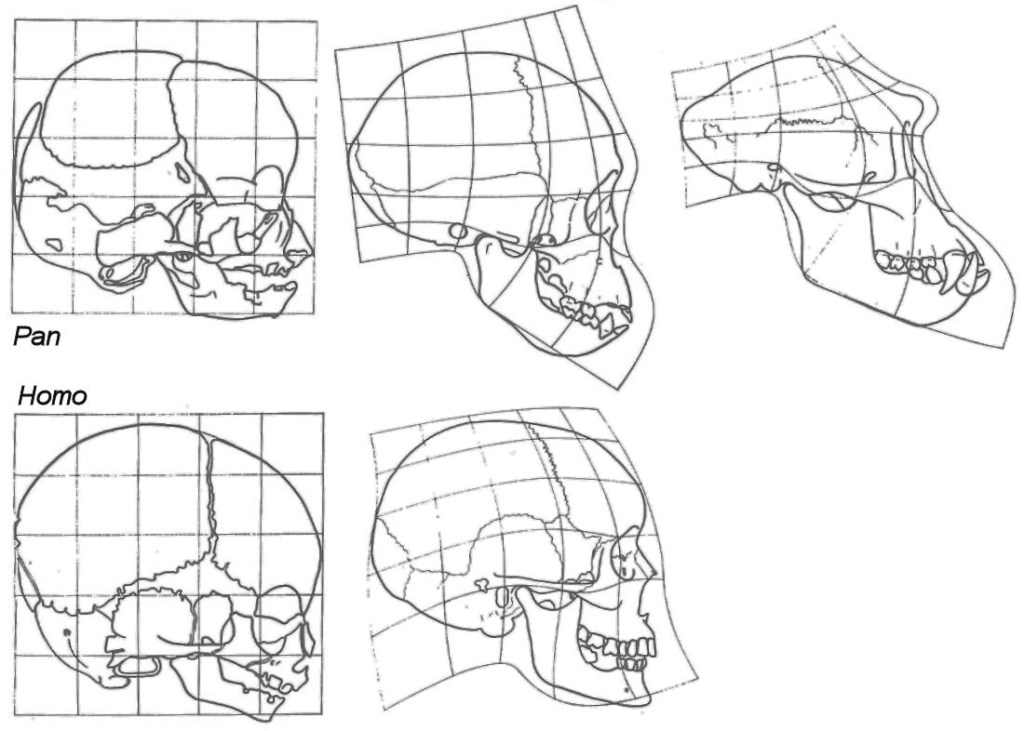
Despite being so closely related to our ape cousins, we physically look quite different in a few ways, especially in our skulls. The other apes, especially the great apes, have very large projecting (prognathic) faces, large brow ridges, larger teeth (especially in the canine teeth), and especially, small brains. Humans however, have flat faces, no brow ridges, small mouths and teeth, and very large brains, the complete opposite. What little genetic difference we have with chimpanzees makes up for all these differences.

There is one overarching reason for this, why we look so different from the other apes despite being so closely related to them, and it requires very little genetic difference. It is called neoteny. 

What is Neoteny?

Neoteny is a biological phenomena that has been observed in many different animals, including, it seems, humans. 

Neoteny is broadly a form of heterochrony, which is a change in the timing of growth stages in an organism. More specifically, neoteny is a form of paedomorphism, which basically means to have a more juvenile-like appearance. Neoteny specifically is the retention of juvenile traits into adulthood. This usually happens when a mutation causes sexual maturation to occur sooner, when the individual is phenotypically younger. That specific form of neoteny is called paedogenesis. Neoteny is a form of paedomorphism, which is a form of heterochrony. 

Neoteny can be very important for evolutionary changes, as if the retention of a certain trait is beneficial, it’ll be passed down, causing great evolutionary changes. Ontogeny is also another important topic for understanding neoteny. 

Ontogeny is the development of an organism throughout its life. As neoteny is the slowing of development, ontogeny is important to understand when discussing this topic. 

Examples of Neoteny

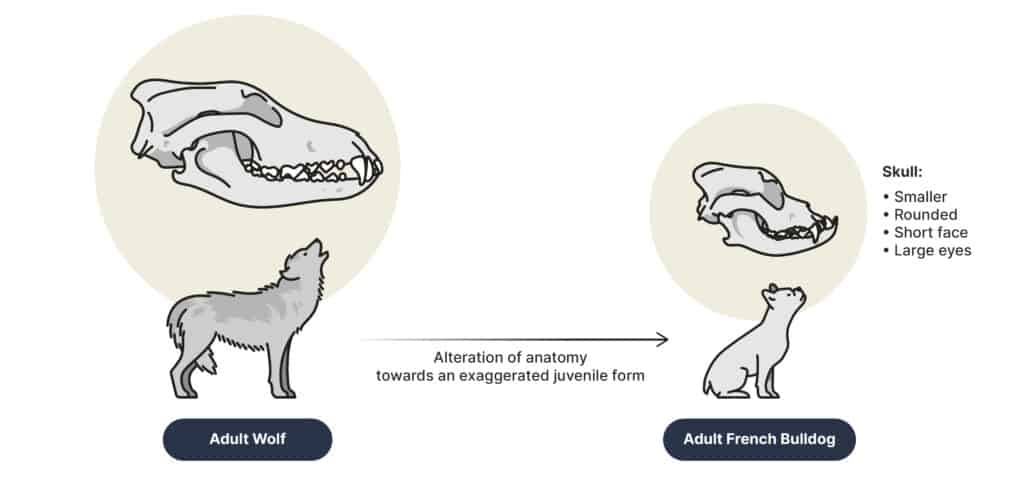
There are many examples of neoteny in animals. Many dog breeds have been selectively bred to be more neotenic. Younger wolves are more social and friendly, making them better household pets, rather than more aggressive guarding and hunting dogs like they were originally domesticated for. This resulted in humans selecting for wolves with more puppy-like behaviors. 

Physical neotenous traits were also selected for. Neotenous traits seen in some dog breeds include softer fur, rounder bodies and heads, larger eyes, and floppy ears.These traits are often seen as cuter and friendlier, making them more popular among dog owners. Unfortunately however, these traits are often unhealthy for the dogs, as many have congenital issues, such as brachycephalic skulls, making breathing difficult. 

Dogs with these neotenous traits include breeds like chihuahuas and pugs. Dogs were artificially selected for, but there are many natural examples.

Comparison of a wolf and domesticated dog, showing the neotenic features of the skull

Neoteny is also seen as the reason why naked mole rats (Heterocephalus glaber) have such longer lifespans.

While some rodents, like mice, have an average life span of 3 years, naked mole rats can have life spans of up to 30 years. Neotenic traits in these rats include a lower body rate, lack of hair, prolonged gestation, longer times to reach maturity, greater percentage of reproductive success, the absence of a scrotum, a reduced vomeronasal organ, etc. Very few other rodents have these same traits into adulthood. 

At birth, naked mole rat brains are much more developed than other rodents as well, and are more alike that of newborn primates. Despite this, these rats take much longer for their brains to mature, taking 4 times longer than average for other rodents. This is a sign of increased neoteny in the brains of these rats. 

Another good example of neoteny is the mexican axolotl (Ambystoma mexicanum). 

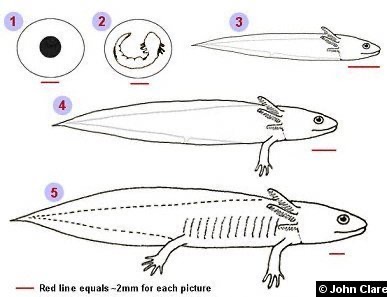
Axolotls are one of few amphibians that don’t undergo metamorphosis. Because of this, they retain many juvenile traits throughout their lives. One of the most outstanding traits is external gills, one of their most distinguishing traits. 

This paedomorphosis is a result of low activity in the hypothalamo-pituitary-thyroid (HPT) axis. The pituitary hormone thyrotropin (TSH) is capable of inducing metamorphosis in axolotls, so all functions of the HPT axis (metabolism and stress responses, etc.) below the pituitary level are functional, except this TSH release.

Ontological development of an axolotl, from embryo to adult

Neoteny in Humans 

There are many examples of neoteny in humans as well, which have had big impacts on our own evolution. Neoteny, especially, is common in our brains. Because of neoteny, our brains take much more time to develop, allowing us to learn much more as we develop. This gives us time to learn more complex behaviors and learn from environmental cues. Extended development in the brain is primarily due to mutations on important developmental genes in the brain.

The slowing of the development of the amygdala-medial PFC (prefrontal cortex) allowed for more time for children and parents to bond. This part of the brain is important for emotional maturity, in behaviors like attention, learning, modulation, and prediction, so extending its development is very useful.

When compared to the brains of other primates, specifically chimpanzees (Pan troglodytes) and monkeys like rhesus macaques (Macaca mulatta), humans have much more extended brain development due to this. 

When the human variant of the MCPH1 gene, another important gene in brain development, was placed into rhesus macaques, the monkeys experienced greatly delayed brain development, and subsequently exhibited better short-term memory and shorter reaction time when compared to unaltered monkeys, just like what is seen in humans. This shows that the human variants of these genes, which are important for our memory and reaction time, have been greatly changed in our lineage compared to our cousins. 

Other genes that control brain regulation, such as RBFOX1, an important hub gene in brain development, are very different from rhesus macaques, showing just how much the human brain has changed in terms of development.

In total, about 7,958 genes related to brain development have been compared between humans and other primates. About half of these genes possess delay in development in humans. Out of 299 of those genes, 40% are even expressed later in our lives than in other primates. This delayed maturation of the brain also has behavioral impacts. 

With a larger, more mature, more self aware brain, human social interactions have become much more complex. This may have increased levels of shyness, both fearful and self-conscious shyness. 

There’s another neotenous change in humans that is important for human brain development, but rather than the development itself, it’s important for the size of human brains. 

Compared to other apes, humans have much smaller jaw muscles and larger brains. This is the opposite in our ape cousins. However, as juveniles, other apes have larger brains and weak jaw muscles, just like humans. This changes greatly as the other apes develop throughout their lives, but it remains this way in humans. This is due partly to a single mutation on one important gene, MYH16.

The MYH16 Gene 

MYH16 is a gene found in mammals, but specifically is used in the temporalis and masseter muscles in primates, muscles that are  important for chewing.This gene codes for a myosin heavy chain protein, an important protein for muscle contractions in the jaw muscles. 

Though this reduced our chewing muscles and therefore our jaw size, it allowed for an increase in brain growth (encephalization), and was therefore beneficial. In humans, this gene has been converted into a pseudogene due to a two nucleotide deletion mutation, hindering the production of the MYH protein, and reducing our chewing muscles. Though this reduced our chewing muscles and therefore our jaw size, it allowed for an increase in brain growth (encephalization), and was therefore beneficial. 

The skulls of a human and a chimpanzee with the masticatory muscles

Because humans are such social animals, having a larger and more mature brain is very beneficial. We traded our brains for our brawns. This is known as the “less-is-more” hypothesis, having less chewing muscles is more beneficial. 

This mutation would have occurred anywhere from around 5.3-2.4 million years ago, likely closer to the latter. It occurred after the split between chimpanzees and humans, but before the split between modern humans and Neanderthals.

This is why chimpanzees and humans look so different in their skulls, despite both being more closely related to each other than either is to a gorilla, because a single mutation alters the growth of chewing muscles in humans, allowing for a larger brain. The roughly 1% genetic difference between chimpanzees and humans is a big difference, partially due to this mutation in this singular gene. 

This is neotenous as smaller chewing muscles and larger brains are present in the juvenile forms of all apes, but goes away in all but humans, where it is retained. This is where ontogeny comes in. 

Human and Ape Ontogeny 

Humans are most similar to the other apes as fetuses, and their skull shape soon begins diverging slowly after birth. Some of these changes diverge at the same rate, while other traits diverge at different times and at different rates.

Facial ontogeny of a human and chimpanzee

Some of the biggest changes during ontogenetic development are in the face. Other, non-human apes obtain a larger, more prognathic face, larger teeth (especially in the canine teeth), and a smaller brain. Other important changes include changes in the basicranium, specifically in the foramen magnum. This is important for the locomotion of the animals later in life. These changes are in the neuro and splanchnocranium, the two major portions of the skull. 

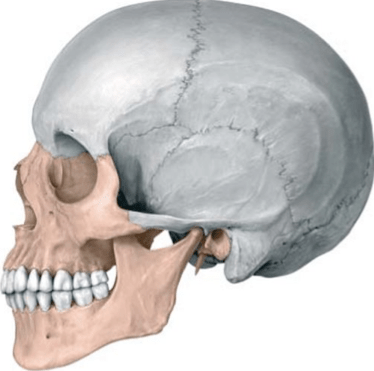
Diagram of a human skull. The pink portion represents the splanchnocranium, and the grey represents the neurocranium

The splanchnocranium succeeds the neurocranium in the development of the endocranium (the inside of the skull). These changes occur at similar rates in other apes, but are very different in humans, though some variation does exist. Because our brain development is so different from the other apes, there are also other ontogenetic changes in the human endocranium, although ontogeny isn’t the only reason for this.

The brains of postnatal humans begin growing very rapidly. By year one, the brain is 70% the adult size, and by year 6, it’s 90-95% its adult size. Due to the smaller sizes of the brains of other apes, this is very different in them. Humans have an increase in endocranial flexion (pushed forward occipital bones) compared to other apes as well, which is important for some of the other ontogenetic between humans and apes. Cranial flexion also helps with spatial packing of our larger brains, along with aiding in bipedal locomotion. 

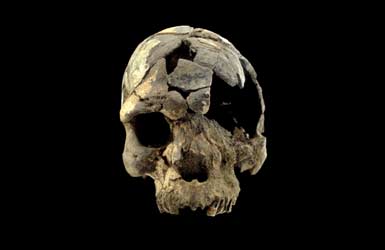
Some major endocranial changes we know have occurred very recently in our species, as early fossils of our species, like the Herto cranium, lack them, showing that they’re very new traits. The Herto skulls, despite being only about 160,000 years old, have a very different endocranial shape from modern Homo sapiens, though the brains were about the same size. 

The Herto cranium

Due to all these changes during development, the skulls of adult humans are closest to the skulls of juvenile chimpanzees, aside from the growth of the teeth. 

The fossils of juvenile australopiths, like the taung and dikika child, are important for tracking these cranial changes in the human lineage. There are also examples of different ontogeny in other places besides the skull. One good example is in the spine, specifically the thoracolumbar region. 

The spine anatomy in apes is very diverse, mainly due to posture and locomotion. Because of the different vertebrae throughout the apes, the ontogeny of the vertebrae is unique. Not a lot is known about the development of the vertebrae, but comparing the vertebrae of juvenile humans, apes, and extinct hominins like Australopithecus and Homo erectus.The vertebrae of humans and chimpanzees are more alike than they are to gorillas and orangutans. 

Also in chimps and humans, the development of the vertebrae develop much more than in the other apes. In humans however, our development finishes much quicker. This is exactly what is seen in extinct hominin species. Though the vertebrae of humans and chimpanzees are very similar, one big change is humans gain a longer lumber column, which aids in our upright posture. Ontogeny is also present farther down the body in the femora.

Even though chimpanzees and gorillas walk very similarly, the ontogeny of their femora is still different in multiple ways. The basic development of the femora in primates is the same, but varies in slight details. Humans differ from this the most, with longer angled femora, also for bipedal locomotion. Overall, humans most resemble our ape cousins in most aspects of the body when they’re juveniles, but this quickly changes as the other apes grow, while humans stay relatively the same. 

Conclusion 

Evolution is run primarily by random mutation, which is then selected for by non-random mutation. Depending on what the mutation does, and the environment of the organism, the change will either be selected for or selected against. Humans, up until very recently, have been exposed to countless selection pressures. As a very social species, having a mutation that allows for extended brain development and an overall larger brain would be very quickly selected for. Neoteny is one of the many ways this occurred.

Neoteny allowed us to trade our larger mouths and stronger bites for larger brains and extended brain development. This is why humans look so different from our closest living relatives. There have been a few small genetic changes in a very small portion of DNA that drastically altered our lives, biology, and appearance, showing just how significant small genetic changes can be. 

Sources 

  1. “Neoteny”. Ishinobu, 02-17-20. https://ishinobu.com/neoteny/
  2. “Neoteny”. Bionity.com (ND). https://www.bionity.com/en/encyclopedia/Neoteny.html
  3. Bogin, Barry. “Neoteny – Biological”. Center for Academic Research & Training in Anthropogeny (ND). https://carta.anthropogeny.org/moca/topics/neoteny-biological
  4. McNamara, J. K (2012). Heterochrony: the Evolution of Development. Evolution: Education and Outreach, 5, 203-218. https://doi.org/10.1007/s12052-012-0420-3 
  5. Keyte, L. A., Smith, K. K. (2014). Heterochrony and developmental timing mechanisms: changing ontogenies in evolution. Semin Cell Developmental Biology, 0: 99-107.  10.1016/j.semcdb.2014.06.015
  6. “Ontogeny and Phylogeny”. Understanding Evolution (ND). https://evolution.berkeley.edu/ontogeny-and-phylogeny/ 
  7. Dwyer, Bruce. “Neoteny – why dogs were bred to maintain puppy-like play & features”. Dog Walker of Melbourne (ND). https://www.dogwalkersmelbourne.com.au/articles-dog-walking-pet-sitting/71-dog-neoteny-puppy-love 
  8. Lindo, John. “Why are modern dog breeds so different from one another?” Loyal for Dogs, 12-09-22. https://loyalfordogs.com/posts/why-are-modern-dog-breeds-so-different-from-one-another 
  9. Skulachev, P. V. Holtze, S., Vyssokikh, Y. M., Bakeeva, E. L., Skulachev, V. M., Markov, V. A., Hildebrandt, B. T., Sadovnichii, A. V. (2017). Neoteny, Prolongation of Youth: From Naked Mole Rats to “Naked Apes” (Humans). Physiological Reviews, 97(2): 699-720. https://doi.org/10.1152/physrev.00040.2015 
  10. Orr, E. M., Garbarino, R. V., Salinas, A., Buffenstein, R. (2016). Extended Postnatal Brain Development in the Longest-Lived Rodent: Prolonged Maintenance of Neotenous Traits in the Naked Mole-Rat Brain. Frontiers in Neuroscience, 10.  https://doi.org/10.3389/fnins.2016.00504
  11. Groef, D. B., Grommen, H. V. S., Darras, M. V. (2018). Forever young: Endocrinology of paedomorphosis in the Mexican axolotl (Ambystoma mexicanum). General and Comparative Endocrinology, 266, 194-201. https://doi.org/10.1016/j.ygcen.2018.05.016
  12. “Axolotls-Biology”. Axolotols.org (ND). 
  13. Tottenham, N. (2020). Early Adversity and the Neotenous Human Brain. Biological Psychiatry, 87(4): 350-358. https://doi.org/10.1016/j.biopsych.2019.06.018
  14. Somel, M., Franz, H., Yan, Z., Khaitovich, P. (2009). Transcriptional neoteny in the human brain. PNAS, 106(14): 5743, 5748. https://doi.org/10.1073/pnas.0900544106
  15. Shi, L., Luo, X., Jiang, J., Chen, Y., Liu, C., Hu, T., Li, M., Lin, Q., Li, Y., Huang, J., Wang, H., Niu, Y., Shi, Y., Styner, M., Wang, J., Lu, Y., Sun, X., Yu, H., Ji, W., Su, B. (2019). Transgenic rhesus monkeys carrying the human MCPH1 gene copies show human-like neoteny of brain development. National Science Review, 6(3): 480-493. https://doi.org/10.1093/nsr/nwz043
  16. Li, M., Tang, H., Shao, Y., Wang, M., Xu, H., Wang, S., Irwin, M. D., Adeola, C. A., Zeng, T., Chen, L., Li, Y., Wu, D. (2020). Evolution and transition of expression trajectory during human brain development. BMC Ecology and Evolution, 20, 72. https://doi.org/10.1186/s12862-020-01633-4 
  17. Choi Q., Charles. “Being More Infantile May Have Led to Bigger Brains”. Scientific American, 07-01-09. https://www.scientificamerican.com/article/being-more-infantile/
  18. Schmidt, A. L., Poole, L. K. (2019). On the bifurcation of temperamental shyness: Development, adaptation, and neoteny. New Ideas in Psychology, 53, 13-21. https://doi.org/10.1016/j.newideapsych.2018.04.003
  19.  Lee, A. L., Karabina, A., Broadwell, J. L., Leinwand, A. L. (2019). The ancient sarcomeric myosins found in specialized muscles. Skeletal Muscle, 9, 7. https://doi.org/10.1186/s13395-019-0192-3 
  20. McCollum, A. M., Sherwood, C. C., Vinyard, J. C., Lovejoy, O. C., Schachat, F. (2006). Of muscle-bound crania and human brain evolution: The story behind the MYH16 headlines. Journal of Human Evolution, 50(2): 232-236. https://doi.org/10.1016/j.jhevol.2005.10.003 
  21. Oh, J. H., Choi, D., Goh, J. C., Hahn, Y. (2015). Loss of gene function and evolution of human phenotypes. BMB Reports Online, 48(7): 373-379. 10.5483/BMBRep.2015.48.7.073
  22. Perry, H. G., Verrelli, C. B., Stone, C. A. (2005). Comparative Analyses Reveal a Complex History of Molecular Evolution for Human MYH16. Molecular Biology and Evolution, 22(3): 379-382. https://doi.org/10.1093/molbev/msi004
  23. Perry, H. G., Kistler, L., Kelaita, A. M., Sams, J. A. (2015). Insights into hominin phenotypic and dietary evolution from ancient DNA sequence data. Journal of Human Evolution, 79, 55-63. https://doi.org/10.1016/j.jhevol.2014.10.018
  24. Hunt, K. (2020). Thews, Sinews, and Bone: Chimpanzee Anatomy and Osteology. Chimpanzee: Lessons from our Sister Species. 97-118.  https://doi.org/10.1017/9781316339916.007
  25. Groves, P. C. (2017).The latest thinking about the taxonomy of great apes. International Zoo Yearbook, 52(1), 16-24. https://doi.org/10.1111/izy.12173
  26. Mitteroecker, P., Gunz, P., Bernhard, M., Schaefer, K., Bookstein, L. F. (2004). Comparison of cranial ontogenetic trajectories among great apes and humans. Journal of Human Evolution, 46(6): 679-698. https://doi.org/10.1016/j.jhevol.2004.03.006
  27. Zollikofer, E. P. C. (2012). Chapter 13 – Evolution of hominin cranial ontogeny. Progress in Brain Research, 195, 273-292. https://doi.org/10.1016/B978-0-444-53860-4.00013-1 
  28. Pérez-Claros, A. J., Palmqvist, P. (2022). Heterochronies and allometries in the evolution of the hominid cranium: a morphometric approach using classical anthropometric variables. Paleontology and Evolutionary Science, 10:e13991. https://doi.org/10.7717/peerj.13991
  29. Scott, A. N., Strauss, A., Hublin, J., Gunz, P., Neubauer, S. (2018). Covariation of the endocranium and splanchnocranium during great ape ontogeny. PLoS ONE, https://doi.org/10.1371/journal.pone.0208999
  30. Neubauer, S., Gunz, P., Hublin, J. (2009). The pattern of endocranial ontogenetic shape changes in humans. Journal of Anatomy, 215(3): 240-255. 10.1111/j.1469-7580.2009.01106.x
  31. Zollikofer, E. P. C., Bienvenu, T., Beyene, Y., Suwa, T., Asfaw, B., White, D.T., Ponce de León, S. M. (2022). Endocranial ontogeny and evolution in early Homo sapiens: The evidence from Herto, Ethiopia. PNAS, 119(32): e213553119. https://doi.org/10.1073/pnas.2123553119 
  32. Zollikofer, E. P. C., Bienvenu, T., Ponce de León, S. M. (2016). Effects of cranial integration on hominid endocranial shape. Journal of Anatomy, 230(1): 85-105.  https://doi.org/10.1111/joa.12531
  33. Penin, X., Berge, C., Baylac, M. (2002). Ontogenetic study of the skull in modern humans and the common chimpanzees: Neotenic hypothesis reconsidered with a tridimensional procrustes analysis. American Journal of Biological Anthropology, 118(1): 50-62.  https://doi.org/10.1002/ajpa.10044
  34. Baxland, Beth. “Humans and Other Great Apes”. The Australian Museum, 08-26-22. https://australian.museum/learn/science/human-evolution/humans-are-apes-great-apes/ 
  35. “Neoteny in Humans”. Mun.Ca (ND). https://www.mun.ca/biology/scarr/Neoteny_in_humans.htm
  36. “Splanchnocranium”. Bone Broke, 06-25-15. https://bonebroke.org/2015/06/25/splanchnocranium/ 
  37. van Dyck, I. L., Morrow, M. E. (2017). Genetic control of postnatal human brain growth. Current Opinion in Neurology. 30(1), 114-124. 10.1097/WCO.0000000000000405
  38. Nalley, K. T., Scott, E. J., Ward, V. C., Alemseged, Z. (2019). Comparative morphology and ontogeny of the thoracolumbar transition in great apes, humans, and fossil hominins. Journal of Human Evolution, 134, 102632. https://doi.org/10.1016/j.jhevol.2019.06.003
  39. Sanders, R. “160,000-year-old fossilized skulls uncovered in Ethiopia are oldest anatomically modern humans.” UC Berkeley News, 06-11-03. 
  40. Morimoto, N., Nakatsukasa, M., Ponce de León, S. M., Zollikofer, E. P. C. (2018). Femoral ontogeny in humans and great apes and its implications for their last common ancestor. Scientific Reports, 8, 1930. https://doi.org/10.1038/s41598-018-20410-4 

Neanderthals and Modern Humans – So much to learn!

Did Human and Neanderthals Share Art Tips? What we know about Human-Neanderthal Interactions!

be sure to watch the latest episode of the PaleoPost Podcast to hear what it might mean that modern humans and Neanderthals interacted for millennia?

Did we learn how to make art form them? Or did they pick up tips from us?

The mystery deepens on this episode!

Happy Darwin Day!-Guest Post by Mekhi

Introduction

One of the most important, if not the most important concepts in modern biology is evolution. The idea that organisms change with time and are all related back to a common ancestor was revolutionary, and important for understanding pretty much every aspect of biology. The history of the theory of evolution was long and complicated, and evolutionary thought had been a thing for hundreds of years, but perhaps the most revolutionary thinker was Charles Darwin, who was born on this day, February 12th, 215 years ago. 

Darwin’s Early Life

Charles Robert Darwin was born in Shrewsbury England on February 12th, 1809. He was born into a wealthy family with 5 siblings, with his father and mother, though his mother died when he was young. On his fathers side, there was a history of scientists, with his father, Dr. R. W. Darwin being a medical doctor, and his grandfather, Erasmus Darwin being a well known botanist.

His father hoped his son would go down the path of medicine as well, but Darwin was more interested in natural history. After graduating from Christ’s College in 1831 with a bachelor degree of arts, a botany professor, John Stevens Henslow, recommended Darwin take a naturalist’s position on the HMS Beagle, a trip that would not only change his life, but would change the history of science as a whole.

The ship, captained by Robert Fitzroy, embarked on its 5 year journey in December of 1831 when Darwin was 22 years old.  His role on the boat was to study the discoveries made on the journey, but also to provide companionship to the captain.

In total, he spent about 1,200 days on land during the voyage, where he would study many different animals, plants, and fossils. Most famously during the journey, the Beagle spent 5 weeks on the Galapagos islands. It was on these islands where his observations would form his famous theory of evolution by natural selection. 

On the Galapagos islands, he studied geology and wildlife. Most famously, he studied the birds of the islands. Though commonly called Darwin’s finches, these birds weren’t actually finches, and were likely more closely related to blackbirds or mockingbirds. Regardless, the observations Darwin made about these birds were crucial for the development of the theory of natural selection.

These birds proved to be an incredible example of adaptive radiation, speciation, and natural selection.

Darwin’s Research and Work

The environmental occurrences on the islands led to a great variation in the birds, such as variation in beak size, body size, plumage, etc.., as they adapted to the different environments of the different islands. 

The beaks were some of the most prominent examples, as each bird species adapted to different food sources. The geographic isolation across the different islands led to allopatric speciation, as gene flow between the different populations was stunted. 

It wasn’t completely stunted however, as genetic research shows that there was interspecific gene flow across the species, resulting in hybridization, making this a good example of the arbitrary nature of ‘species’. 

Genetic analysis also showed the different genes that affected the adaptation observed in the finches. The ALX1 and HMGA2 genes for example have been shown to affect the shape of the beaks across the different species. His observations on the Galapagos, along with his expedition of the Beagle as a whole, inspired Darwin to write On the Origin of Species, one of the most significant works of scientific literature. This book would be published in 1859. 

A specimen drawer of shells put together by Charles Darwin

In this book, Darwin proposed his theory of evolution by natural selection, along with the theory of common descent, two crucial ideas in modern biology. This book sparked many, often religious debates, but was more widely accepted due to the evidence and arguments he provided. 

Darwin’s first sketch of a tree of life showing his ideas of common descent

Darwin would go on later to publish several other books, including The Descent of Man, and Selection in Relation of Sex. He covers multiple topics in this book, including sexual selection, but more importantly, he addresses the topic of human evolution.

He talks about embryology in the first chapter as a way to study human evolution. In a time without hominin fossils and genetics, he had to pull from what he had.

He made several predictions that would later be proven, such as the idea that humans evolved in Africa, but also made several problematic claims about race and sex, proposing that human social organization follows a straight path from savagery to more advanced cultures. 

However, this doesn’t mean that all of Darwin’s views on these topics were wrong.

Most famously, Darwin strongly criticized and disliked slavery, and strongly supported abolition. Darwin was a product of his time, just like everyone is, so it’s understandable that he had views that today we view as controversial today, because they were normal back then. That is how society functions. We cannot critique his scientific theories purely on the basis of these specific views. Rather, we should view them with a critical and most importantly scientific lens, and understand the many things he got wrong and right about evolution. 

Conclusion

Darwin would die April 19th, 1882, at the age of 73, in Kent England. He lived a long and successful life, had many kids, and many scientific achievements. His ideas were revolutionary, and much of them we know today were spot on, but not all. He got things right, he got things wrong, but what he got right was incredibly important for our modern understanding of biology.

It is important to note that scientists do not praise Darwin. They did not and do not follow his every word and idea. A good scientist should recognize what he got wrong and right, and understand the significance of his ideas on evolution and the history of life on this planet. Darwin was a normal man, but a man who had many ideas that have been shown again and again to this day to be correct. Happy Darwin Day!

Sources

  1. “Charles Darwin”. Biography, 03-29-21. https://www.biography.com/scientists/charles-darwin 
  2. Mcnamara, Robert. “Biography of Charles Darwin, Originator of the Theory of Evolution”. ThoughtCo, 07-29-21. https://www.thoughtco.com/who-is-charles-darwin-1224477 
  3. Lotzof, Kerry. “Charles Darwin: History’s most famous biologist”. Natural History Museum (ND). https://www.nhm.ac.uk/discover/charles-darwin-most-famous-biologist.html 
  4. Scoville, Heather. “Charles Darwin’s Finches and the Theory of Evolution”. ThoughtCo, 06-26-19. https://www.thoughtco.com/charles-darwins-finches-1224472
  5. “Adaptive Evolution in Darwin’s Finches”. Harvard University (ND). https://scholar.harvard.edu/sangeet/adaptive-evolution-darwins-finches
  6. “On the Origin of Species”. Harvey Cushing/John Hay Whitney Medical Library (ND). https://library.medicine.yale.edu/about/adopt/darwin 
  7. “The Reception of Darwin’s On the Origin of Species”. The Humanist.com, 01-29-15. 
  8. Pyne, Lydia. “Charles Darwin’s Descent of Man, 150 Years Later”. JSTOR Daily, 02-20-21. https://daily.jstor.org/charles-darwins-descent-of-man-150-years-later/ 
  9. “Darwin and slavery”. Darwin Correspondence Project (ND). https://www.darwinproject.ac.uk/learning/11-14/darwin-and-slavery#:~:text=Darwin%20believed%20that%20the%20enslavement,family%2C%20supported%20the%20abolition%20movement
  10. “Charles Darwin (1809-1882)”. Internet Encyclopedia of Philosophy (ND). https://iep.utm.edu/darwin/ 
  11. “About Darwin Day”. International Darwin Day (ND). https://darwinday.org/