Co-Authored with Genevieve von Petzinger
As I sit here watching the Press Release on the new naledi findings, I can’t help but feel captivated, excited, and at the edge of my seat about what some may deem as “just old bones.” However, to people like you and me, fossils, particularly those of our ancestors, hold significance beyond their age. They are like windows that allow us to peek into our past and change how we see ourselves.
Today will be one of those days where we sit and scratch at our heads and wonder, talking amongst ourselves, about what it means to be “us.”
From the depths of Rising Star Cave, many mysteries have been unveiled, some of which have challenged the field of paleoanthropology; (since their first introduction to the world?), Homo naledi has been an eye-catcher.

From the first announcement of enigmatic fossils from several individuals being found deep in a cave in South Africa, one of the big questions has always been whether this was purposeful or an accidental grouping caused by environmental conditions? After today, we may well have some answers to this question.
After this, we met Neo, the most complete individual Homo naledi yet discovered, and he showed us so much more about the species; following him was Leti, the child out of the darkness of Rising Star, a small child that we thought could never have been found where it was. The discoveries would not stop coming, and in fact, they did not.
Next on the list of big announcements coming out of Rising Star was the evidence of the use and capability to control fire. “A five-year-old could tell there was fire,” said Dr. Berger during the Press Announcement—the implications we will discuss in a moment.
I think, without waiting any longer, we will read directly from National Geographic, the Press Release out just now, about the newest discoveries from Rising Star:
Let us come up front and start with the news, with the press release itself: (With a few edits for clarity)
“New Evidence Suggests Intentional Burials and Use of Symbols by Other Hominins Hundreds of Thousands of Years Before Homo sapiens.
These findings imply Homo naledi may have engaged in meaning-making behaviors previously associated only with modern humans and Neandertals
WASHINGTON, D.C. (June 5, 2023) –– In their search to understand human origins, National Geographic Explorer in Residence and world-renowned paleoanthropologist Lee Berger and his team unearthed new evidence in the Rising Star cave system in South Africa, suggesting Homo naledi –– an extinct hominin species –– buried their dead and used symbols for meaning-making, both behaviors that were thought to be exclusive to large-brained hominins. These findings could be some of the earliest examples of mortuary practices and meaning-making by a small-brained hominin, thus altering our understanding of human evolution. Scientific papers on the burials, symbols, and interpretation of the findings have been accepted and will be published in eLife. They are currently available in preprint via BioRxiv.
Funded by the National Geographic Society, Berger and his team –– including fellow National Geographic Explorers Keneiloe Molopyane, lead excavator in the Dragon’s Back chamber, and Agustín Fuentes, on-site biocultural specialist –– identified depressions deep in the chambers of the Rising Star cave system. Bodies of H. naledi adults and several children estimated to be younger than 13 years of age were deposited in fetal positions, which suggests intentional burial of the dead.

The interments predate the earliest known Homo sapiens burials by at least 100,000 years, making the Rising Star burials some of the most ancient in the hominin record and indicating that burials might not have been limited to H. sapiens or other hominins with larger brain sizes.
Additionally, the team found engraved markings on the cave walls, which could be 241,000 to 335,000 years old and will be further tested. These potential symbols, which include deeply impressed cross-hatchings and other geometric shapes, were found on surfaces that appeared to have been prepared and smoothed. The lines seem to have been made by carefully passing a pointed or sharp tool through the grooves repeatedly. The creation of similar visual marks has also been documented in Neanderthals (Homo neanderthalensis) from at least 60,000 years ago and early Homo sapiens in South Africa and Israel from about 100,000+ years ago. These types of purposeful graphic markings are generally considered to have been an early method for recording and transmitting meaning (though their significance remains shrouded in mystery), and are widely recognized as a major cognitive step in human evolution.
“These recent findings suggest intentional burials, the use of symbols, and meaning-making activities by Homo naledi. It seems an inevitable conclusion that in combination, they indicate that this small-brained species of ancient human relatives were performing complex practices related to death,” said Berger. “That would mean not only are humans not unique in the development of symbolic practices, but may not have even invented such behaviors.”
The Rising Star cave system has become one of the most fruitful sites for hominin fossils in the world. The new findings by Berger and team add a new chapter to what we know about the human origin story.
“To be inside the caves –– inside the world of Homo naledi –– is not only a life-changing adventure, but what we’ve uncovered forces us to rethink a whole set of assumptions about hominins and human evolution,” said Fuentes, professor of anthropology at Princeton University. “Much of what we assumed was distinctively human, and distinctively caused by having a large brain, may not be either of those things. Burial, meaning-making, even ‘art’ could have a much more complicated, dynamic, non-human history than we previously thought.”
The first H. naledi fossils were found in the Dinaledi chamber in 2013 by Berger and his team. The chamber is exceptionally narrow, requiring Berger to lose 55 pounds so he could traverse the chamber himself in 2022. He and his team continue to uncover new evidence about how H. naledi lived.
“With each new finding, Lee shifts our understanding of human evolution,” said Jill Tiefenthaler, the Society’s Chief Executive Officer. “The Society is proud to support Lee, Agustín, Keneiloe, and the rest of their team who are making significant contributions to science and exploration in their pursuit of answers about our ancient past.”
Read more about these findings on NatGeo.com. Additionally, on August 8, 2023, National Geographic Books will release Berger’s book, “Cave of Bones: A True Story of Discovery, Adventure, and Human Origins.” The book dives into the true-life scientific adventure, taking readers deep into South African caves as Berger and team uncover H. naledi fossil remains that compel a reframing of the human family tree. Berger’s findings will also be shown in Netflix’s “UNKNOWN: Cave of Bones” which premieres on July 17 as one of the films in a four-part docuseries event. He will also be announcing these findings at the Richard Leakey Memorial Conference at Stony Brook University on June 5 at 3:50 p.m. ET. Tune in to the livestream here.
About National Geographic Society
The National Geographic Society is a global nonprofit organization that uses the power of science, exploration, education and storytelling to illuminate and protect the wonder of our world. Since 1888, National Geographic has pushed the boundaries of exploration, investing in bold people and transformative ideas, providing more than 15,000 grants for work across all seven continents, reaching 3 million students each year through education offerings, and engaging audiences around the globe through signature experiences, stories and content. To learn more, visit http://www.nationalgeographic.org or follow us on Instagram, Twitter and Facebook.”
I cannot convey how important these discoveries are to understanding our origins, what this can change, and what this means for our understanding of what it means to be human. Be sure to check out the gallery below to see the images of the Homo naledi art. Yes, art. Imagine that, think for a moment, that we did not create the symbols that we find and attribute to later Homo sapiens, such as those from Bolombos; in fact, some of the same images that are found in Rising Star are located elsewhere, created by much larger brained hominin species, at much later dates. Twitter may have had no idea what he was dealing with when he introduced the internet to the “hashtag.” These symbols, which for so long have been attributed to higher brain function and cognition, are areas of the brain that should have developed last in a hominin who, by all of our understanding, should not have been capable of doing.
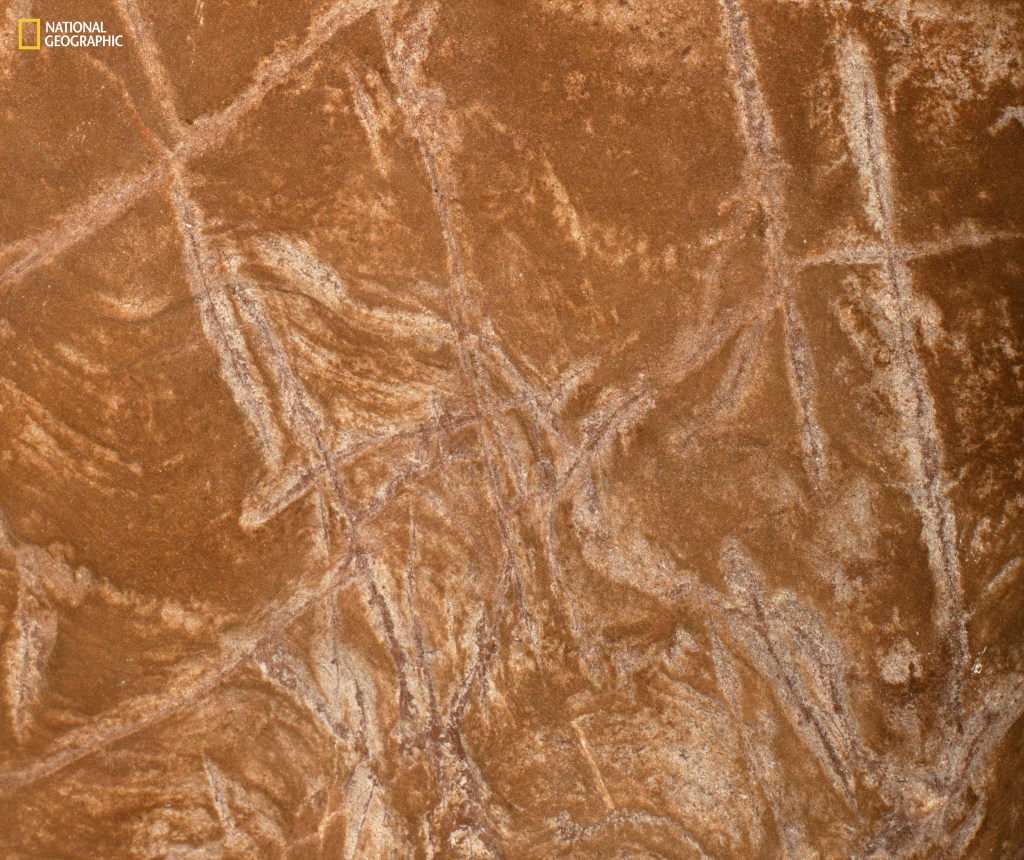
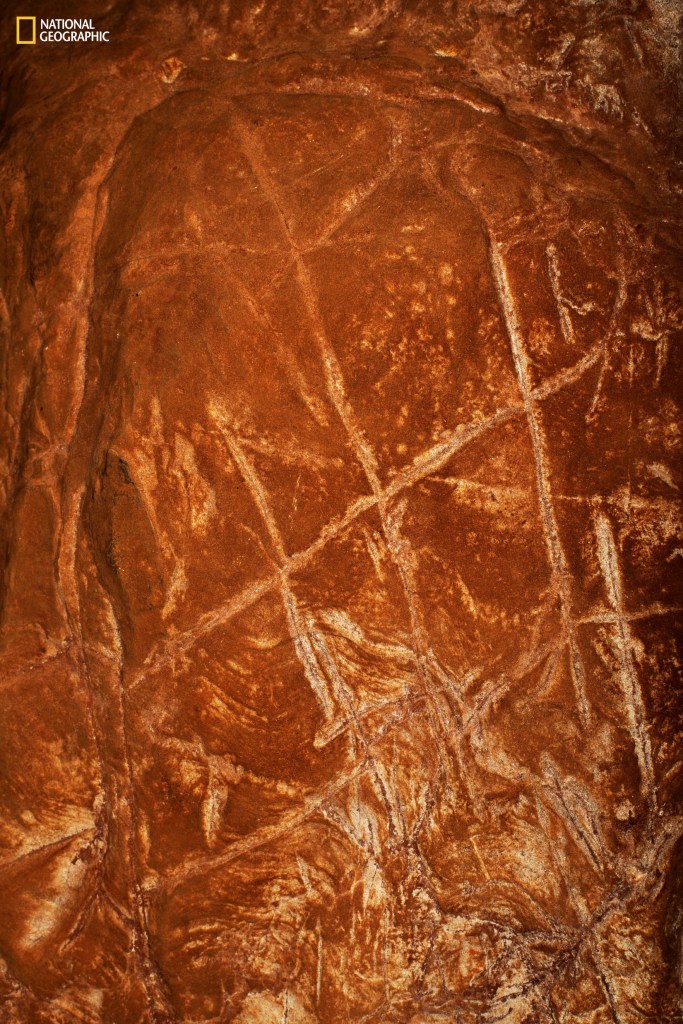


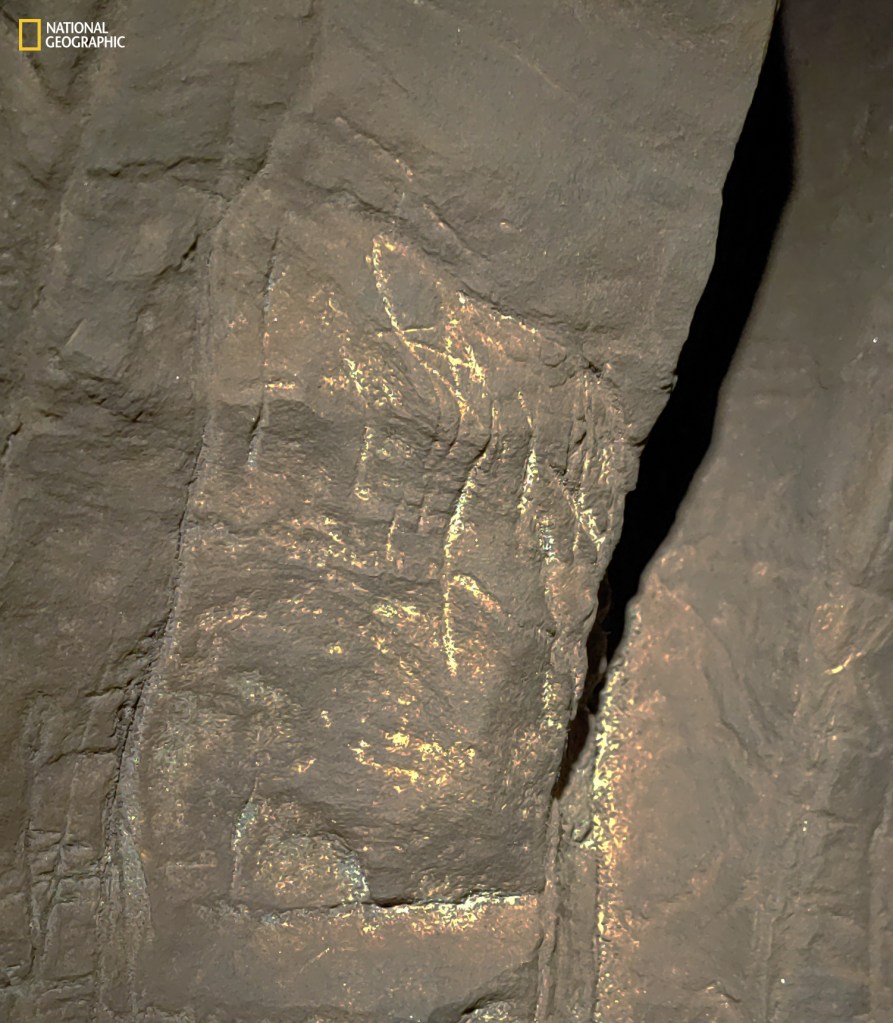

“A few decades ago, we were the only ones capable of making art,” says Dr. Agustin Fuentes, a significant contributor to the analysis. To think, amazingly, that perhaps we did not invent art but saw it and copied what we saw being carved into cave walls. Who knows, maybe we were even taught. At this point, with Homo naledi, the possibilities, I think, are boundless. So many new avenues of research must be gone down before we can even begin to understand this species and ourselves. For so long, we have held that being human requires a type of cognition beyond what we see in other species, a “meta-cognition”, a way of thinking of oneself and those around us. It seems that naledi knew itself as a being who knew others recognized their passing, even possibly to another world they could not see.
There is so much content, news, and information that we could delve into or uncover together today. Still, unpacking things as we go will be more fun, so expect to see a great deal of naledi content coming from these pages over the next few weeks to months! But before you go, please keep a few things in mind, keep these three discoveries in mind, and then allow your brain to branch out and stretch to each of the possible implications each discovery could have.
Before we continue, I think it is important to keep in mind the thoughts of Genevive von Petzinger, an expert on Geologic Symbols, Cave Art, and Symbolic thought, “I think it’s important to note up front that I recognize that the goal of this paper was to announce the discovery of what appear to be intentionally-made marks in Rising Star cave in South Africa. This was not meant to be an in-depth analysis or a declaration of definitive results.” As she goes on to say, “This is a big claim. If it proves to be true, it has the potential to be paradigm-shifting as the identification of intentional engraved marks, made by a small-brained distant human cousin 200,000+ years ago in South Africa, would completely change our understanding of where, when, and who made the first graphic marks.” So before we continue, it is essential to keep a large grain of salt with everything we are thinking about regarding naledi and these discoveries. As other scientists, researchers, and data will show, there is much to learn and find out about these new finds. I know I keep repeating myself here, but I do not believe it can be overstated enough; these finds, if proven to be attributed to naledi through various scientific means, will change how we view things.
Let’s unpack:
- The Use of Fire
- The Ritualized Burial of the Dead
- The Creation and Use of Meaningful
There is much to learn from these discoveries and published papers. Still, macroevolution can be observed, as can macro, and within these discoveries are dozens of other implications. What does it mean to be able to use and control fire? Was naledi the first to create what we consider to be meaning-making objects and symbols, or did they, too, get it from an earlier source? Is naledi where our modern ideas on burial, life, death, and the afterlife come from?
Let me posit something else; there is ongoing work that Dr. Hawks mentions involving proteomics and genomics research; we could even have interbred with this enigmatic species; we could share DNA with them, let alone our thoughts, feelings, emotions, and intuitions.
The more we learn, it shows that we know less than we thought we knew. What does it mean to be human? Just as so many times before, this claim or that has been made, and it is no one feature that makes us human, but an amalgamation of elements, many of which can be found in naledi hundreds of thousands of years before we humans were here to have a say in any of it.
Remember, there is always more to learn, and as Dr. Berger and naledi continue to show us, there are plenty of reasons to Never Stop Exploring.
Update: Check out this in-depth discussion I had with Genevieve von Petzinger about the alleged engravings:
 World of Paleoanthropology
Thanks for your coverage, it’s provided impetus and direction for me to really dig into paleoanth.
Reading through the preprints now. From “Evidence for Deliberate Burial…” the laminated orange-red mud layer being disturbed was compelling from a lay perspective without having to try and evaluate the chemical analysis (also it’s just really fun to say LORM!)
From “241,000 to 335,000 Years Old Rock Engravings” I was just stopped dead in my tracks with a (perhaps entirely coincidental? but moving) observation about sediment or some other substance being rubbed over the engravings on the column between the proposed burial chambers. Tomorrow is the anniversary of D-Day and there’s viral video that always goes around showing caretakers at a cemetery for fallen soldiers rubbing sand across the face of engraved marble grave markers to add contrast and legibility, and as a way of paying respect.
Can’t wait to see and hear more about all of this, we’re barely scratching the surface (heh) of what can be learned at Rising Star, and around the world.
LikeLike
What a moving juxtaposition. I was touched by the images of humans making gravestones more legible (umm, maybe more viewable when thinking of our cousins?) and Naledi possibly doing the same thing in a startlingly similar way.
LikeLike
Seth you are correct in all things said. We should all be humble without hubris. Today Lee and the others take us into a new chapter of what we are and not who with think we are. Congrats
LikeLike
Hi, first of all congrats! This is amazing! I am retired associate professor of ENT at Zagreb University in Croatia. I devoted my scientific life to the research od the human nasal septum and nowadays I have scientific proofs that among 6 types of septal deformities in man three of them are directly inherited from mother/father. One of these three has been proven to be connected with the shape of the skull (so called frontal-shaped skull) and obviously connected with the upright position of the body. Maybe the precise and expert look to the remnants of the bony parts of the nasal septum in NALEDI man could give a precious contribution in trying to find the the truth of real human(oid) history.
My best,
Prof. Ranko Mladina, MD, PhD
Zagreb, Croatia
LikeLike
I am not surprised of this finding. As human evolution had many species. Maybe near 60 million years ago. Having a larger brain high IQ, has nothing to do with craving,artwork,music etc. Just as apes use sticks and stones as weapons,tools.
LikeLike
It feels like a combination of May Day, Christmas, and a slew of birthdays with all the naledi news and preprints. Controlled fire! Graves containing naledi individuals! Engraved symbols! Oh joy!
LikeLike
I find it very interesting! why should we be the first or only species to do these things? you can go on the internet right no a watch 100’s of dog and cat videos that show care and even mourning over lost loved ones. I know my dog loves me and I her. so to say we are the only one to mourn with meaning… no. you can also watch elephants take bones of other dead elephants and basicly cry. I follow you on Facebook and your page.
LikeLike
І do trust all the ideaѕ you’ve introduced in your post.
They’re really convincing and will dеfinitеly work.
Nonetһeless, the posts are very shoгt for newbies.
Мay you рlease prolong them a bit from subsequent time?
Thank you for the post.
LikeLike
I would urge you to be much more cautious with these discoveries. As you can see on Twitter, no specialist of the subject (out of the team itself) is convinced by the not-peer-reviewed preprints. Look at Flint Dibble’s review on YouTube, there’s also problems with the geochemistry of sediments, the engravings do not convince any specialist etc etc.
LikeLike
You misunderstand the point of the papers and the announcements, which are meant to open the door to further research to answer these questions. Yes, the team is the one who agrees; they are the ones who have done the work. That is how science works. People didn’t think neanderthals had culture until a few years ago. There will always be doubters; only time will tell. But I have spoken with many experts who agree with the analysis. You can view them on the channel. Thanks.
LikeLike
As an academic myself in this very topic (participating in Gibraltar hashtag study, blombos study, Panga ya Saidi study), I think I understand quite well the content of the preprints and the problems it involves to make such announcement before Peer-review. Or… Should I say, after negative Peer-review by several colleagues, not taking it into account, and then putting it on preprint and making with the press as if it was the cover of Science…
LikeLike