A New Chapter: We’re Moving to Substack For years, this site has been the home for our deep history explorations. However, in the spirit of finding a better “flow” and maintaining the clarity needed to balance a very full life, I’ve decided to move all future long-form content and updates to a new home: Deep HistoryContinue reading “A New Chapter: We’re Moving to Substack”
Author Archives: sethchagi
Bridging the Gap: The Launch of the 1902 Committee Rock Art Journal

In the study of human origins, few things are as evocative as rock art. It is the visual record of the evolution of the human mind. However, keeping up with global developments in this field can be a challenge for researchers and enthusiasts alike. Today, we are excited to introduce The 1902 Committee, a newContinue reading “Bridging the Gap: The Launch of the 1902 Committee Rock Art Journal”
Clarity Is an Ethical Obligation in Science
One of the quiet truths of academic life is that confusion is rarely caused by a lack of intelligence. More often, it’s caused by overload. Students drowning in literature they were never taught how to read. Researchers buried under jargon they didn’t invent but are expected to wield fluently. Educators and museums trying to communicateContinue reading “Clarity Is an Ethical Obligation in Science”
Fire Through the Ages: From Wonderwerk Cave to Ancient Britain

Introduction Recently, archaeologists uncovered evidence in the UK that early humans might have been using fire hundreds of thousands of years earlier in Europe than we previously believed. This discovery adds a fascinating new layer to our understanding of how our ancient ancestors mastered this transformative tool. A Tale of Two Sites: Wonderwerk Cave andContinue reading “Fire Through the Ages: From Wonderwerk Cave to Ancient Britain”
How I Use AI in My Work: Ethics, Limits, and Practice
AI is now part of my toolkit for science communication, just like cameras, editing software, and drawing tablets. It’s not a replacement for scholarship, and it’s not a magic oracle. It’s a tool I use carefully to share deep history with more people, more clearly. This page explains: Why I use AI at all WhatContinue reading “How I Use AI in My Work: Ethics, Limits, and Practice”
Swirls by the Rapids: An Archaeoacoustic Reading of River Soundscapes and Spiral Motifs in the Tagus and Ocreza
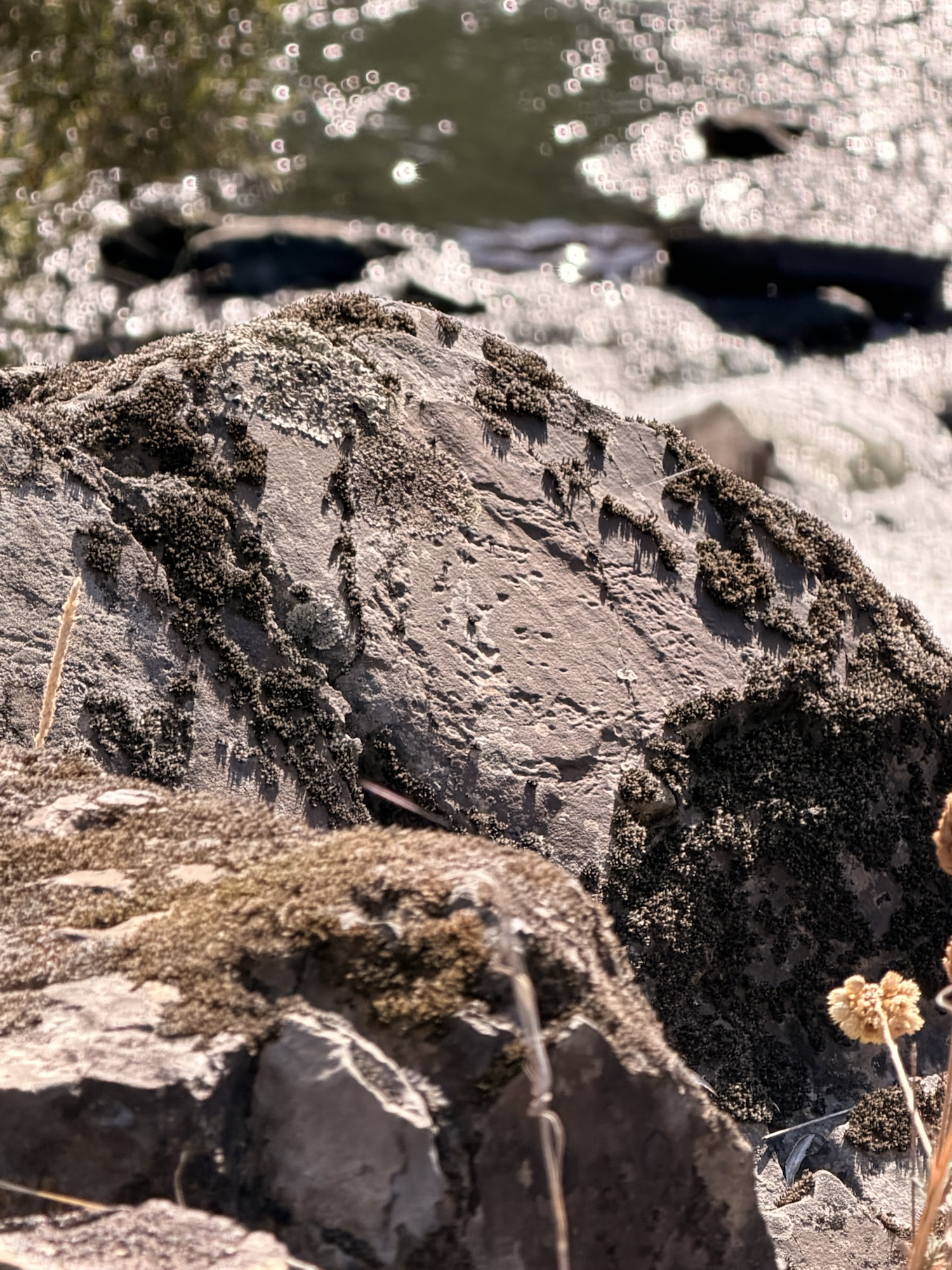
Echoes of the Past: The Ocreza Spiral and Its Turbulent River Story
Fire, Flesh, and Faith: How Cooking Created the Human Spirit
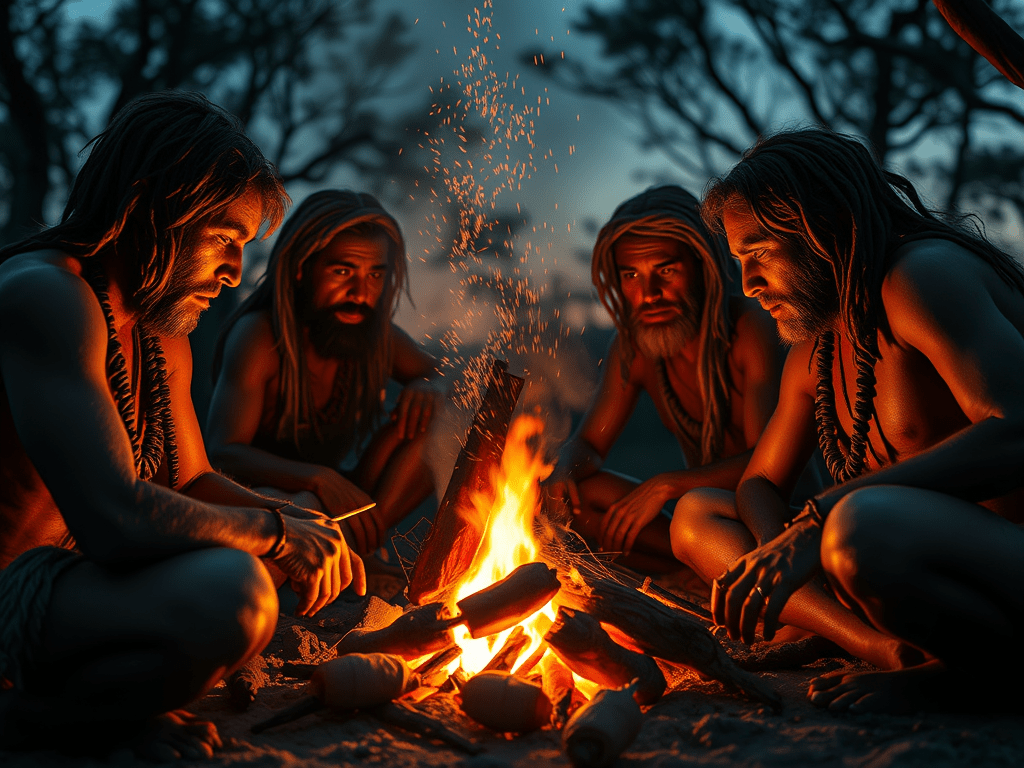
The text explores the significance of the hearth in human evolution, linking it to cooking, energy consumption, and social structure. The control of fire allowed early humans to cook food, improving energy yield and enabling larger brains and smaller guts. Archaeological evidence shows that fire usage became commonplace about 300,000 to 400,000 years ago, shaping daily life and social interactions around central hearths. It argues that the hearth served as a proto-altar, merging practical and ritualistic elements, fostering community through shared meals and storytelling, and reinforcing a sense of sacred space. Ultimately, the hearth transformed not just sustenance but the very essence of humanity.
Graves in the Dark: What Hominin Burials Really Mean
Introduction: Why Burials Matter Across the deep past of our lineage, few questions generate as much debate as whether a hominin buried its dead. The practice is often seen as a hallmark of humanity: a line crossed into symbolic thought, planning, and perhaps even ritual. Yet the truth is more complicated. What counts as aContinue reading “Graves in the Dark: What Hominin Burials Really Mean”
The Cultural Remix: Neanderthals and Denisovans in Conversation
Imagine a cave somewhere in Ice Age Eurasia. A fire smolders low, smoke curling upward into the darkness. A group of Neanderthals huddles close, trading stories, sharpening tools. Suddenly, a stranger appears — stockier, broader-jawed, carrying something unfamiliar: a greenstone bead, maybe, or a tool chipped in a style just slightly different. What happens next?Continue reading “The Cultural Remix: Neanderthals and Denisovans in Conversation”
Echoes & Paint: Cave Acoustics and Ritual
Introduction Paleolithic cave art often occupies deep, hard-to-reach chambers where light is scarce, surfaces vary, and the air itself feels different from the outside world. Traditional explanations for motif placement emphasize visibility, surface suitability, pigment access, and preservation bias. In recent decades, researchers have added a complementary, measurable factor to that list: acoustics. Echoes, resonances,Continue reading “Echoes & Paint: Cave Acoustics and Ritual”
 World of Paleoanthropology