On this episode of “The Story of Us,” we are doing something a little different and are featuring a book series, a paleo fiction series, just now completed, and its author E.A Meigs. This book’s series is a good mix of wanting something like “Clan of the Cave Bear” but with a great deal more adventure and less of the other stuff. In this series, we see things through the mind of the Neanderthals, close relatives of ours, who went extinct about 40,000 years ago.
Hear a little about her in her own words:
E. A. Meigs is the author of Dreamer Books: An Ice Age Saga, and also a publisher, editor, researcher, illustrator (and much more). She has had a long and varied career, starting out with four years in an afterschool job at the Cape Cod Museum of Natural History, which launched a life-long passion for science and history. Eventually Meigs went on to other jobs as managing editor of an academic journal and regular columns with a number of online and print publications before she finally founded her own publishing company, Dreamer Literary Productions, LLC. Meigs began writing as soon as she could put words on paper, creating stories inspired by the New England woodlands and seascapes that filled her childhood. Even when working in other fields and when marriage and parenting took up most of her energy, she always remained a writer at heart. More can be learned about E. A. Meigs by visiting her About the Author page at https://dreamerliteraryproductions.com/about-the-author/ and on LinkedIn at https://www.linkedin.com/in/e-a-meigs-dreamer-book-series/.
Dear Colleagues, Professors, Advisors, and Administrators,
I hope you are doing well.
This message is for those of you who are in the academic sphere.
If you could please distribute the following message and attached document to members of your department (especially undergraduates), that would be greatly appreciated.
___________________
Cambridge Journal of Human Behaviour: Call for Submissions (Vol. 2, Issue 1)
The Cambridge Journal of Human Behaviour (CJHB) is now calling for submissions! CJHB is an internationally registered, peer-reviewed journal that is interdisciplinary in nature and dedicated to publishing the exceptional work of undergraduates from across the globe.
We are a diamond open access journal, do not charge fees of any sort (subscription, processing, membership, or otherwise), and permit the author to re-publish their work elsewhere.
The deadline for the first issue of Volume 2 is 21st July, 2023. Submissions are always open and can be submitted online via our website: www.cjhumanbehaviour.com
Specific details for submission:
Dissertations, projects, and extended essays welcome
5,000 words maximum
Any topic relating to human behaviour (archaeology, anthropology, psychology, biology, etc.)
Interdisciplinary manuscripts strongly encouraged
All work must have been completed during the course of a student’s undergraduate studies
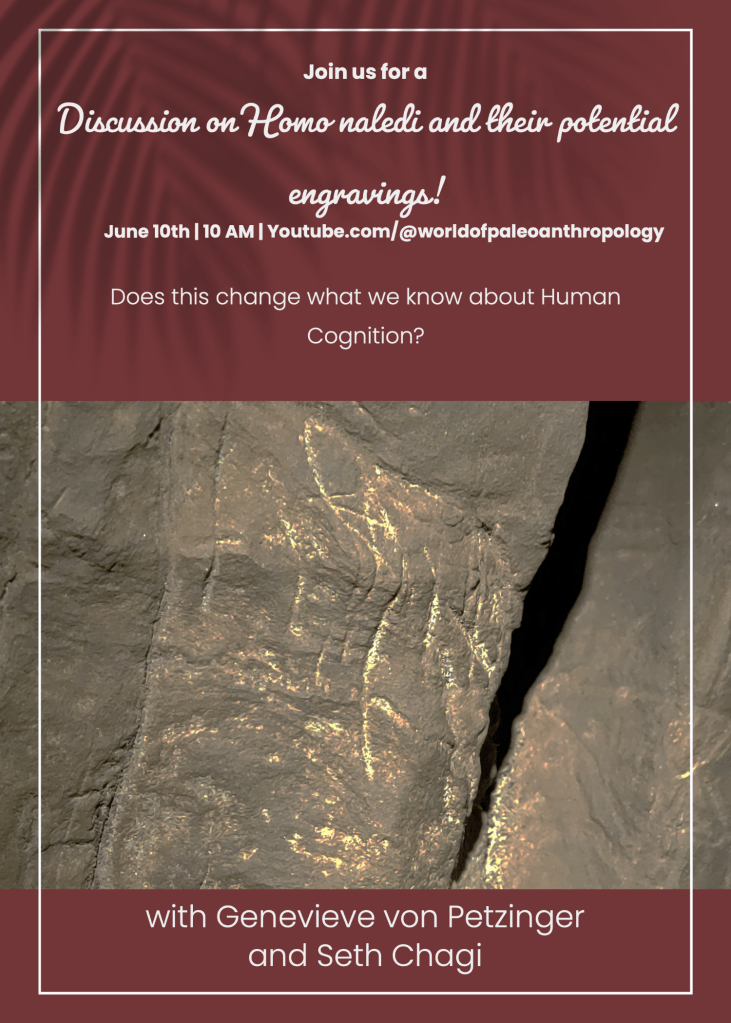
Now that we’ve all seen the headlines about the potential Naledi engravings join Seth and Genevieve as we dig deep into the questions surrounding this new possibility. What do we know so far? How should researchers approach such an extraordinary claim? How can we study these engravings? What is the balance between media and academia? And what are the implications for the paleoanthropology field if these engravings are associated with these small-brained hominins? Definitely, a topic that’s generated lots of opinions and thoughts, but I think we can all agree it’s an exciting time to study human evolution!
ONCE IT IS 10AM, You can click on the image below to take you to the video!
Sexual dimorphism (genetic/morphological differences between the sexes) is incredibly common throughout primates, and our ancestors were no exception to this. In primates, especially apes, males are typically much larger than females, along with other differences, such as larger maxillary (upper) canines. At its greatest extent, primates can be up to 50% sexually dimorphic. Modern humans are much less sexually dimorphic as compared to our relatives, and we usually are around 15% sexually dimorphic. Sexual dimorphism likely began decreasing in humans around 2 million years ago, though some earlier hominins, such as Ardipithecus ramidus had low levels of sexual dimorphism at 4.4 million years ago.
Sexual dimorphism in later hominins, in the genus Australopithecus, is controversial. Research on the femora of Australopithecus afarensis and Australopithecus africanus suggests that these species had very high levels of sexual dimorphism, similar to what is seen in modern gorillas and orangutans. If this is accurate, female australopiths may have had different locomotor styles (methods of walking) than males due to their sexual differences.
Other research suggests that Australopithecus had little levels of sexual dimorphism, closer to what is seen in modern humans. As it stands right now, it appears that Australopithecus did express some levels of sexual dimorphism, though this is subject to change as new evidence comes about. However, no matter how sexually dimorphic our australopith ancestors were, there is one hominin genus that was clearly very sexually dimorphic, and that is Paranthropus.
What is Paranthropus?
Paranthropus is a unique genus of hominin which lived from 2.5-1.4 million years ago. Members of this genus are also commonly known as the ‘robust australopiths’ due to their odd and robust skeletal and cranial morphology. Paranthropus was originally considered to be in the genus Australopithecus, until it was decided that it was unique enough among other australopiths to be placed within its own genus, though some anthropologists still consider it to be in the Australopithecus genus.
Paranthropus is an off-branching lineage, and is not directly ancestral to modern humans. It likely branched off from Australopithecus afarensis or Australopithecus africanus sometime in the late Pliocene epoch. Paranthropus contains 3 known and recognized species: P. aethiopicus, P. boisei, and P. robustus. The former two lived throughout eastern Africa, while Paranthropus robustus lived in South Africa.
Perhaps its most unique trait was its diet. Paranthropus was seemingly mostly herbivorous. The eastern species had a diet mostly composed of C4 plants, meaning they were mostly consuming savannah grasses, while Paranthropus robustus had a slightly more varied diet, with a mix of C4 and C3 (forest) plants, and likely changed its diet seasonally. This diet was possibly a fall back diet, where the genus adapted for a more accessible diet, not a preferred diet.
Because of this unique diet, Paranthropus had some specialized morphology. This genus possessed a pronounced sagittal crest, (a bony crest on the top of the head), large round zygomatic arches (cheek bones), and incredibly large molars and thick tooth enamel, a condition known as post-canine megadontia.
All these traits gave Paranthropus a very powerful bite, perfect for the tough vegetation it was eating. This gave P. boisei the nickname “nutcracker man”, though analysis of tooth wear on Paranthropus teeth shows it wasn’t eating much tough food. Tougher meats, nuts, and seeds may occasionally have been a part of its diet however. Perhaps one of the most interesting things about Paranthropus is their high levels of sexual dimorphism, which makes them stand out even among other living primates.
Sexual Dimorphism in Paranthropus
Paranthropus exhibiteda great deal of sexual dimorphism. Female individuals were smaller in body size and weight, smaller in skull size, had smaller brains, teeth, and lacked the distinguishing sagittal crest. Male Paranthropus boisei were about 4 ft. 6 in. tall and weighed about 108 lbs while females were about 4 ft. tall and weighed about 75 lbs. Paranthropus robustus was slightly smaller with males being about 3 ft. 10 in. tall and weighing 120 lbs and females being about 3 ft tall and weighing about 90 lbs. Because of a lack of post cranial material from Paranthropus aethiopicus, its height and weight is unknown, but it was likely similar to that of P. boisei.
A Paranthropus molar from Gondolin, South Africa, known as GDA-2 also shows a great deal of sexual dimorphism in P. robustus. The size of the molar falls into the range of the larger P. boisei. This could possibly suggest that P. boisei had made it to southern Africa, or more likely, that P. robustus males had much larger teeth than females. Other teeth, found in Swartkrans, South Africa, are much smaller than what is expected in Paranthropus, suggesting that female individuals had smaller teeth.
Two individuals from P. boisei and P. robustus give great insight into sexual dimorphism in Paranthropus.
One female fossil specimen from Koobi Fora, Kenya, gives a better look into sexual dimorphism in Paranthropus boisei. The cranial specimen, known as KNM-ER-732, lacks a sagittal crest, and has a smaller cranial capacity than male individuals, though not by much. This individual had a cranial capacity of around 500 cc, while other male individuals, such as KNM-ER-406, had a cranial capacity of about 510 cc. The female specimen is also smaller in size overall than male individuals.
The Paranthropus boisei specimen KNM-ER 732
The next specimen which exhibits sexual dimorphism was found in Drimolen, South Africa, and belongs to Paranthropus robustus. This specimen, nicknamed Eurydice, formally known as DNH 7, is the most complete specimen of its species. Eurydice is significantly smaller in skull and tooth size compared to male specimens of her species, such as SK 46. Along with that, she also lacked a sagittal crest, showing high levels of sexual dimorphism. Interestingly, Eurydice is one of the only female specimens out of the many P. robustus specimens found at the site, potentially giving insight into the social structure of her species.
The Paranthropus robustus cranium DNH 7
Paranthropus Social Structure
Sexual dimorphism often has a big role in the social structure of animals. Gibbons for example show very little sexual dimorphism, resulting in them having monogamous social structures. This means that most gibbons live in small family groups, with one male and one female. This activity is known as pair bonding. Some groups in China and Khao Yai, Thailand contain multiple adults, but for the most part, the low sexual dimorphism in gibbons results in monogamous groups, which is beneficial for both individuals in the family group.
When deciphering the social structures of Paranthropus, looking at modern primates with similar levels of sexual dimorphism can give good insight. For Paranthropus, one primate with similar levels of sexual dimorphism are gorillas.
Gorillas exhibit great levels of sexual dimorphism, with females being about half the size of males. This is similar to what has been observed in fossils of Paranthropus. Most gorillas have what is known as a harem society. This is a group containing one adult head male, several females, and their offspring. The adult male defends the females from foreign males, and intern, has breeding rights to all the females, unless he proves himself to be a poor leader in which case the females typically abandon the male and join a better group.
In some species of gorilla, such as the eastern gorilla (Gorilla beringei), the harem group contains several related males which defend the group. Due to the similar levels of sexual dimorphism, this harem society may be what Paranthropus used. This is further backed up by strontium isotope analyses of the holotype specimen of Paranthropus robustus, TM157c. When analyzing the teeth of this female specimen, anthropologists deduced that she had moved to her location of death before her teeth had fully mineralized, suggesting that female Paranthropus migrated less in their groups, which is behavior found in harem groups of gorillas.
However, there is one major difference between gorillas and Paranthropus, that is their environment. While modern gorillas live in more dense and lush jungles, where they can be protected and hidden by foliage, Paranthropus lived in open dry woodland and savannah habitats. A better modern comparison for Paranthropus social structure would instead be baboons. Baboons exhibit similar levels of sexual dimorphism, but live in more open dry savannah, similar to Paranthropus.
Baboons often live in large social groups with several males, females, and offspring. Typically, baboon groups consist of one primary male, several secondary males, and the females and offspring. This system allows for better protection in the open savannah as there are more males to defend the group. This type of group is known as a multilevel society.
A social group of Hamadryas baboons
However, this system often leads to lots of intolerance between males. Some baboon species, such as the Hamadryas baboon (Papio hamadryas) are especially aggressive, whereas others, such as Guinea baboons (Papio papio) are less aggressive. This could possibly mean that male Paranthropus were aggressive towards each other, and lived in very large social groups.
Sites throughout South Africa, such as Swartkrans and Kromdraai show an uneven sex ratio in Paranthropus robustus, with 15 male individuals being found and 4 female individuals, though this information may be inaccurate. If it is accurate, it may add further support to the idea that Paranthropus upheld multilevel societies, with many males and few females. It could also suggest a higher mortality rate in male Paranthropus, which would make sense under a harem or multilevel society, as males would be more likely to be kicked out of the group, making them more vulnerable.
Conclusion Paranthropus, like other hominins and primates in general, exhibited a great amount of sexual dimorphism. Male individuals possessed larger bodies, brains, skulls, and teeth. This high level of sexual dimorphism would have had a large impact on the social structures and behavior. Due to the open woodland/savannah environment they lived in, Paranthropus likely formed large multilevel social groups, with a head male, and lower males and females, similar to what is seen in modern baboons. This system is beneficial for the group as it allows for more group protection. Further research into the sexual dimorphism and behavior of our ancient ancestors and relatives is very important as it can help us understand ourselves and our evolution.
Sources:
Suwa, G., Sasaki, T., Semaw, S., White. D. T. Canine sexual dimorphism in Ardipithecus ramidus was nearly human-like. PNAS, 118 (49) e2116630118 (2021). https://doi.org/10.1073/pnas.2116630118
Green. J. D., Gordon, D.A., Richmond. G. B. Limb-size proportions in Australopithecus afarensis and Australopithecus africanus. Journal of Human Evolution, 52, 2, 187-200 (2006). https://doi.org/10.1016/j.jhevol.2006.09.001
Harmon, E. Size and shape variation in the proximal femur of Australopithecus africanus. Journal of Human Evolution, 56, 6, 551-559 (2009). https://doi.org/10.1016/j.jhevol.2009.01.002
Harmon, H. E. Size and shape variation in Australopithecus afarensis proximal femora. Journal of Human Evolution, 51, 3, 217-227 (2006). https://doi.org/10.1016/j.jhevol.2006.01.009
Reno., L. P., Meindl, S. R., McCollum, A. M.,Lovejoy., O.C. Sexual dimorphism in Australopithecus afarensis was similar to that of modern humans. PNAS, 100 (16) 9404-9409 (2003). https://doi.org/10.1073/pnas.1133180100
Larsen, S. C. Equality for the sexes in human evolution? Early hominid sexual dimorphism and implications for mating systems and social behavior. PNAS, 100 (16) 9103-9104 (2003). https://doi.org/10.1073/pnas.1633678100
Jungers, L. W., Grabowski, M., Hatala, G. K., Richmon, G. B. The evolution of body size and shape in the human career. Philosophical Transactions B, 371(1698): 20150247 (2016). 10.1098/rstb.2015.0247
Pickering, R. T., Heaton, L. J., Sutton, B. M., Clarke, J. R., Kuman, K., Senjem, H. J., Brain, C.,K. New early Pleistocene hominin teeth from the Swartkrans Formation, South Africa. Journal of Human Evolution, 100,1-15 (2016). https://doi.org/10.1016/j.jhevol.2016.08.005
Sillen, A., Balter, V. Strontium isotopic aspects of Paranthropus robustus teeth; implications for habitat, residence, and growth. Journal of Human Evolution, 114, 118-130, https://doi.org/10.1016/j.jhevol.2017.09.009
Pickering, R. T., Heaton, L. J., Sutton, B. M., Clarke, J. R., Kuman, K., Senjem, H. J., Brain, C. K. New early Pleistocene hominin teeth from the Swartkrans Formation, South Africa. Journal of Human Evolution, 100, 1-15, https://doi.org/10.1016/j.jhevol.2016.08.005
Backwell, L., d’Errico, F. Early hominid bone tools from Drimolen, South Africa. Journal of Archaeological Science, 35, 11, 2880-2894 (2008). https://doi.org/10.1016/j.jas.2008.05.017
Braga, J., Chinamatira, G., Zipfel, B., Zimmer, V. New fossils from Kromdraai and Drimolen, South Africa, and their distinctiveness among Paranthropus robustus. 12, 13956 (2022). https://doi.org/10.1038/s41598-022-18223-7
Grine, E. F., Jacobs, L. R., Reed, E. K., Plavcan, M. J. The enigmatic molar from Gondolin, South Africa: Implications for Paranthropus paleobiology. Journal of Human Evolution, 63, 4, 597-600 (2012). https://doi.org/10.1016/j.jhevol.2012.06.005
Rak, Y., Kimbel, H. K., Moggi-Cecchi, J., Lockwood, A. C., Menter C. The DNH 7 skull of Australopithecus robustus from Drimolen (Main Quarry), South Africa. Journal of Human Evolution, 151, 102913 (2020). https://doi.org/10.1016/j.jhevol.2020.102913
Guan, G., Ma, C., Fei, H., Huang, B., Ning, W., Ni, Q., Jiang, X., Fan, P. Ecology and social system of northern gibbons living in cold seasonal forests. Zoological Research, 38, 4 (2018). 10.24272/j.issn.2095-8137.2018.045
Clarke, E., Reichard, H. U., Zuberbuhler, K. Context-specific close-range “hoo” calls in wild gibbons (Hylobates lar). BMC Ecology and Evolution, 15, 56 (2015). https://doi.org/10.1186/s12862-015-0332-2
Breuer, T., Robbins, M. A., Olejniczak, C., Parnell, J. R., Stokes, J. E., Robbins, M. M. Variance in the male reproductive success of western gorillas: acquiring females is just the beginning. Nature Careers, 64, 515-528 (2010). https://doi.org/10.1007/s00265-009-0867-6
Fischer, J., Kopp, H. G., Peco, D. F., Goffee, A., Hammerschmidt, K., Kalbitzer, U., Klapproth, M., Maciej, P., Ndao, I., Patzelt, A., Zinner, D. Charting the neglected West. The social system of the Guinea baboons. American Journal of Physical Anthropology, 162 (Suppl Suppl 63): 15-31 (2017). https://doi.org/10.1002/ajpa.23144
Bonnell, R. T., Henzi, P. S., Barrett, L. Functional social structure in baboons: Modeling interactions between social and environmental structure in group-level foraging. Journal of Human Evolution, 126, 14-23 (2018). https://doi.org/10.1016/j.jhevol.2018.10.011
As I sit here watching the Press Release on the new naledi findings, I can’t help but feel captivated, excited, and at the edge of my seat about what some may deem as “just old bones.” However, to people like you and me, fossils, particularly those of our ancestors, hold significance beyond their age. They are like windows that allow us to peek into our past and change how we see ourselves.
Today will be one of those days where we sit and scratch at our heads and wonder, talking amongst ourselves, about what it means to be “us.”
From the depths of Rising Star Cave, many mysteries have been unveiled, some of which have challenged the field of paleoanthropology; (since their first introduction to the world?), Homo naledi has been an eye-catcher.
From the first announcement of enigmatic fossils from several individuals being found deep in a cave in South Africa, one of the big questions has always been whether this was purposeful or an accidental grouping caused by environmental conditions? After today, we may well have some answers to this question.
After this, we met Neo, the most complete individual Homo naledi yet discovered, and he showed us so much more about the species; following him was Leti, the child out of the darkness of Rising Star, a small child that we thought could never have been found where it was. The discoveries would not stop coming, and in fact, they did not.
Next on the list of big announcements coming out of Rising Star was the evidence of the use and capability to control fire. “A five-year-old could tell there was fire,” said Dr. Berger during the Press Announcement—the implications we will discuss in a moment.
I think, without waiting any longer, we will read directly from National Geographic, the Press Release out just now, about the newest discoveries from Rising Star:
Let us come up front and start with the news, with the press release itself: (With a few edits for clarity)
“New Evidence Suggests Intentional Burials and Use of Symbols by Other Hominins Hundreds of Thousands of Years Before Homo sapiens.
These findings imply Homo naledi may have engaged in meaning-making behaviors previously associated only with modern humans and Neandertals
WASHINGTON, D.C. (June 5, 2023) –– In their search to understand human origins, National Geographic Explorer in Residence and world-renowned paleoanthropologist Lee Berger and his team unearthed new evidence in the Rising Star cave system in South Africa, suggesting Homo naledi –– an extinct hominin species –– buried their dead and used symbols for meaning-making, both behaviors that were thought to be exclusive to large-brained hominins. These findings could be some of the earliest examples of mortuary practices and meaning-making by a small-brained hominin, thus altering our understanding of human evolution. Scientific papers on the burials, symbols, and interpretation of the findings have been accepted and will be published in eLife. They are currently available in preprint via BioRxiv.
Funded by the National Geographic Society, Berger and his team –– including fellow National Geographic Explorers Keneiloe Molopyane, lead excavator in the Dragon’s Back chamber, and Agustín Fuentes, on-site biocultural specialist –– identified depressions deep in the chambers of the Rising Star cave system. Bodies of H. naledi adults and several children estimated to be younger than 13 years of age were deposited in fetal positions, which suggests intentional burial of the dead.
The interments predate the earliest known Homo sapiens burials by at least 100,000 years, making the Rising Star burials some of the most ancient in the hominin record and indicating that burials might not have been limited to H. sapiens or other hominins with larger brain sizes.
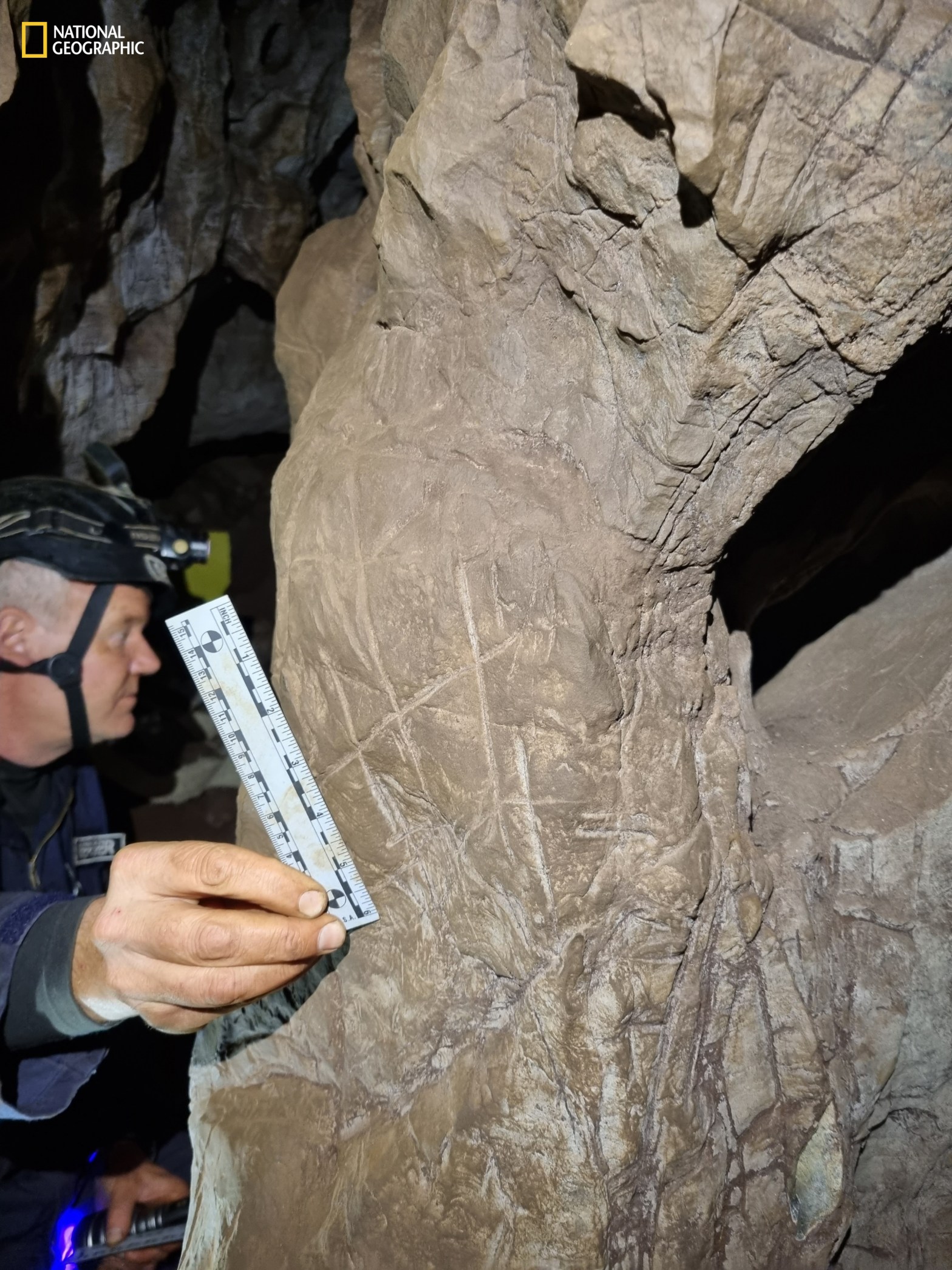
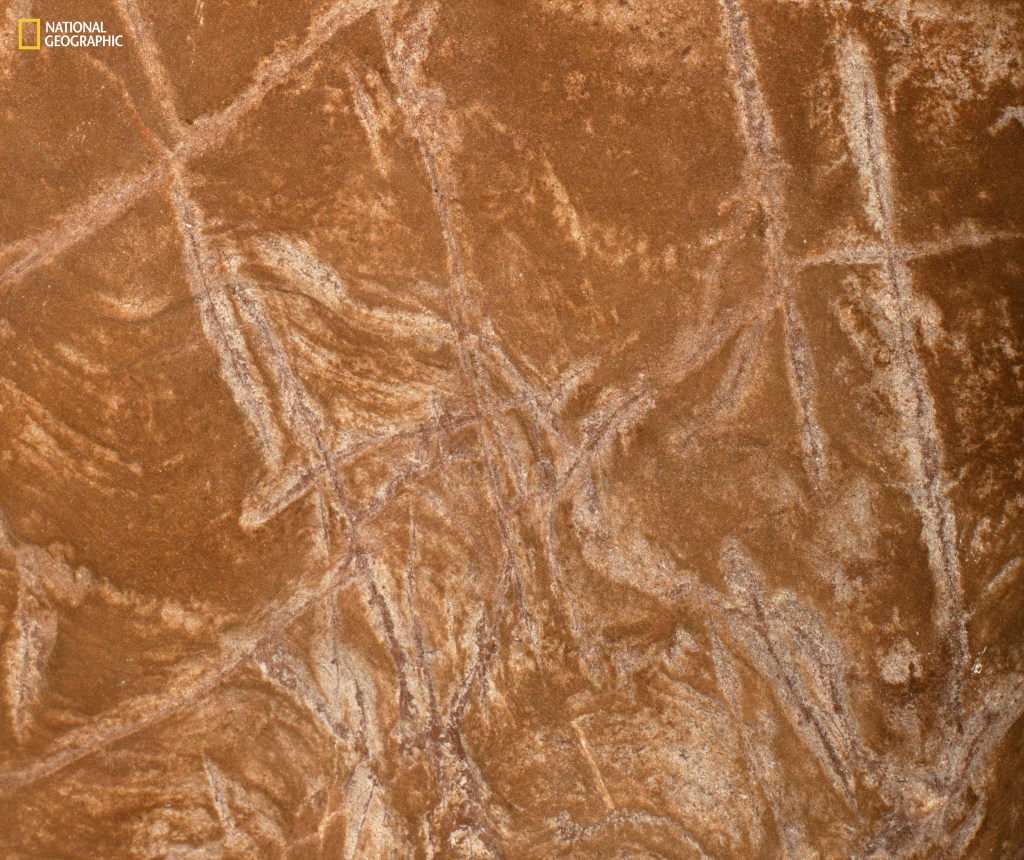
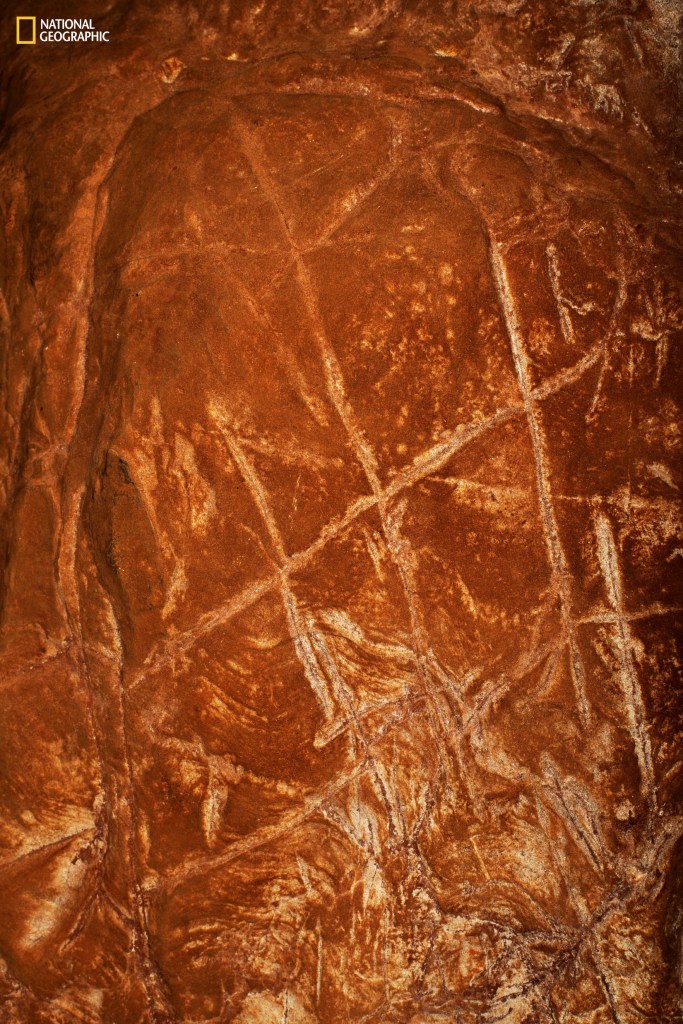
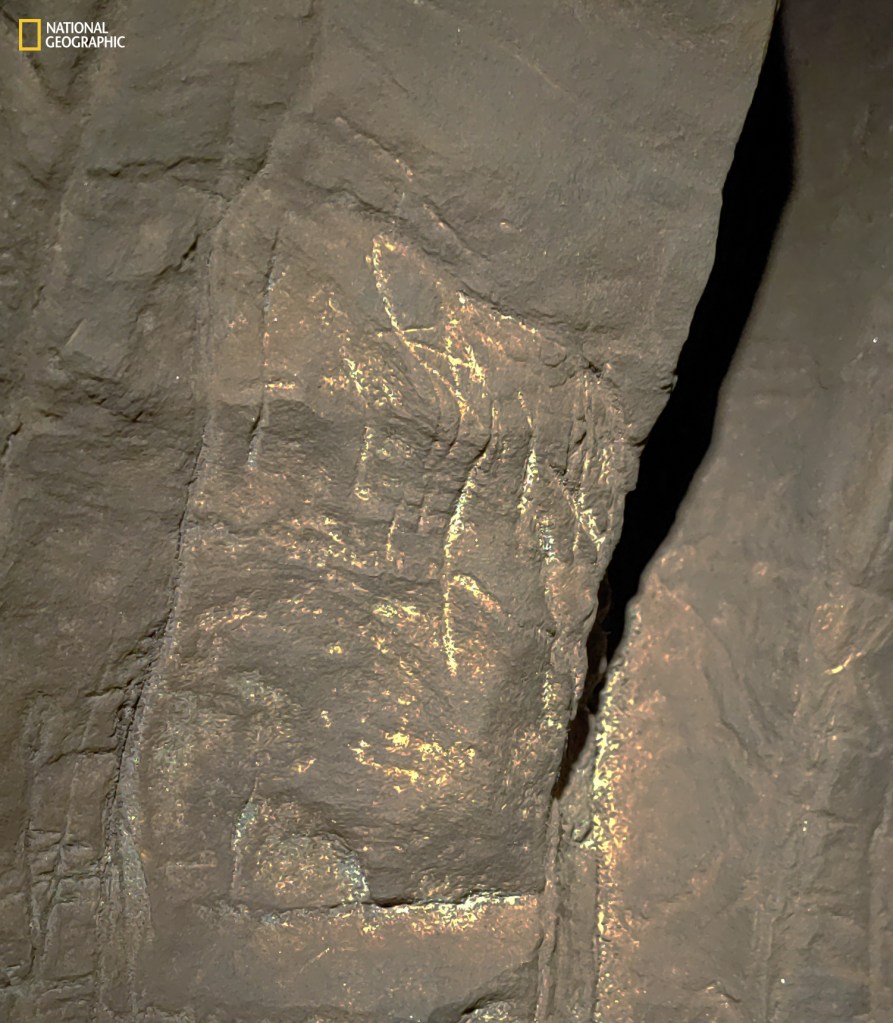
Additionally, the team found engraved markings on the cave walls, which could be 241,000 to 335,000 years old and will be further tested. These potential symbols, which include deeply impressed cross-hatchings and other geometric shapes, were found on surfaces that appeared to have been prepared and smoothed. The lines seem to have been made by carefully passing a pointed or sharp tool through the grooves repeatedly. The creation of similar visual marks has also been documented in Neanderthals (Homo neanderthalensis) from at least 60,000 years ago and early Homo sapiens in South Africa and Israel from about 100,000+ years ago. These types of purposeful graphic markings are generally considered to have been an early method for recording and transmitting meaning (though their significance remains shrouded in mystery), and are widely recognized as a major cognitive step in human evolution.
“These recent findings suggest intentional burials, the use of symbols, and meaning-making activities by Homo naledi. It seems an inevitable conclusion that in combination, they indicate that this small-brained species of ancient human relatives were performing complex practices related to death,” said Berger. “That would mean not only are humans not unique in the development of symbolic practices, but may not have even invented such behaviors.”
The Rising Star cave system has become one of the most fruitful sites for hominin fossils in the world. The new findings by Berger and team add a new chapter to what we know about the human origin story.
“To be inside the caves –– inside the world of Homo naledi –– is not only a life-changing adventure, but what we’ve uncovered forces us to rethink a whole set of assumptions about hominins and human evolution,” said Fuentes, professor of anthropology at Princeton University. “Much of what we assumed was distinctively human, and distinctively caused by having a large brain, may not be either of those things. Burial, meaning-making, even ‘art’ could have a much more complicated, dynamic, non-human history than we previously thought.”
The first H. naledi fossils were found in the Dinaledi chamber in 2013 by Berger and his team. The chamber is exceptionally narrow, requiring Berger to lose 55 pounds so he could traverse the chamber himself in 2022. He and his team continue to uncover new evidence about how H. naledi lived.
“With each new finding, Lee shifts our understanding of human evolution,” said Jill Tiefenthaler, the Society’s Chief Executive Officer. “The Society is proud to support Lee, Agustín, Keneiloe, and the rest of their team who are making significant contributions to science and exploration in their pursuit of answers about our ancient past.”
Read more about these findings on NatGeo.com. Additionally, on August 8, 2023, National Geographic Books will release Berger’s book, “Cave of Bones: A True Story of Discovery, Adventure, and Human Origins.” The book dives into the true-life scientific adventure, taking readers deep into South African caves as Berger and team uncover H. naledi fossil remains that compel a reframing of the human family tree. Berger’s findings will also be shown in Netflix’s “UNKNOWN: Cave of Bones” which premieres on July 17 as one of the films in a four-part docuseries event. He will also be announcing these findings at the Richard Leakey Memorial Conference at Stony Brook University on June 5 at 3:50 p.m. ET. Tune in to the livestream here.
About National Geographic Society
The National Geographic Society is a global nonprofit organization that uses the power of science, exploration, education and storytelling to illuminate and protect the wonder of our world. Since 1888, National Geographic has pushed the boundaries of exploration, investing in bold people and transformative ideas, providing more than 15,000 grants for work across all seven continents, reaching 3 million students each year through education offerings, and engaging audiences around the globe through signature experiences, stories and content. To learn more, visit http://www.nationalgeographic.org or follow us on Instagram, Twitter and Facebook.”
I cannot convey how important these discoveries are to understanding our origins, what this can change, and what this means for our understanding of what it means to be human. Be sure to check out the gallery below to see the images of the Homo naledi art. Yes, art. Imagine that, think for a moment, that we did not create the symbols that we find and attribute to later Homo sapiens, such as those from Bolombos; in fact, some of the same images that are found in Rising Star are located elsewhere, created by much larger brained hominin species, at much later dates. Twitter may have had no idea what he was dealing with when he introduced the internet to the “hashtag.” These symbols, which for so long have been attributed to higher brain function and cognition, are areas of the brain that should have developed last in a hominin who, by all of our understanding, should not have been capable of doing.
A close up of the base of the Panel A crosshatch engraving in the passage between the Hill Antechamber burial chamber and the Dinaledi Burial Chamber described in Berger et al (2023a). The roughly horizontal wavy lines at the bottom of the image which are crossed by the engravings is a fossil algal stromatolite found in the native dolomitic rock and clearly illustrate the non-natural origin of the more prominent etchings as they cross the fossil. Image from Berger et al., 2023.An image of the Panel A crosshatch engraving in the passage between the Hill Antechamber burial chamber and the Dinaledi Burial Chamber from Berger et al (2023a). The image is taken using a polarizing filter to highlight the various non-natural etchings on the surface. The roughly horizontal wavy lines at the bottom of the image which are crossed by the engravings is a fossil algal stromatolite found in the native dolomitic rock. Earlier etchings can be seen behind the crosshatch, possibly having been obscured by covering the surface with cave dirt as described in the scientific papers. Image from Berger et al., 2023.Moments after discovery, Lee Berger holds a photographic scale next to a hashtag, or crosshatched engraving in the passage between the Hill Antechamber burial chamber and the Dinaledi Burial Chamber known as Panel A. Photo by Mathabela Tsikoane, Courtesy Lee Berger and the National Geographic Society.Discovered on July 28th, 2022. This picture shows an image of Panel B in the Hill Antechamber exhibiting numerous engravings and etchings on the ancient dolomitic wall. The panel shows repeated etchings likely done over a considerable period. The etchings include geometric figures such as squares, ladders, triangles, crosses, and X’s. Image from Berger et al. (2023b).A closeup of the non-geometric image from the Hill Antechamber burial chamber that is found at the top of Panel B as described in Berger et al (2023b). Note the upside-down cross shaped etching to the left of the carving as well as other etchings to the right and below. The material discoloring the surface has not as yet been analyzed but appears to be secondarily applied to the surface in order to highlight the image in low light. Image from Berger et al., 2023.
“A few decades ago, we were the only ones capable of making art,” says Dr. Agustin Fuentes, a significant contributor to the analysis. To think, amazingly, that perhaps we did not invent art but saw it and copied what we saw being carved into cave walls. Who knows, maybe we were even taught. At this point, with Homo naledi, the possibilities, I think, are boundless. So many new avenues of research must be gone down before we can even begin to understand this species and ourselves. For so long, we have held that being human requires a type of cognition beyond what we see in other species, a “meta-cognition”, a way of thinking of oneself and those around us. It seems that naledi knew itself as a being who knew others recognized their passing, even possibly to another world they could not see.
There is so much content, news, and information that we could delve into or uncover together today. Still, unpacking things as we go will be more fun, so expect to see a great deal of naledi content coming from these pages over the next few weeks to months! But before you go, please keep a few things in mind, keep these three discoveries in mind, and then allow your brain to branch out and stretch to each of the possible implications each discovery could have.
Before we continue, I think it is important to keep in mind the thoughts of Genevive von Petzinger, an expert on Geologic Symbols, Cave Art, and Symbolic thought, “I think it’s important to note up front that I recognize that the goal of this paper was to announce the discovery of what appear to be intentionally-made marks in Rising Star cave in South Africa. This was not meant to be an in-depth analysis or a declaration of definitive results.” As she goes on to say, “This is a big claim. If it proves to be true, it has the potential to be paradigm-shifting as the identification of intentional engraved marks, made by a small-brained distant human cousin 200,000+ years ago in South Africa, would completely change our understanding of where, when, and who made the first graphic marks.” So before we continue, it is essential to keep a large grain of salt with everything we are thinking about regarding naledi and these discoveries. As other scientists, researchers, and data will show, there is much to learn and find out about these new finds. I know I keep repeating myself here, but I do not believe it can be overstated enough; these finds, if proven to be attributed to naledi through various scientific means, will change how we view things.
Let’s unpack:
The Use of Fire
The Ritualized Burial of the Dead
The Creation and Use of Meaningful
There is much to learn from these discoveries and published papers. Still, macroevolution can be observed, as can macro, and within these discoveries are dozens of other implications. What does it mean to be able to use and control fire? Was naledi the first to create what we consider to be meaning-making objects and symbols, or did they, too, get it from an earlier source? Is naledi where our modern ideas on burial, life, death, and the afterlife come from?
Let me posit something else; there is ongoing work that Dr. Hawks mentions involving proteomics and genomics research; we could even have interbred with this enigmatic species; we could share DNA with them, let alone our thoughts, feelings, emotions, and intuitions.
The more we learn, it shows that we know less than we thought we knew. What does it mean to be human? Just as so many times before, this claim or that has been made, and it is no one feature that makes us human, but an amalgamation of elements, many of which can be found in naledi hundreds of thousands of years before we humans were here to have a say in any of it.
Remember, there is always more to learn, and as Dr. Berger and naledi continue to show us, there are plenty of reasons to Never Stop Exploring.
Update: Check out this in-depth discussion I had with Genevieve von Petzinger about the alleged engravings:
Before the exciting and big announcements coming out on the 5th! (Stay tuned!) I wondered what, according to AI, would it mean if a hominin species, such as Homo naledi, ritualistically buried their dead?
Asking the New Bing Chatbot AI, I asked, “ in APA 7th edition, write a blog post about the implications on what it means to be human if the hominin species homo naledi buried its dead ritualistically, as some researchers believe. Cite your sources. “
The response was exciting: ( I am leaving it unedited to show what a pure AI response looks like).
“One of the most fascinating discoveries in human evolution is the finding of Homo naledi, a new species of hominin that lived in South Africa between 236,000 and 335,000 years ago. What makes this species so intriguing is the possibility that they buried their dead in a ritualistic way, something that was previously thought to be unique to modern humans. In this blog post, I will explore the implications of this behavior for our understanding of what it means to be human.
Homo naledi was first announced in 2015 by a team of researchers led by Lee Berger, who found more than 1,500 bones of at least 15 individuals in a remote chamber of the Rising Star cave system in the Cradle of Humankind, a UNESCO World Heritage Site. The bones belonged to a small-brained species that had a mix of primitive and modern features, such as curved fingers, long legs, and a human-like face. The researchers suggested that the bones were deliberately placed there by other Homo naledi individuals over a long period of time, as there was no evidence of predators, water flow, or natural openings that could have transported the bones into the cave (National Geographic, 2015).
This hypothesis was challenged by some scientists who argued that it was implausible that such a low-intelligence species could have engaged in such a complex behavior, and that there might be alternative explanations for how the bones got there (CNN, 2021). However, in 2017, Berger’s team found another partial skull of a Homo naledi child in a nearby passage of the same cave system, which strengthened their case for intentional disposal of the dead (CNN, 2021). The child’s skull was found on a limestone shelf above the cave floor, suggesting that it was placed there on purpose.
If Homo naledi did indeed bury their dead, what does that mean for our definition of humanity? One possible implication is that we need to rethink our assumptions about the relationship between brain size and cognitive abilities. Homo naledi had a brain volume of about 500 cubic centimeters, which is less than half of that of modern humans. Yet they may have exhibited a behavior that requires planning, cooperation, communication, and symbolic thinking. This suggests that brain size is not the only factor that determines intelligence, and that there might be other ways of evolving complex cognition (Human Genesis, 2016).
Another possible implication is that we need to expand our view of human culture and spirituality. Disposal of the dead is one of the earliest signs of cultural expression and religious belief among hominins. It shows that they had a sense of self-awareness, social bonding, and respect for the deceased. It also implies that they had some concept of an afterlife or a transition to another realm. While we cannot know for sure what Homo naledi thought or felt when they buried their dead, we can imagine that they had some form of emotional attachment and ritual practice that gave meaning to their lives (National Geographic, 2015).
In conclusion, Homo naledi is a remarkable species that challenges our conventional notions of what it means to be human. By burying their dead in a ritualistic way, they may have demonstrated cognitive and cultural capacities that were previously thought to be exclusive to modern humans. They also may have shared some aspects of our spirituality and morality, which are often considered to be defining features of our humanity. By studying Homo naledi and other hominins, we can learn more about our origins and diversity as a species.
From this little article, I hope that you can see why Homo naledi has always been such a big deal and why learning more about these supposed practices can help shine a light on what makes us cognitively and socially human. Perhaps we will learn more on the fifth; one can only hope and wonder what new mysteries will be announced from the depths of Rising Star Cave, as it never seems empty of surprises.
Keep an eye on this space for all Homo naledi news, especially around the 5th of June this month; not sure what time, but I will have the coverage out ASAP, and if we are lucky, as it is happening! So stay tuned!
On this episode of The Story of Us, prepare to hear some exciting content and news!
Premiering at 3pm PST! Dr. Brenna Hassett is a bioanthropologist and archaeologist who uses the evidence left behind in bones and teeth to tell us how we grew — or failed to grow — in the past.
In this video, Dr Hassett will discuss her research on the archaeology of death in cities, and how our primate ancestry informs the incredible way our species has evolved the longest childhoods on the planet.
Dr Hassett is also 1/4 of Team TrowelBlazers, a group of women working to recognise the unsung accomplishments of women in the ‘digging’ sciences.
Don’t miss this opportunity to learn from one of the leading experts in her field.
Written with the Assistance of the New Bing as well as Grammarly
There is a fact in Anthropology that I just love telling people because it seems to always blow their minds, for whatever reason…but that fact is that there is more genetic diversity within Africa than in the rest of the world.
Why?
Read on to learn more!
The continent of Africa is the birthplace of modern humans and boasts of being the most genetically diverse continent on the planet. The genetic variation among African populations reflects their deep evolutionary history, complex migration patterns, admixture, and adaptation. It is essential to comprehend the genomic diversity of Africa to advance research into human health and diseases and reconstruct the origins and evolution of our species.
According to the widely accepted model, modern humans (Homo sapiens) emerged in Africa approximately 300,000 years ago and gradually replaced other hominid species across the globe. Anatomically modern human fossils have been found in Morocco and Ethiopia, and the oldest evidence of symbolic behavior and culture, such as art and burial practices, have been found in South Africa.
Therefore, African populations today harbor more genetic diversity than any other population globally, with non-Africans having only a subset of that diversity found in Africa. The continent has significant cultural, linguistic, and genetic diversity.
The history of human migration and admixture within and out of Africa is complex and dynamic. Several waves of migration have occurred over time, influenced by environmental, cultural, and historical factors. The major events include the expansion of Bantu-speaking populations from West-Central Africa to Eastern and Southern Africa, resulting in the spread of agriculture, metallurgy, and languages across the continent, as well as genetic admixture with local hunter-gatherer groups. The arrival of Eurasian populations to Africa through different routes and periods, such as the back-to-Africa migration of early farmers from the Near East around 3,000 years ago, the Arab slave trade from the 7th to the 19th centuries, and the European colonization from the 15th to the 20th centuries, introduced new genetic variants and haplotypes into African populations, as well as diseases and pathogens. The transatlantic slave trade from the 16th to the 19th centuries forcibly displaced millions of Africans to the Americas and other regions, resulting in the formation of new populations with varying degrees of African ancestry, as well as the loss of genetic diversity in some African regions.
The diverse environments and lifestyles of African populations have shaped their genomes through natural selection. Selection can increase the frequency of beneficial variants or decrease the frequency of harmful variants in response to environmental pressures, such as climate, diet, pathogens, or culture. Some examples of genes that show evidence of positive selection in African populations are genes involved in immune response to viral infections, such as TRIM5α, which confers resistance to HIV-1 in some individuals, genes involved in DNA repair and metabolism, such as BRCA1 and BRCA2, which are associated with breast cancer risk, genes involved in skin pigmentation, such as SLC24A5 and SLC45A2, which influence skin color variation among Africans, and genes involved in malaria resistance, such as HBB (sickle cell trait), G6PD (glucose-6-phosphate dehydrogenase deficiency), and DARC (Duffy blood group antigen).
The genomic diversity of Africa has significant implications for human health and disease research. On one hand, it offers a unique opportunity to discover novel genetic variants and loci that influence disease susceptibility, severity, or response to treatment. On the other hand, it poses challenges for transferring findings from other populations or applying standard diagnostic tools or therapies that are based on non-African data.
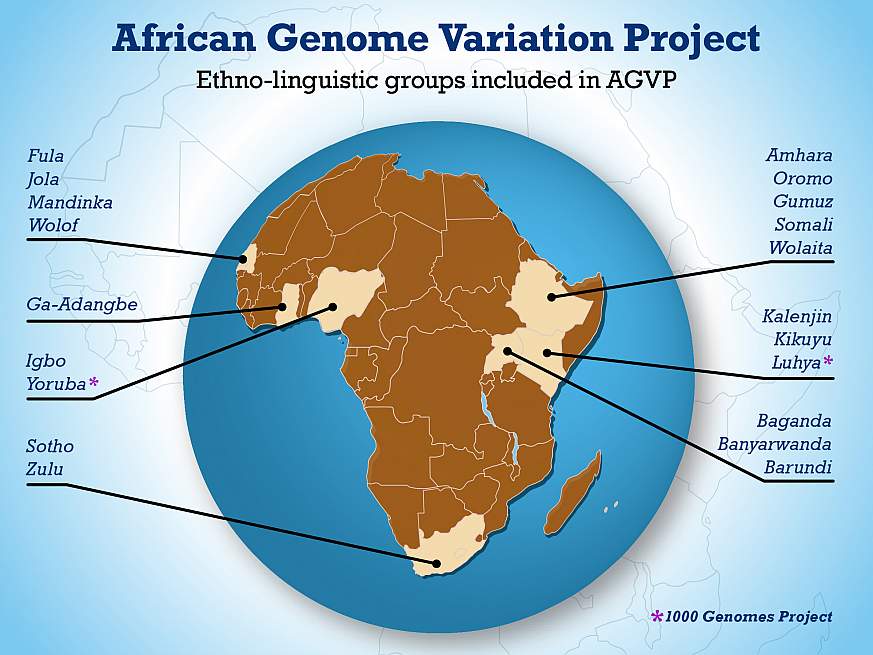
Therefore, there is a need for more comprehensive characterization of the genomic diversity of African individuals to understand the genetic basis of health and disease, as well as to develop precision medicine approaches that are tailored to their specific needs and contexts. Several initiatives have been launched to address this gap, such as the Human Heredity and Health in Africa (H3Africa) Consortium and the African Genome Variation Project, which aim to generate large-scale genomic data from diverse African populations and apply them to biomedical research.
In conclusion, Africa is a rich source of genomic diversity that reflects its long and complex history as the cradle of modern humans. Studying the genomic diversity of Africa can provide insights into human origins, evolution, migration, admixture, adaptation, and so much more. New research papers are continually showing us that while Africa is indeed the birthplace of modern humans, we may not have been rooted there.
Today we will be talking about a fascinating topic, one of which seems to go under the radar from time to time and yet has an extreme impact on the populations of modern humans (us)! We will discuss bottlenecks, what they are, and how they affect the populations they affect. This is not strictly based on what happens to humans, but that, of course, will be the main point of this article. Humans.
A human population bottleneck is a sharp reduction in the size of a human population due to environmental events or human activities, such as famines, earthquakes, floods, fires, disease, droughts, wars, migrations, or cultural practices. Population bottlenecks can significantly affect the genetic diversity and health of human populations and their evolutionary history and adaptation. A bottleneck can occur when there is any reason or reasons for drastically reducing the genetic pool available to a population at any given point. By reducing the gene pool and minimizing admixture, we can begin to see the issues arise that small populations face. But of course, we survived and possibly even came out better and more adapted to our ecological niches at the end of each of these proposed bottlenecks.
Genetic diversity is the variation in the genes of a population. It is essential for the survival and adaptation of a population, as it allows for natural selection to act on beneficial traits and eliminate harmful ones. Genetic diversity also provides the raw material for innovation and creativity in human culture and technology. If there is a small gene pool, we are going to see the same phenotypic features over and over, and if those features, for whatever reason, do not fit the new niche created by the bottle neck, much of the population will die off. For one reason to another, infighting, lack of breeding opportunities, or higher competition for resources such as food and water. Population genetics is very fragile, and changes in how things are done can have drastic impacts.
Population bottlenecks can reduce genetic diversity by increasing the effects of genetic drift and inbreeding. Genetic drift is the random change in the frequency of alleles (different versions of a gene) in a population due to chance events. Inbreeding is the mating of closely related individuals, which increases the likelihood of inheriting identical copies of alleles from both parents. Both genetic drift and inbreeding can lead to the loss of alleles, the fixation of alleles (when one allele becomes the only one in a population), and the increase of harmful recessive traits that can cause diseases or impairments.
When we are dealing with smaller populations that are trying to survive, any evolutionary disadvantages they face are going to be increased. If a recessive trait is usually bred out of the population, allowing the population to flourish and grow, but only those individuals with this allele or trait remain, then whatever negative aspect about this feature will cause damage. Sometimes too much damage to the area’s ecology, and we have extinctions, or, as we are learning, near extinction events called bottlenecks.
Population bottlenecks can also affect the evolutionary history and adaptation of human populations by altering their patterns of genetic variation and relationships with other populations. For example, population bottlenecks can create founder effects, which occur when a small group of individuals colonizes a new area or becomes isolated from the main population. Founder effects can result in genetic differences between the new population and the original one and among different populations that originated from the same source. Founder effects can also influence the cultural and linguistic diversity of human populations. At its most extreme, many anthropologists, when asked the question, “Where will humans be in a thousand years?” It is hard to answer, for if we do go into space for any extended time, and I do mean a long amount of time, those who went into space would be the “founders”; setting a new population base wherever they went, one which may not exactly represent the original gene pool back at home. The founder effect has had a great role in our development and evolution; it has allowed us to develop and to develop changes, changes which make is beautifully part of the same species.
Examples of human population bottlenecks
Human populations have experienced many population bottlenecks throughout their history, some of which have left traces in their genomes that can be detected by genetic analysis. Some examples are:
– The Out-of-Africa bottleneck: This occurred when a small group of modern humans left Africa about 60,000 to 80,000 years ago and spread across the world, replacing other hominin species such as Neanderthals and Denisovans. This bottleneck reduced the genetic diversity of non-African populations compared to African ones, as well as introduced some genetic variants that were adaptive to different environments outside Africa.
– The Toba catastrophe bottleneck: This is a controversial hypothesis that proposes that a massive volcanic eruption at Lake Toba in Indonesia about 74,000 years ago caused a global cooling event that drastically reduced the human population to about 10,000 to 30,000 individuals. This bottleneck would have further decreased the genetic diversity of human populations and increased their genetic differentiation.
– The Ashkenazi Jewish bottleneck: This occurred when a small group of Jewish people migrated from Europe to Eastern Europe about 1,000 years ago and established a distinct cultural and religious identity. This bottleneck reduced the genetic diversity of Ashkenazi Jews compared to other Jewish groups and increased their susceptibility to certain genetic diseases such as Tay-Sachs disease and cystic fibrosis.
– The New Zealand black robin bottleneck: This occurred when only five individuals of this bird species survived after habitat destruction and predation by introduced mammals in the 1980s. This bottleneck severely reduced the genetic diversity and fitness of this species, which required intensive conservation efforts to prevent its extinction.
So there we have it! I hope this has answered some of your questions surrounding what bottlenecks are when we are talking about genetics, human genetics, what it means, and the effects it could have evolutionarily on a species.










 World of Paleoanthropology