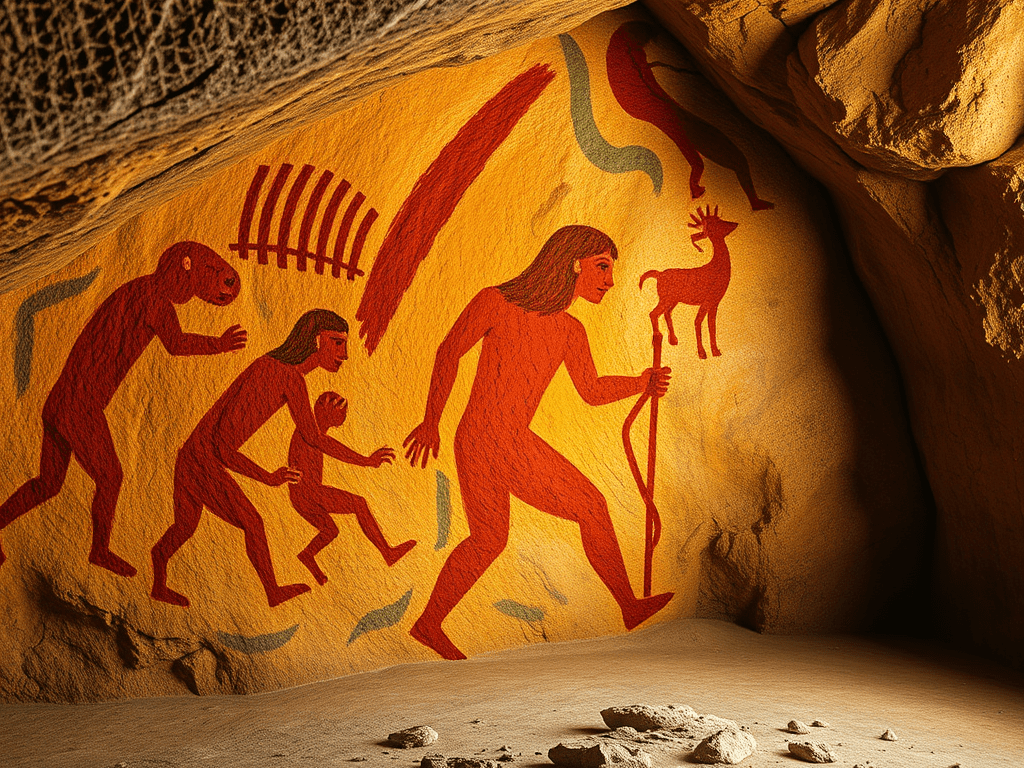
What if the roots of our modern creativity lie not in galleries or screens, but in ancient caves and carved shells? Artistic expression, from an evolutionary standpoint, is not a peripheral activity—it is central to the very definition of what it means to be human. Early visual culture—manifested in the form of Paleolithic cave paintings, petroglyphs, and engraved artifacts—offers profound insight into the origins of abstract cognition, social cohesion, and symbolic communication. Artifacts like the ochre-stained walls of Chauvet or the meticulously incised shells associated with *Homo erectus* serve as both tangible and conceptual precursors to the multifaceted artistic practices we engage in today. They signal cognitive and cultural thresholds that predate written language and foreshadow the complex media ecosystems that now include AI-generated visual content. Tracing this arc from early symbolic markings to digital code allows us to better understand our ancestors and reflect on how art continues to shape our engagement with reality.
Cognitive Evolution: Art as a Marker of Symbolic Thought
The emergence of symbolic material culture marks a critical juncture in human evolution. The act of creating representational imagery—be it zoomorphic, anthropomorphic, or geometric—demonstrates an advanced capacity for abstract thought, deferred meaning, and intentional communication. This development is intimately linked to neurological evolution, particularly the expansion of the prefrontal cortex and associative brain regions that govern executive function, imagination, and narrative thinking.
Early visual expressions externalized internal cognitive processes, enabling individuals to communicate not only immediate experiences but also mythic, conceptual, and temporal ideas. Art became an extension of working memory—a shared interface for transmitting knowledge and values across generations. This concept aligns with Merlin Donald’s theory of distributed cognition, which posits that symbolic artifacts serve as external memory storage systems, enabling complex cultural continuity beyond the limitations of individual minds. Thus, visual symbols should be understood not merely as aesthetic artifacts but as epistemological tools: expressions of thought that bridge individual cognition and collective understanding. The cognitive substrate that enabled early art overlaps significantly with the capacities that support language, science, and complex social behavior.
Social Connectivity: Aesthetic Production and Group Identity
Archaeological evidence suggests that early artistic activity was often communal in nature, embedded within ritual contexts that reinforced group identity and cohesion. Cave sites such as Lascaux or El Castillo are frequently located in acoustically resonant chambers, implying multisensory ritual practices. These spaces likely functioned as arenas for performance, storytelling, and initiation rites—where visual symbols were activated through narrative and ceremonial acts. The collective creation and interpretation of art reinforced cultural norms and deepened intra-group bonds.
Moreover, portable art objects—beads, figurines, and engraved tools—played essential roles in establishing social hierarchies, trade relationships, and intergroup alliances. These artifacts functioned as signifiers of identity, status, or cosmological affiliation. Like language, the creation and exchange of symbolic objects facilitated the expansion of social networks. Artistic production was thus not merely reflective of social life; it was constitutive of it. It generated shared symbolic vocabularies that structured human interaction and preserved collective memory.
Modern Parallels: AI Art and the Extension of Human Creativity
The proliferation of digital and AI-generated art provides an opportunity to re-examine the boundaries of creativity and cognition. These technologies enable novel forms of collaboration between human and machine, challenging traditional concepts of authorship and artistic agency. A notable example is the AI-generated portrait “Edmond de Belamy,” created by the Paris-based collective Obvious using a generative adversarial network (GAN), which sold at Christie’s for over \$400,000. This case exemplifies how algorithmic systems are entering the art market and public consciousness, prompting widespread debate over the meaning and value of machine-made creativity. Just as ochre marks on limestone expanded the communicative repertoire of early humans, algorithmic processes now extend our capacity to visualize, simulate, and express complex ideas.
AI-generated art—from neural style transfer to generative adversarial networks (GANs)—introduces modes of pattern recognition and synthesis that parallel aspects of human creativity, though by distinct means. Some critics argue that AI lacks intentionality or emotional nuance. Others suggest that human-AI collaboration marks a new stage in the co-evolution of minds and tools. These technologies do not supplant human creativity; rather, they augment and transform it, prompting reflection on the nature of consciousness, originality, and future artistic production.
Digital platforms have also reconfigured the social functions of art. Virtual galleries, NFT communities, and algorithmically curated feeds now serve as new loci of cultural exchange and identity construction. Much like the communal cave paintings of the Upper Paleolithic, these digital spaces facilitate the negotiation of symbolic meaning. They reaffirm the enduring role of art as both a mirror and a maker of shared experience, echoing the communal storytelling and identity-shaping functions of ancient art. Just as early humans gathered to create and interpret symbols that reflected their world, today’s digital art communities engage in similar acts of meaning-making and cultural negotiation in virtual spaces.
Conclusion: The Deep Continuity of Artistic Expression
From engraved shells to generative algorithms, the history of human artistic production reveals a continuous interplay between cognition, culture, and creativity. This enduring relationship serves as a foundation for understanding how creative expression has evolved alongside human thought and society. Artistic expression has never been solely about aesthetics; it has always been a way of articulating our place in the world, negotiating identity, and bridging the divide between self and other. As we enter an era of increasingly digital and machine-assisted creativity, understanding the roots of our artistic impulses becomes even more crucial.
By tracing this lineage, we gain insights into both our deep past and our creative futures. The study of early art offers a powerful framework for evaluating contemporary developments in art and technology. It reminds us that art is not a static product but a dynamic, evolving process—one that reflects and shapes the human experience across time. Cave walls and code alike are inscribed with meaning; both serve as portals to understanding ourselves and our place within a broader human narrative.
See you next time, and remember, there is always more to learn!
In the tapestry of human evolution, few threads are as evocative as the act of burial. The deliberate interment of the dead signifies more than a practical response to mortality; it reflects cognitive depth, emotional resonance, and social complexity. For early hominins, grappling with death may have been a pivotal moment—marking the emergence of symbolic thought and cultural expression. It is in this reckoning with the finality of life that we catch glimpses of an evolving consciousness, one not purely driven by survival, but by memory, grief, and meaning.
This article delves into the archaeological and anthropological evidence of burial practices among ancient hominins, focusing on three seminal sites: Shanidar Cave, Sima de los Huesos, and the Rising Star Cave system. Each site offers a unique window into the evolving relationship between early humans and the concept of death, hinting at a complex interplay between biology, belief, and behavior. Understanding these practices allows us to reimagine the ancient mind and our shared emotional lineage.
Shanidar Cave: Neanderthals and the “Flower Burial”
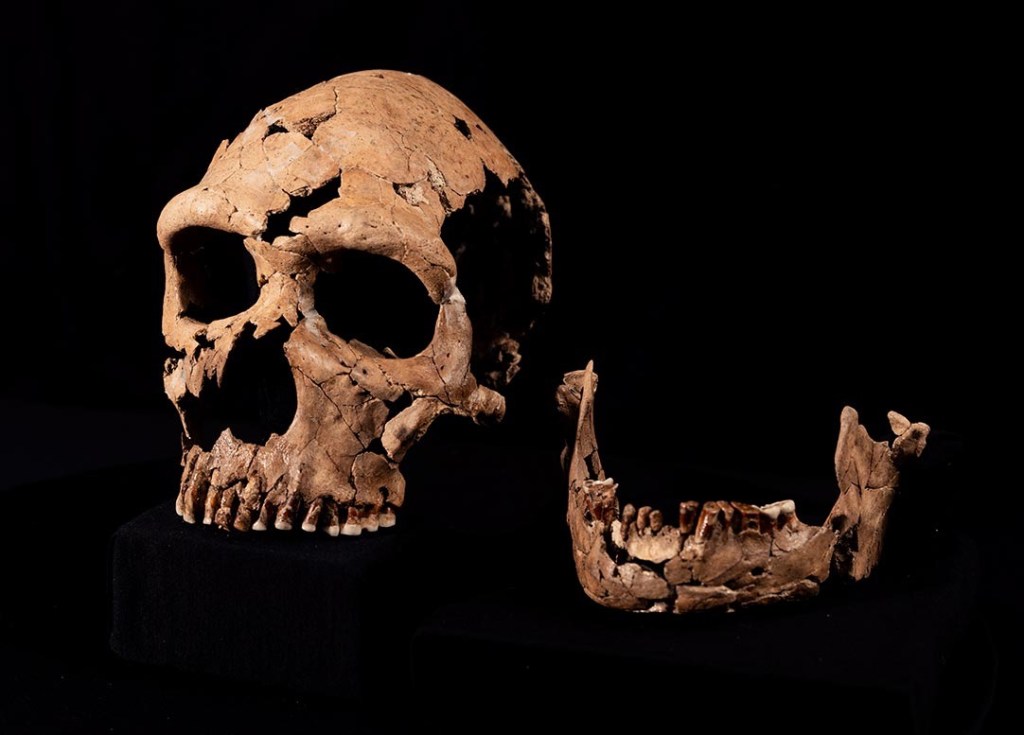
Located in the Zagros Mountains of northern Iraq, Shanidar Cave has yielded some of the most compelling evidence of Neanderthal burial practices. Excavations led by Ralph Solecki in the 1950s and ’60s uncovered the remains of ten Neanderthal individuals, some of whom appear to have been deliberately buried. Among them, the discovery of Shanidar IV has become particularly iconic.
Next to the bones of Shanidar IV, archaeologists found clusters of ancient pollen grains, potentially representing specific flower species. Solecki interpreted this as evidence of a “flower burial,” suggesting that Neanderthals placed flowers with their dead—a profoundly symbolic act pointing to emotional depth and cognitive sophistication ([cam.ac.uk](https://www.cam.ac.uk/stories/shanidarz?utm_source=chatgpt.com)). Although some have argued that the pollen may have entered the site through rodent activity or natural deposition, the overall context supports a more deliberate interpretation.
Further excavations and re-analyses in the 21st century have strengthened the case for intentional burial. The careful placement of bodies and lack of disturbance from carnivores suggest that Neanderthals were not simply reacting to the presence of the dead but were actively managing death in socially meaningful ways. This insight challenges outdated views of Neanderthals as cognitively inferior and reframes them as complex, emotionally responsive beings.
Sima de los Huesos: A Middle Pleistocene Mortuary Site
Deep within the Atapuerca Mountains of northern Spain lies one of paleoanthropology’s most haunting sites: Sima de los Huesos, or the “Pit of Bones.” Over 6,500 fossil fragments have been recovered here, representing at least 28 individuals of Homo heidelbergensis. These remains date to approximately 430,000 years ago, making this the earliest known accumulation of hominin bodies in a single context.
What makes this site remarkable is not just the quantity of remains, but the manner of their deposition. The bones were found in a vertical shaft deep within a cave system, suggesting that individuals were intentionally placed or dropped there post-mortem. Taphonomic analyses have revealed breakage patterns consistent with a fall, indicating that bodies were likely lowered or tossed into the pit after death ([phys.org](https://phys.org/news/2025-03-burials-compelling-evidence-neanderthal-homo.html?utm_source=chatgpt.com)).
Adding a layer of intrigue, a single finely made handaxe of red quartzite—nicknamed “Excalibur”—was found among the bones. This artifact, too large and unworn to be utilitarian, is interpreted as a symbolic offering or grave good ([sciencedirect.com](https://www.sciencedirect.com/science/article/pii/S1631068305001697?utm_source=chatgpt.com)). If this interpretation holds, it represents one of the earliest instances of funerary symbolism in the human lineage.
Though less visually evocative than Shanidar, Sima de los Huesos may tell a deeper story. The sheer number of individuals represented and the possible inclusion of symbolic items suggest a communal awareness of death and a response that transcends basic hygiene or danger. It suggests the stirring of mortuary tradition and even proto-spirituality among pre-Neanderthal populations.
Rising Star Cave: Contested Homo naledi Burials
In 2013, a team of cavers and scientists working in South Africa’s Rising Star Cave system made a discovery that would shake the foundations of paleoanthropology. The remains of at least 15 individuals of Homo naledi were found in an almost inaccessible chamber called Dinaledi. These fossils, remarkably preserved and undisturbed, presented a new puzzle: how and why were they placed there?
The physical context of the chamber—accessible only through a narrow and perilous route—rules out most natural causes of body accumulation. There are no signs of predator activity, and the presence of articulated skeletons suggests minimal post-mortem disturbance. Over time, researchers proposed a radical hypothesis: Homo naledi may have deliberately placed their dead in this secluded location, engaging in a rudimentary form of burial or body disposal ([nhm.ac.uk](https://www.nhm.ac.uk/discover/news/2023/june/claims-homo-naledi-buried-their-dead-alter-our-understanding-human-evolution.html?utm_source=chatgpt.com)).
This claim, if verified, is profound. Homo naledi lived around 236,000 to 335,000 years ago, during a time when they coexisted with early Homo sapiens. Yet their brain size, roughly one-third that of modern humans, challenges assumptions about the cognitive requirements for mortuary practices.
New findings from 2023 have revealed shallow pits containing skeletal remains within the chamber, interpreted as intentional graves. If Homo naledi did engage in deliberate burial, they were doing so independently of other hominin groups with larger brains, suggesting that symbolic behavior evolved more than once in our evolutionary history. Not everyone agrees, and critics point to the need for further evidence and alternative explanations such as accidental entrapment or natural events ([timesofisrael.com](https://www.timesofisrael.com/new-evidence-points-to-neanderthal-burial-rituals/?utm_source=chatgpt.com)).
Regardless of the final verdict, the case of Homo naledi forces a reevaluation of what it means to be “human” in a behavioral sense and reminds us that evolution is rarely linear or simple.
The Significance of Burial Practices
Burial, in its many forms, offers critical insight into the cognitive, social, and emotional dimensions of hominin life. Across the three cases discussed, several overarching themes emerge:
1. **Cognitive Complexity**: The act of burial implies an understanding of death as a transformation or final state. In some contexts, it may signal belief in an afterlife or a spiritual world.
2. **Social Cohesion**: Burial reflects a strong group identity. The care shown to the dead—whether through floral arrangements, artifact placement, or careful body positioning—indicates that bonds extended beyond life.
3. **Symbolic Behavior**: The use of objects, color (such as red ochre or quartzite), and spatial placement in funerary contexts demonstrates the emergence of symbolic thinking and perhaps language.
4. **Evolutionary Insight**: Studying the diversity of burial practices across species and time periods helps us understand the multiple pathways through which behavioral modernity emerged.
These practices, far from being peripheral cultural details, are central to what makes us human. They mark the emergence of moral frameworks, collective memory, and spiritual imagination. Through burial, the dead remain a part of the living community.
Conclusion: Reflections on Mortality and Humanity
The act of burying the dead transcends mere practicality; it reflects our deep-seated need to find meaning in life and in death. From the fragrant pollen at Shanidar to the enigmatic bodies of Homo naledi, burial practices across hominin species speak to a universal theme: the recognition of mortality and the emotional bonds that outlast it.
As we unearth and interpret these ancient acts, we are not merely studying bones or sediment. We are listening to the whispers of ancient minds—beings who mourned, remembered, and perhaps even imagined a world beyond this one. In these burial sites, we find not just the story of evolution, but the roots of the human soul.
So I missed reporting on this news recently; and it’s pretty significant so I wanted to make sure that I addressed it. I also plan on making a quick summary video about it for sharing and educational enjoyment ASAP. Please learn, like, share, and subscribe!
In the depths of northern Spain’s Sierra de Atapuerca, an extraordinary discovery has recently captured global attention. Fossilized fragments of a human face, affectionately nicknamed “Pink,” have been unearthed in the Sima del Elefante cave. Radiometric dating places these remains between 1.1 and 1.4 million years old, marking them as the oldest known human facial fossils in Western Europe, significantly predating earlier discoveries.
Anatomical and Evolutionary Significance
The fossil, cataloged as ATE7-1, is remarkably well-preserved, comprising approximately 80% of the left side of an adult individual’s mid-face. The fragment includes key anatomical features such as the cheekbone and upper jaw. Although Pink shares certain characteristics with Homo erectus—particularly robust facial structures—it displays distinct differences unseen in other known hominin fossils. This intriguing mix of familiar and unique traits has prompted scientists to tentatively classify Pink as Homo affinis erectus, suggesting it might represent a previously unknown hominin species or subspecies closely related to, yet distinct from, the classic Homo erectus.
The implications of this discovery are profound, hinting at a previously unrecognized branch in the human evolutionary tree. Detailed comparative analyses of cranial morphology between Pink and other early human species are currently underway. These studies aim to clarify Pink’s precise phylogenetic position and enrich our understanding of early human diversity in Europe.
Cultural and Environmental Context
Alongside Pink, archaeologists uncovered a collection of stone tools crafted from quartz and flint. These artifacts, together with animal bones bearing unmistakable cut marks, provide compelling evidence of advanced tool use and meat processing. Such findings demonstrate a level of behavioral sophistication and cognitive capability previously unattributed to European hominins from this period.
The environmental context of Pink’s era further enhances our comprehension of these early inhabitants. The Atapuerca region during this period was characterized by a lush Mediterranean forest ecosystem, abundant with fauna and plentiful water sources. Such a hospitable environment would have supported prolonged habitation, enabling early hominins to flourish and evolve.
Challenging Existing Migration Models
Pink’s discovery significantly reshapes our understanding of early human migration into Europe. Before this find, the oldest human fossils in Europe dated back approximately 800,000 years, suggesting a later arrival and establishment. Pink pushes this timeline back by several hundred thousand years, indicating that hominins entered and adapted to Western European environments much earlier than previously thought.
This discovery compels paleoanthropologists to reassess current migration models, examining the timing, routes, and adaptive strategies employed by early hominins as they dispersed across the continent. Additionally, the possibility of a new species raises intriguing questions regarding interactions, competition, and potential interbreeding among different hominin populations across Eurasia.
Future Research Directions
Despite the groundbreaking nature of Pink’s discovery, the fossil raises as many questions as it answers. Ongoing and future excavations at the Atapuerca site are critical for gaining deeper insights into this mysterious early human lineage. Continued interdisciplinary research—including detailed morphological analyses, genetic studies (where viable), and advanced dating techniques—will be essential to fully understand the significance of Pink’s discovery.
Researchers also aim to investigate broader regional contexts, determining the geographical distribution of these hominins and their interactions with contemporaneous populations elsewhere in Eurasia. Each subsequent find will further illuminate the complexity and interconnectedness of early human evolution, enriching the intricate narrative of our shared past.
Conclusion
The discovery of Pink in the Atapuerca Mountains is more than an addition to the fossil record—it represents a transformative moment in our understanding of human evolution in Europe. By revising the timeline of early human settlement and introducing the possibility of an entirely new hominin lineage, Pink challenges us to reconsider our evolutionary history, highlighting the ongoing mysteries of our ancient past.
References
Washington Post: “Fragments of a face more than a million years old found in Spanish cave”
CENIEH: “Atapuerca reescribe la historia del primer poblamiento europeo”
The Times: “Oldest human facial bones found in western Europe rewrite prehistory”
I’m Seth Chagi—paleoanthropologist, science communicator, and founder of the World of Paleoanthropology. My passion lies in unraveling the story of our shared human origins and making this knowledge engaging and accessible to everyone through compelling articles, dynamic videos, and interactive experiences. As the enthusiastic host of the #PaleoPostPodcast and creator of the popular YouTube series “The Story of Us,” I love bringing the wonders of our ancient past vividly to life.
Grounded in the philosophies of Stoicism and Humanism, I approach both my work and personal life with resilience, empathy, and curiosity, continuously striving for growth and balance. These principles guide my mission to foster a deeper understanding of humanity’s journey and our interconnectedness with nature and each other.
Beyond my professional pursuits, I’m deeply committed to education and inclusivity. My experience as a certified behavioral analyst has allowed me to support and uplift children, particularly those on the autism spectrum, helping them build confidence and emotional resilience. Through interactive workshops, I aim to ignite curiosity and a lifelong passion for science in young learners.
Leveraging expertise in social media and digital storytelling, I craft engaging content designed to promote scientific literacy and foster a vibrant community of curious minds.
My goal is simple yet profound: inspire individuals of all ages to explore the rich tapestry of our human heritage, nurture a love for discovery, and contribute meaningfully to the ongoing conversation about our past, present, and collective future.
I am availalble for in person, and virtual events, to help facilitate and spread awarness on our shared Human Origins. If you are interetsted, please contact me at worldofpaleoanthropology@gmail.com for more information.
Imagine a small band of early humans huddled around a flickering fire on the African savanna 1.8 million years ago. In the dim glow, a young mother cradles her infant, who fusses quietly. There are no cribs or strollers, no formula or diapers – only the tools nature endowed and the ingenuity of a resourceful species. This is the world of early hominin parenting, where raising a child is a feat of survival and a labor of love. In this narrative, we journey back to the Pleistocene to explore how the challenges of prehistoric parenting shaped the course of human evolution. Drawing on anthropological research and evolutionary theory – from Sarah Blaffer Hrdy’s insights into cooperative breeding to modern findings on parental physiology – we uncover how the simple acts of holding, feeding, and nurturing children became pivotal forces in making us human. It’s a story of endurance and creativity, of grandmothers and fathers, of play and community – themes from our distant past that carry surprising lessons for parents today.
Life in the Late Pleistocene: Parenting Without Privilege
In a world with no baby food or nursery rooms, parenting for our Homo erectus ancestors was a full-contact sport. A mother couldn’t lay her baby down in a safe bassinet or duck into a kitchen to warm a bottle. Protection and provision had to be continuous and creative. During the day, mothers foraged wild tubers and fruits, often with infants strapped to their bodies or clinging to their fur or leather slings. Every few hours, the baby’s cries signaled a need for nursing. Milk was the one meal always on hand – and it had to be, for an infant unable to digest tough wild foods relied entirely on mother’s milk for many months. Nights brought their own trials. In the darkness of a world without walls, a sleeping baby left even a few feet away could fall prey to prowling hyenas or leopards. Natural selection had stark rules: infants who were not kept close and protected simply did not survive. As one pediatric scholar put it, “Mothers who left their children alone for more than a few minutes soon had no children… By contrast, the genes that compelled mothers to stay with their children were passed down”. In other words, our very existence as descendants of ancient humans is evidence that our foremothers were attentive, contact-focused caregivers.
Physical closeness was more than a convenience – it was life or death. Early hominin babies, much like human infants today, were born helpless and dependent, far more so than the young of other primates. They required nearly round-the-clock holding, feeding, and cleaning. Anthropologists suspect that early human mothers carried their babies constantly, in arms or perhaps makeshift slings of animal hide or plant fiber. A recent ethnographic analogy comes from the Hadza people of East Africa, whose lifestyles offer a window into the past. Hadza mothers often carry their infants for most of the day from birth until about two to three years old. The payoff of all this holding and carrying is a secure, calm baby: High-touch caregiving leads to less crying and distress. In fact, researchers find that among foragers like the Hadza, “there is a high degree of physical contact and an immediate response to crying” by caregivers – resulting in shorter crying bouts than seen in Western populations. In a Pleistocene context, a quiet baby was also a safer baby, less likely to attract predators or hostile attention.
The challenges extended beyond safety and feeding. Hygiene, for instance, had to be managed without modern diapers or wipes. Parents likely lined cradle-like depressions with soft leaves or moss as primitive diapers, or practiced vigilant “elimination communication,” learning an infant’s signals and holding them away from the body at the right moment. Every task we consider part of parenting today – feeding, soothing, cleaning, teaching – had to be achieved with stone-age resources. Yet, far from merely surviving, our ancestors innovated a parenting style finely tuned to their environment. They slept close to their children (a practice now called co-sleeping) because any other arrangement was unthinkable. They fed on demand because a hungry baby could not wait. And crucially, they did not parent alone.
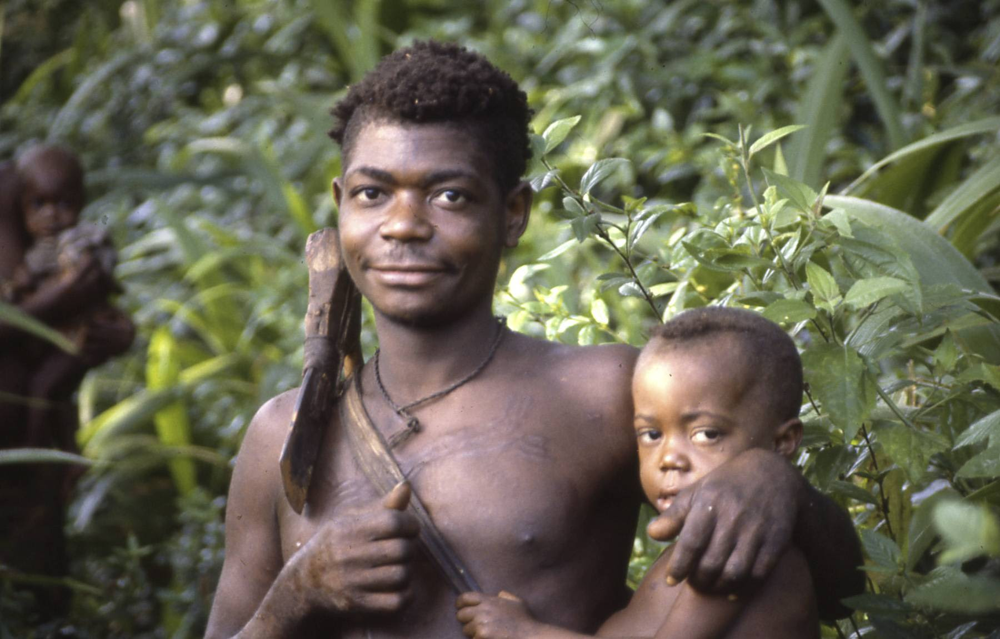
An Aka father from Central Africa holds his young son. Among the Aka, fathers are famously hands-on, spending nearly half the day within arm’s reach of their infants. This high involvement of fathers and other community members reflects a cooperative breeding system thought to resemble that of early humans.
“It Takes a Tribe”: Cooperative Breeding and Alloparents
One of the most remarkable adaptations that allowed early humans to overcome the immense burdens of child-rearing was the development of cooperative breeding. Unlike other great apes – where mothers are the sole caretakers – humans evolved a strategy in which “it takes a village” was literally true. Mothers had help, and lots of it. Fathers, yes, but also grandmothers, aunts, uncles, older siblings, even unrelated tribe members all pitched in as alloparents (“other parents”). Anthropologist Sarah Blaffer Hrdy, who has championed this concept, notes that human mothers in foraging societies could never have managed to raise our characteristically slow-growing, high-demand offspring without assistance. A human child takes far longer to mature than, say, a baby chimpanzee, requiring an estimated 10–13 million calories to grow to independence – a workload too great for one person. “How did our prehuman ancestresses living in the Pleistocene manage to get those calories?” Hrdy asks. The answer: they rarely did it alone.
Fascinating clues come from studies of contemporary hunter-gatherers thought to model ancient patterns. In the Aka Pygmy communities of the Central African rainforest, for example, childcare is a family and community affair. Anthropologists report that Aka babies have, on average, 14 different caregivers besides their mother – including fathers, grandparents, siblings, and neighbors. Newborn Aka infants are passed from person to person; by the time they are 18 weeks old, they actually spend more time being held by alloparents than by their mothers. Such shared care is not seen as unusual or neglectful – in fact, when one Efe Pygmy mother was asked who cares for babies in her community, she answered simply, “We all do!”. This arrangement, Hrdy explains, is called cooperative breeding. It appears to have deep evolutionary roots in our lineage, emerging by the time of Homo erectus. Indeed, the fossil record hints that by around 1.8–1.7 million years ago, changes in ecology and foraging (such as a shift to harder-to-acquire foods like tubers) made it advantageous for mothers to get help provisioning their young – essentially opening the door for grandmother and others to step in.
The Grandmother Hypothesis is a compelling piece of this puzzle. Originally proposed by evolutionary biologist George C. Williams and later elaborated by anthropologist Kristen Hawkes, this hypothesis suggests that human females’ unusual longevity past menopause evolved precisely because grandmothers who stopped having their own babies could help raise their grandchildren. By foraging and sharing food with their young kin, these post-reproductive women boosted the survival and fertility of their daughters’ children – effectively passing on more of their genes by investing in grandchildren. Mathematical models and field studies support this idea: in foraging groups like the Hadza of Tanzania, the presence of a helpful grandmother correlates with better-nourished grandchildren and allows mothers to have the next baby sooner. Over evolutionary time, such grandmothering could have been “a driving force behind the increased longevity of our species”, as well as our larger brain size – because longer lifespans and the cooperative rearing of slow-maturing, big-brained children go hand in hand. While not all scientists agree on the extent of grandmother’s influence (skeptics note ancient lifespans were shorter on average than today), evidence from humans and even other species (like orcas) shows that grandmaternal support can significantly improve offspring survival.
Cooperative breeding meant that fatherhood too took on a new evolutionary significance. Unlike our ape cousins – male chimpanzees and gorillas that invest little to nothing in caring for kids – early human fathers began to contribute beyond just genes. They might defend the family, provision food, or simply hold and comfort their infants. Intriguingly, human biology seems to have adapted to facilitate this. Modern studies show that when men become active, caregiving fathers, their hormonal profiles shift: testosterone levels tend to drop, presumably to promote nurturing behavior over mating effort. In one far-reaching study from the Philippines, men with higher testosterone were more likely to become fathers, but after their children were born, these men experienced significant declines in testosterone. Fathers who were the most involved in hands-on infant care had the lowest testosterone of all. The authors concluded that human fathers are biologically tuned for parenting – a trait quite rare among mammals. Alongside hormonal shifts, some expectant fathers even undergo couvade syndrome, a sympathetic pregnancy phenomenon where they experience pregnancy-like symptoms (nausea, weight gain, fatigue) when their partner is pregnant. While the causes of couvade are debated (cultural vs. physiological), its existence across cultures hints at the deep psychological and perhaps biological investment men have evolved in the process of child-rearing. All these factors made the family unit of early humans not just a mother-baby dyad but a network – a safety net that allowed our ancestors to raise children who would go on to thrive and spread our species across the globe.
Warm Embrace: Attachment, Closeness, and Infant Survival
Cooperative breeding did not diminish the importance of the mother-infant bond – if anything, it enhanced it by keeping babies alive and well so that bonding could flourish. Central to early hominin parenting was the concept of attachment: the physical and emotional closeness that ensures an infant feels secure. Picture a Pleistocene newborn: after a perilous birth (perhaps aided by a midwife or an experienced older woman of the band), the squalling infant is placed immediately on its mother’s chest. The warmth of skin-to-skin contact and the familiar rhythm of her heartbeat are the only cradle it knows. Across mammals, mother-offspring contact is known to regulate the baby’s physiology – stabilizing temperature, breathing, and heart rate. In humans, this contact may also have fostered brain development and trust. Early humans likely practiced near-constant baby-wearing – keeping infants wrapped against their bodies during daily activities. This not only freed the mother’s hands to gather food or tend a fire, but also ensured that the child’s primitive needs for warmth and safety were met without delay. Evidence from anthropology supports the power of this practice. In cultures around the world that still follow age-old childcare patterns, infants who are carried and promptly comforted tend to cry less and show more stable emotional development.
A mother from the Congo Basin carries her baby while foraging in the forest. In nomadic hunter-gatherer societies, infants are kept close at all times – a likely echo of how early hominin mothers never let their vulnerable babies out of sight. Physical closeness and constant contact helped ensure infant survival in the wild.
Nighttime presented another challenge where ancient instincts prevailed: sleeping arrangements. Today’s debates about co-sleeping versus crib-sleeping have a clear resolution in our evolutionary history. For Paleolithic families, there was no separate nursery (and certainly no baby monitor to listen from afar). Mothers and fathers slept with their babies tucked beside them or on top of them, often through the toddler years. This kept the child safe from cold, predators, or wandering off. It also facilitated on-demand breastfeeding through the night, which both nourished the infant and acted as natural birth control (through lactational amenorrhea) to space out siblings. Researchers who have compared mother-infant sleep in lab settings find that shared sleep leads to more frequent but shorter feedings and arousals, aligning with an infant’s natural needs. In fact, anthropologist James McKenna argues that human infants are biologically designed to sleep in contact with a caregiver, and that co-sleeping (when done safely) is associated with calmer, more self-reliant children in some studies. Our ancestors didn’t need scientific studies to tell them this – the cries of a baby separated in the dark were enough. Simply put, a baby who slept alone in the Paleolithic likely didn’t wake up again. Those who slept attached to mom’s hip did, and passed on genes biased toward close nighttime contact.
Moreover, the early close attachment had long-term benefits. Human infants are born with brains that are only partially finished; the brain doubles in size in the first year after birth. Neuroscientists now know that an infant’s experiences in this critical period – the touch, the responsiveness, the security or stress – can shape brain architecture. A child who feels securely attached (because caregivers respond consistently and warmly) tends to develop better stress regulation and exploratory confidence. It’s poignant to think that under the harsh conditions of the Pleistocene, what most helped our species’ smallest members was not a novel tool or a physical adaptation, but the tenderness of contact and prompt comfort when they whimpered. That early trust, in turn, may have laid the groundwork for humans’ unparalleled social capabilities. As Hrdy eloquently noted, an ape could not evolve such costly, slow-maturing offspring “unless mothers had a lot of help” – and that help allowed those offspring to be raised in an environment rich in love and interaction .
The Littlest Apprentices: Play, Learning, and Growing Up Human
In the flicker of campfires two million years ago, one might have witnessed an extraordinary scene: toddlers and young children playing. Perhaps they were stacking stones, chasing one another, or imitating the adults knapping flint by banging rocks together. To an outside observer, it’s just “horsing around.” But in evolutionary retrospect, this play was deadly serious in its importance. Humans are sometimes called the “most playful” species, and for good reason – our childhood is incredibly extended compared to other animals, giving us years to explore, imagine, and learn through play. Paleoanthropologists believe that even early Homo erectus children had begun to enjoy longer childhoods than their Australopithecine predecessors, though not as prolonged as modern humans . Over hundreds of thousands of years, as human brains grew larger and more complex, our juveniles needed more time to absorb the immense amount of social and practical knowledge required for survival. Play was the natural school for this education.
What does play accomplish for a young hominin? Modern studies of animal behavior provide rich insights. In species from bear cubs to cheetah cubs, those that play more in youth survive better in adulthood. Rough-and-tumble play hones strength and motor skills; pretend or object play stimulates creativity and problem-solving. For early humans, play would have been the training ground for essential adult tasks. A child dragging a stick and giggling may have been rehearsing the motions of digging tubers or throwing a spear. A group of children play-fighting in the dirt were learning social boundaries, cooperation, and conflict resolution in a low-stakes setting. Evolutionary psychologists have long theorized that play is “serious business that serves to train adult minds” – essentially nature’s built-in curriculum for adulthood.
Crucially, human play has a strong social dimension. Our ancestors’ children didn’t grow up in isolated nuclear families; they grew up in multi-age playgroups watched over by multiple caretakers. Older children likely guided younger ones, and younger children provided inspiration and social motivation for older ones to practice caregiving. Anthropologist Peter Gray has noted that in hunter-gatherer cultures, kids are free to play all day in mixed-age groups, and through that play they acquire the skills and values of their society – from sharing to self-control to bravery. Brenna Hassett, a biological anthropologist, points out that humans share with bonobos (one of our close ape relatives) an unusual trait: we keep playing even as adults, a sign of how vital play is to our complex social life. Chimpanzees, by contrast, largely give up play after childhood. Bonobos and humans – the more peaceable, cooperation-loving apes – retain a streak of lifelong playfulness, which helps maintain flexible, tolerant relationships. It’s not hard to imagine that our early ancestors who engaged in playful activities were better at bonding with peers, solving problems together, and coping with unpredictable environments. A game of hide-and-seek in the Pleistocene might literally sharpen the hiding and tracking skills useful in a hunt or in evading predators. A make-believe scenario of “playing house” could allow children to experiment with roles of mother, father, or healer before they actually had to perform them. Through play, the next generation of humans quietly prepared to take on the adult world.
Play also offered a psychological boon: resilience. In the stresses of survival – scarce food, dangerous animals, tribal conflicts – play was a refuge of joy and creativity. It gave children an outlet to process fears and an opportunity to build confidence. Researchers today find that play is linked to healthy emotional development; it’s likely this was true in prehistory as well. A child who could laugh and pretend in even hard times would grow into an adult capable of hope and innovation. Some scientists even speculate that our species’ propensity for imaginative play laid the foundation for later cultural inventions like art, religion, and science – all of which require the ability to envision worlds that don’t yet exist.
The First Village: Community, Emotion, and the Rise of Humanity
Perhaps the most profound legacy of early hominin parenting is how it forged the emotional ties and community structures that define human societies. By caring for each other’s children, our ancestors wove networks of trust and mutual reliance. This had sweeping implications: it selected for individuals who could empathize, who could anticipate the needs of others, and who found reward in cooperation. In essence, raising children in groups didn’t just produce surviving kids – it produced social adults with unprecedented levels of altruism and group cohesion. Paleoanthropological evidence hints that such prosocial tendencies run deep. A famous discovery at Dmanisi, Georgia (1.8 million years old) uncovered a hominin skull of an elderly individual who had lost all his teeth years before death. He could only have survived that long by others in his group pre-chewing or processing food for him. This toothless elder is seen as one of the earliest signs of human compassion – a being cared for not because he could contribute materially, but because our ancestors had evolved to value one another’s lives. Such care for the weak and vulnerable likely originated around the hearths where infants and parents bonded; once you have emotional attachments and shared childrearing, it’s a short leap to tending to injured hunters or disabled kin. As one science writer noted, we humans are a paradox: natural selection might predict selfishness, yet we observe deep kindness even when there’s no immediate benefit. The roots of that kindness may lie in the primal instincts of mothers, fathers, and helpers to nurture the young – an instinct that spilled over to a general ethos of “all life in our band is precious.”
Communal childrearing also meant communal joy and communal grief. When a child succeeded – took first steps, learned to crack a nut with a stone – the whole group celebrated. When a child fell ill or a mother struggled, the group shared the burden. This fostered emotional resilience not just in the children but in the parents as well. Parental stress was buffered by the knowledge that others “had your back.” Consider a young Pleistocene mother who might feel overwhelmed – her own mother or mother-in-law could step in, giving her respite and guidance. The presence of “alloparents” has measurable benefits even today: studies show that mothers with strong support networks experience less anxiety and depression, and their children often fare better developmentally. It is moving to think that even in the Pleistocene, perhaps around a shared meal of roasted roots, a mother could voice her worries and be comforted by a sister or friend who would take the baby for a while, or by a grandmother who offered wisdom from raising her own young.
Indeed, humans might not have survived the volatile swings of the Pleistocene climate or the dangers of new lands without this collective resilience. By spreading the work and love of raising children among many, communities could endure hardship. If one adult was lost to injury or a hunt gone wrong, the children still had others to feed and protect them. In this way, cooperative parenting was insurance for the species. It also allowed for remarkable flexibility and innovation. With others helping mind the kids, individuals had more freedom to specialize – some could become better toolmakers, others expert foragers, others healers or storytellers – knowing that their offspring were in safe hands for a time. This specialization and sharing are hallmarks of human society and find their genesis in that simple act of sharing a child’s care.
Finally, raising children in a rich social environment likely contributed to one of humanity’s signature traits: our social intelligence. Psychologists suggest that because our ancestral babies had to distinguish not just “mother” and “father” but a whole host of caregivers – each with different voices, faces, and interactions – their developing brains became wired to read many social cues. They learned to “understand others” in a way other apes did not need to. Hrdy argues that this was the cradle of our capacity for empathy and understanding: only a cooperatively raised ape could become the ultra-social human ape, concerned with the thoughts and feelings of dozens of others . In essence, our ability to form communities, cultures, and civilizations might trace back to the nursery – to how we as helpless infants were cared for by a circle of loving kin.
Coming Full Circle: Ancient Lessons for Modern Parents
Our expedition into the past reveals that early hominin parenting was not just a phase of life – it was the crucible of human evolution. By meeting the challenges of raising children under austere conditions, our ancestors unlocked new evolutionary strategies: they lived longer, grew smarter, became more social. In doing so, they left us a legacy encoded not only in our genes, but in our hearts and minds. We carry in us the instincts of the Pleistocene parent: the urge to comfort a crying baby, the impulse to seek help from family or friends when child-rearing feels overwhelming, the joy in watching children play, and the fierce desire to protect them from harm. Modern science continually reaffirms these ancient practices. Close contact, responsive care, breastfeeding, and cooperative support – these are not newfangled trends but time-tested behaviors that promote healthy development. When today’s parents practice skin-to-skin bonding or enlist grandparents in babysitting, they are echoing patterns as old as humanity.
Of course, context has changed. We no longer live in small bands under the stars, and what was adaptive then isn’t always practical now. But the principles endure. Humans are adaptable – that’s another gift of our evolutionary story. As one anthropologist wryly noted, there’s no single “natural” way to raise a child; our species has thrived by being inventive and flexible, from the savannas of Africa to the high-rises of New York. Yet, the core needs of children – love, security, stimulation, social connection – remain constant. We meet them best not in isolation but in community. The notion that a mom and dad alone should fulfill all a child’s needs (prevalent in many industrialized societies) stands in stark contrast to the cooperative breeding model we came from. Perhaps this is why many parents today feel stressed and “burnt out” – we’ve put them in an unnatural situation, “asking the nuclear family to live all by itself in a box,” as Margaret Mead once said, which she warned is “an impossible situation”. The pandemic of recent years underscored this: cut off from support, parents struggled mightily, and mental health issues soared.
The remedy may lie in remembering the wisdom of our ancestors. We can’t resurrect the Pleistocene, nor would we want to romanticize it – infant mortality was high, dangers were real. But we can integrate old and new. Encouraging fathers to take paternity leave and be active caregivers is deeply aligned with our biology (and today we know it strengthens family bonds and child outcomes). Embracing the help of “alloparents” – whether they be grandparents, uncles, close friends, or trusted daycare providers – is not a sign of parental failure but a return to form, creating the “village” that every child and parent deserves. Holding and cuddling our babies, responding to their cries with empathy, and not worrying about “spoiling” them – these instincts built our big brains and compassionate hearts. And letting children play freely – giving them unstructured time to explore with peers – is not wasted time but the very mechanism by which nature allows young minds to blossom.
As we conclude this journey, we arrive at a reassuring insight: modern parents are not alone – they have the strength of an ancient lineage behind them. Every bedtime story told, every skinned knee kissed, every soccer game cheered from the sidelines, carries echoes of those Pleistocene evenings where a circle of adults watched over the youngsters tumbling in the grass, smiling at their antics. The tools have changed (car seats instead of slings, baby puree instead of premasticated tubers), but the heart of parenting hasn’t. It’s still about survival and love. Our ancestors taught us that those two go hand in hand. By loving well, they survived. By ensuring their children survived, they passed love on to the future. So, when you comfort your child tonight or lean on a friend for support, know that you are part of a grand story that began long before written history – a story in which early hominin parents turned the trials of child-rearing into the triumph of humanity.
Sources:
• Hrdy, S. B. (2009). Mothers and Others: The Evolutionary Origins of Mutual Understanding. Harvard University Press.
• Hrdy, S. B. (2016). “Variable postpartum responsiveness among humans and other primates with cooperative breeding: A comparative and evolutionary perspective.” Hormones and Behavior, 77, 272–283.
• Hawkes, K. et al. (1998). “Grandmothering, menopause, and the evolution of human life histories.” Proceedings of the National Academy of Sciences, 95(3), 1336–1339.
• Hawkes, K. (2018). Interview in Smithsonian Magazine, “How Much Did Grandmothers Influence Human Evolution?”
• Salopek, P. (2015). “The Natural History of Compassion.” National Geographic: Out of Eden Walk (dispatch from Dmanisi, Georgia)
• Crittenden, A. N. (2015). Observations of Hadza child care, reported in Nautilus, “The Caveman Guide to Parenting”.
• Gettler, L. T. et al. (2011). “Longitudinal evidence that fatherhood decreases testosterone in human males.” PNAS, 108(39), 16194–16199.
• Divecha, D. (2021). “How Alloparents Can Help You Raise a Family.” Greater Good Magazine, UC Berkeley.
• Hassett, B. R. (2024). “What Does Play Tell Us About Human Evolution?” Popular Archaeology (Winter 2025 issue) .
• McKenna, J. J. (2007). Sleeping with Your Baby: A Parent’s Guide to Cosleeping. (For discussion of co-sleeping benefits in ancestral patterns).
• Pavitt, N. (Photographer). (2018). Hadza grandmother and grandchild (featured in NPR’s Goats and Soda, June 7, 2018) .
• Various authors in Evolutionary Anthropology and American Journal of Physical Anthropology on the Grandmother Hypothesis and cooperative breeding.
When we think about art, images of vibrant canvases, grand sculptures, and intricate designs often come to mind. Yet, the story of human creativity stretches far beyond modern art galleries and into the distant past, where our ancient ancestors first began to leave their mark on the world—literally.
The First Artists: Neanderthals and Early Homo Sapiens
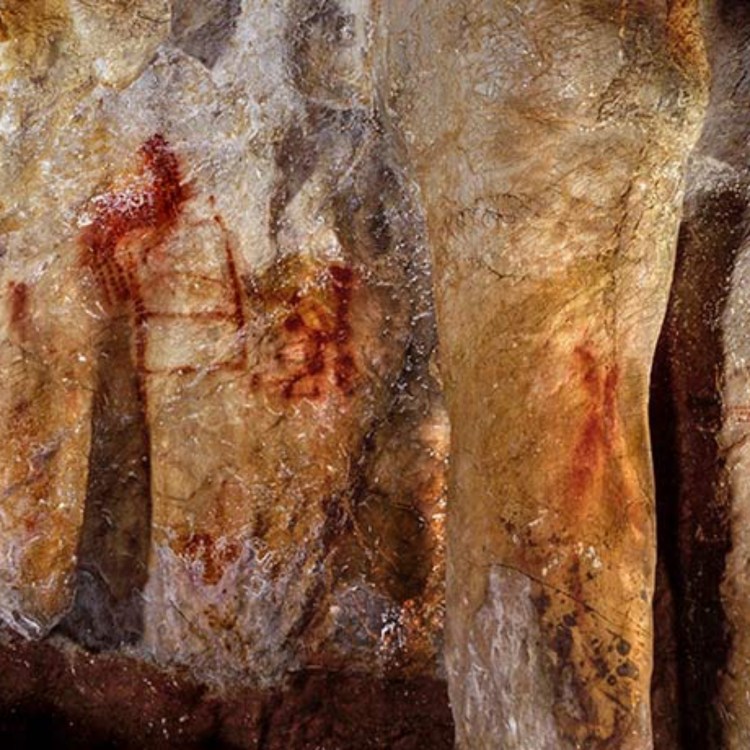
For years, art was considered the hallmark of Homo sapiens, a defining feature of our species’ cognitive and cultural superiority. This belief persisted largely because early archaeological research focused on artifacts created by modern humans, often overlooking or underestimating evidence of symbolic expression in other hominin species. Recent discoveries, however, have challenged this narrative by uncovering evidence of symbolic behavior in Neanderthals and even earlier hominins, expanding our understanding of creativity and its evolutionary roots. For example, studies of red ochre markings in Spanish caves, dated to over 64,000 years ago, and symbolic carvings attributed to Homo naledi have provided compelling evidence of complex cognitive abilities in early hominins (Hoffmann et al., 2018; Dirks et al., 2021). Red ochre markings in Spanish caves, dated to over 64,000 years ago, suggest that Neanderthals had the capacity for symbolic thought—a crucial element of creativity.
Meanwhile, early Homo sapiens created some of the most awe-inspiring art the world has ever seen. The caves of Lascaux in France and Altamira in Spain showcase intricate depictions of animals, dated to around 17,000 years ago. These works reveal a deep understanding of the natural world and suggest complex social structures, as creating such art likely required shared knowledge and cooperation. In Africa, cave art displays an earlier and more diverse range of expressions, with regions such as Namibia’s Apollo 11 Cave featuring painted slabs dating back at least 25,000 years. This highlights how art evolved differently across the globe while retaining symbolic depth.
Art Beyond Homo Sapiens
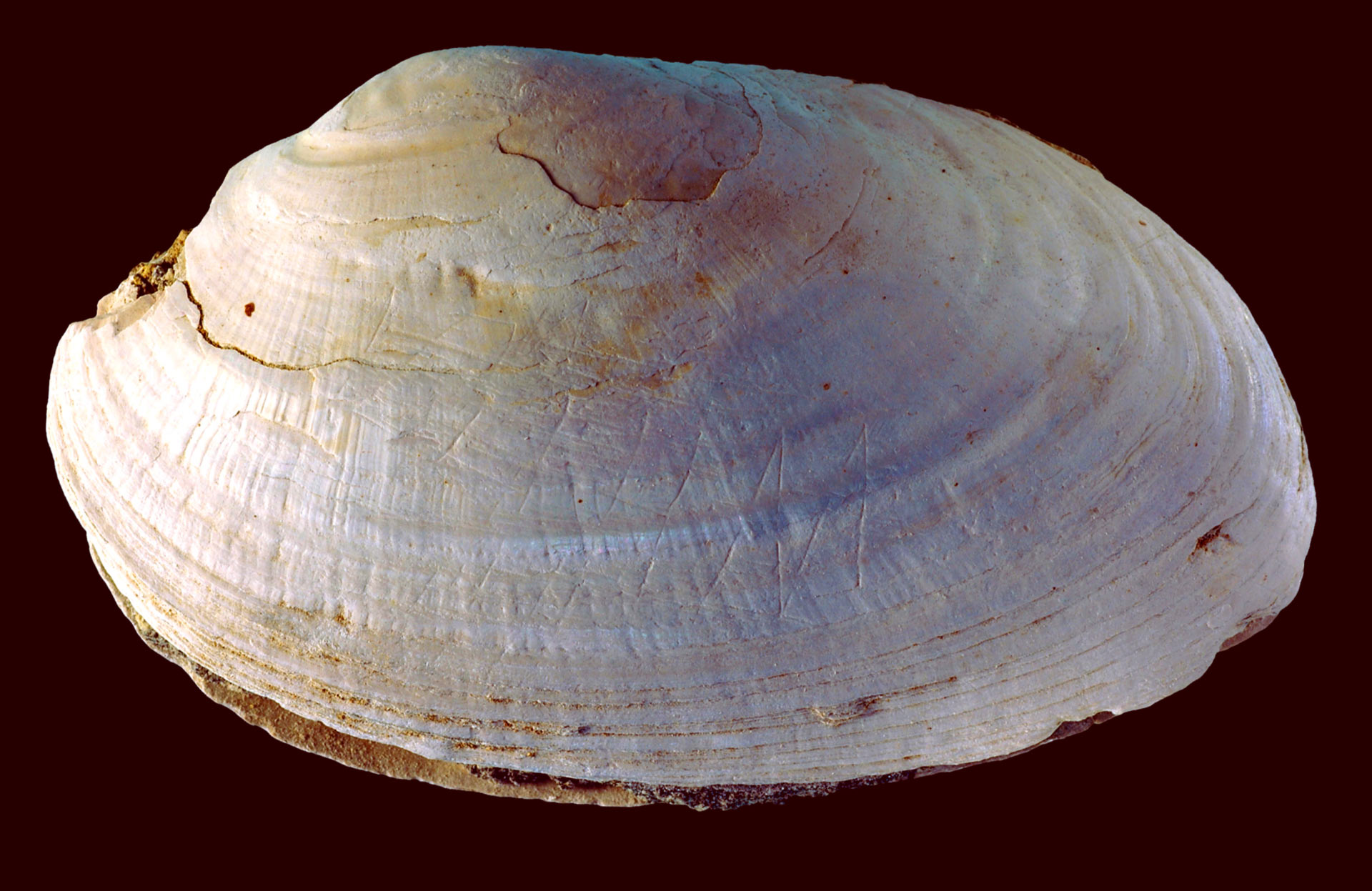
The discovery of an engraved shell attributed to Homo erectus on Java, dated to around 500,000 years ago, pushes the origins of symbolic expression further back in time. This intricate zigzag pattern suggests an early capacity for abstract thinking and intentionality, challenging the assumption that such behaviors were exclusive to later hominins.
It implies that early hominins engaged with their environment in ways that went beyond mere survival, hinting at the roots of symbolic thought and artistic expression. Similarly, recent claims propose that Homo naledi, despite their smaller brain size, may have created symbolic carvings in deep caves. These findings challenge traditional assumptions about the link between brain size and creativity, indicating that symbolic thought might be more widespread in our evolutionary family than previously believed.
What Counts as Art?
Art, at its core, is a means of communication. It allows individuals to express ideas, emotions, and beliefs beyond the confines of spoken language. Ancient art took many forms: rock carvings, pigment markings, bead necklaces, and even the arrangement of bones and tools. For example:
Blombos Cave, South Africa: Engravings on ochre blocks, dated to around 73,000 years ago, represent some of the earliest known examples of abstract art.
Sungir, Russia: Burials adorned with thousands of painstakingly crafted beads highlight the symbolic and aesthetic values of early humans.
Apollo 11 Cave, Namibia: Stone slabs painted with animal figures, dating back at least 25,000 years, demonstrate a clear artistic intention.
Despite these differences, it is crucial to understand that no one form of ancient art is inherently more complex or valuable than another simply because it appears more aesthetically pleasing to modern eyes. For instance, intricate rock art from Southern Africa, which may seem abstract to modern viewers, often conveys deep symbolic meaning tied to spiritual beliefs, just as the more representational cave paintings of Europe do. Modern biases can lead us to undervalue such works because they don’t align with contemporary notions of beauty or realism, highlighting the need to evaluate ancient art on its own cultural and contextual terms.
Why Did Art Begin?
The origins of art are deeply tied to the evolution of human cognition. As our ancestors developed larger brains and more complex social networks, they began to explore new ways to convey ideas and emotions. Art may have served several purposes:
Ritual and Spirituality: Many early artworks are found in sacred or hard-to-reach locations, suggesting they were part of rituals or spiritual practices. This symbolic nature of art hints at a deep connection between creativity and early religious beliefs.
Social Cohesion: Shared artistic projects could strengthen group bonds, creating a sense of identity and unity.
Knowledge Transmission: Depictions of animals and hunting scenes might have served as teaching tools for younger generations.
Personal Expression: Just like today, ancient artists may have created purely for the joy of expression.
What Did the World Look Like to Our Ancestors?
Imagine a world where survival depended on a profound understanding of nature. Picture towering forests alive with the rustle of leaves, sprawling grasslands where herds of animals roamed freely, and shimmering rivers that provided life-sustaining water. Every sound, from the call of a distant bird to the crack of a twig underfoot, carried meaning. The vast night sky, untouched by artificial light, sparkled with constellations that might have guided their movements or inspired their myths. To our ancestors, this was not just a backdrop—it was a living, breathing world, rich with resources, dangers, and spiritual significance. The animals depicted in cave art—majestic bison, swift horses, and elusive deer—were not just prey but integral parts of their world. Art served as a bridge between the tangible and intangible, allowing them to capture their environment and beliefs in a way that transcended time.
What Does This Mean for Us?
Understanding the origins of art connects us to our ancestors in profound ways. Moreover, it offers contemporary artists a rich tapestry of inspiration, reminding them that creativity transcends time. Ancient art forms, from abstract engravings to representational cave paintings, challenge modern notions of innovation and beauty, often sparking dialogue about the universality of human expression. For art movements today, these ancient works provide a foundation to explore themes of identity, spirituality, and the environment—concepts that remain as relevant now as they were thousands of years ago. Their creativity laid the foundation for human culture, allowing us to build complex societies, share knowledge, and explore the depths of our imagination. Every brushstroke, every melody, every word we create today carries echoes of those first tentative marks made on cave walls.
As a paleoanthropologist, I’m constantly in awe of the ingenuity of early humans. As Dr. April Nowell, a leading expert in Paleolithic art, once remarked, “The marks left by our ancestors on cave walls and objects are the first whispers of the human mind expressing itself.” These insights remind us that the creativity of early humans wasn’t just a means of survival but a profound expression of their emerging identities and shared humanity. These ancient artists remind us that creativity is not a luxury; it’s an essential part of what makes us human. This creativity not only enabled them to navigate and thrive in their environments but also laid the groundwork for the cultural and societal advancements that define modern human life. From storytelling and art to scientific innovation, the creative spark of our ancestors continues to shape the way we build connections, solve problems, and imagine new possibilities today. By studying their works, we gain a deeper appreciation for the resilience and brilliance of our shared heritage.
Join the Conversation
What do you think drove our ancestors to create art? Were they driven by practical needs, spiritual beliefs, or a deep sense of connection to their world? Do you believe their motivations were purely practical, or could they have been inspired by spiritual beliefs or social needs? How do you think their environment shaped their creative expressions? Share your thoughts in the comments or connect with me on social media to explore these fascinating questions further! Share your thoughts in the comments or connect with me on social media to explore the fascinating world of human creativity. Let’s uncover the stories our ancestors left behind and continue the legacy of artistic expression together!
Bibliography
Dirks, P. H. G. M., Roberts, E. M., Hilbert-Wolf, H., Kramers, J. D., Hawks, J., Dosseto, A., … & Berger, L. R. (2021). The age of Homo naledi and associated fossils in the Rising Star Cave, South Africa. eLife, 6, e24231. doi:10.7554/eLife.24231
Hoffmann, D. L., Standish, C. D., García-Diez, M., Pettitt, P. B., Milton, J. A., Zilhão, J., … & Pike, A. W. (2018). U-Th dating of carbonate crusts reveals Neandertal origin of Iberian cave art. Science, 359(6378), 912-915. doi:10.1126/science.aap7778
Nowell, A. (2010). Defining behavioral modernity in the context of Neandertal and anatomically modern human populations. Annual Review of Anthropology, 39, 437-452. doi:10.1146/annurev.anthro.012809.104536
Zilhão, J. (2013). Symbolic use of marine shells and mineral pigments by Iberian Neandertals. Proceedings of the National Academy of Sciences, 107(3), 1023-1028. doi:10.1073/pnas.0914088107
Henshilwood, C. S., & Dubreuil, B. (2011). The Still Bay and Howiesons Poort, 77-59 ka: Symbolic material culture and the evolution of the mind during the African Middle Stone Age. Current Anthropology, 52(S4), S361-S400. doi:10.1086/661253
Bednarik, R. G. (1998). The origins of symbolic thought. Journal of Human Evolution, 35(5), 605-617. doi:10.1006/jhev.1998.0236
Conard, N. J. (2009). A female figurine from the basal Aurignacian of Hohle Fels Cave in southwestern Germany. Nature, 459(7244), 248-252. doi:10.1038/nature07995
Where do we come from, and how did we become who we are today? These are big questions that many of us wonder about. Whether we look for answers through faith, science, or both, our curiosity to understand our beginnings brings us together. Studying human evolution is a way to look at these questions using science. It helps us explore who we are, what we have in common, and what our future might look like. If you’re unsure or maybe skeptical—especially if you come from a faith background—let’s take a look at why learning about human evolution can be both fascinating and meaningful.
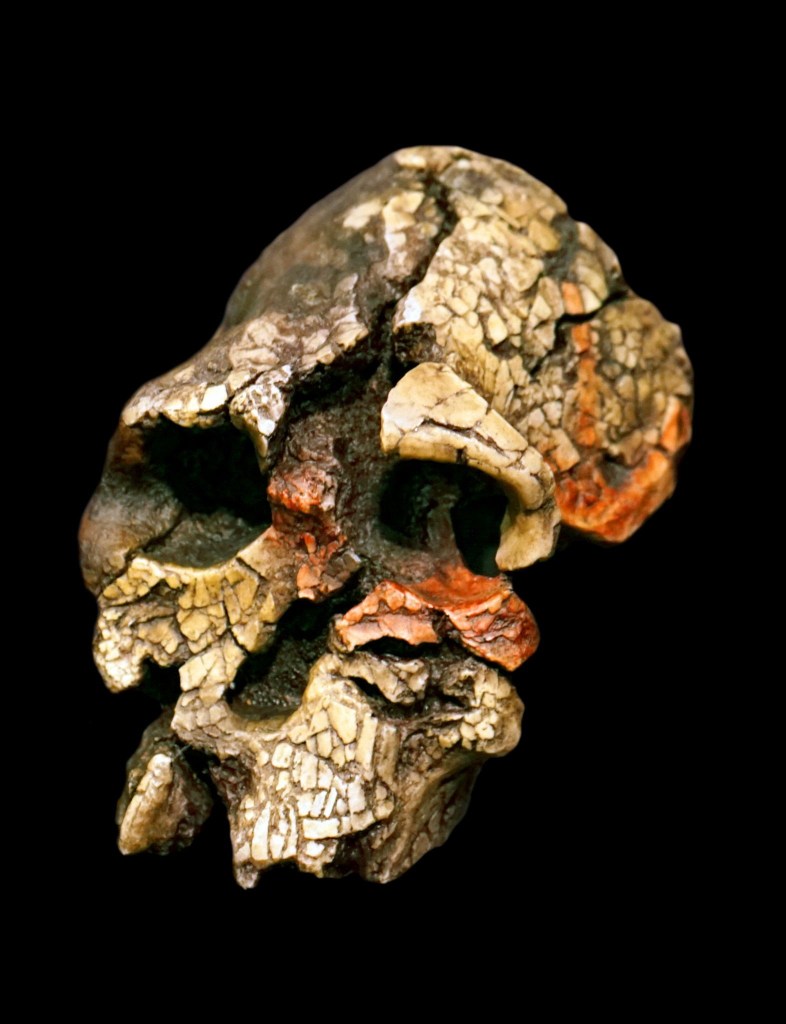
The Kenyanthropus platyops, a 3.5 to 3.2-million-year-old (Pliocene) hominin fossil discovered in Lake Turkana, Kenya. (Photo by: Universal History Archive/Universal Images Group via Getty Images)
What Is Human Evolution?
Human evolution is the scientific study of how humans, or Homo sapiens, developed over millions of years. Scientists use fossils, ancient tools, and DNA to piece together the story of our ancestors. It’s like looking at an old family album, except instead of photos, we have bones and artifacts that tell our story.
This evidence comes from careful research using reliable methods like carbon dating and genetic analysis. These tools help us understand how our ancestors lived, adapted, and eventually became modern humans. By studying human evolution, we learn about where we come from and what connects us as a human family. It shows us how all life is connected and how change has shaped the world we live in.
Why Should We Care About Human Evolution?
Studying human evolution helps us understand what makes us human. Our creativity, ability to work together, and adaptability are all traits shaped by millions of years of evolution. When we explore our past, we see that things like skin color or cultural differences are relatively new. Deep down, we share a lot more than we think.
Modern genetics shows that humans are very similar, with only small differences between us. Knowing this can help break down barriers and help us understand that we are all part of one big human family.
Learning about human evolution also shows us how strong and resilient we are. Our ancestors faced tough environments, dangerous animals, and limited resources. They survived by adapting, inventing new tools, and working together. The skills they developed are the same ones we need today to solve our own problems. Understanding evolution can also teach us about health and help us make better choices for our bodies.
Faith and Science: Working Together
For many people, science and faith can go hand in hand. Studying human evolution doesn’t need to replace religious beliefs; it can add to them. Science often helps us understand “how” things happen, while religion helps us understand “why.” Together, they can give us a better understanding of the world and our place in it.
Learning about evolution can even make us feel more amazed by creation. The complex processes that led to the many forms of life are incredible. Exploring these details doesn’t have to conflict with faith—it can actually deepen our respect for life and the natural world.
The Value of Knowing Our Story
Studying human evolution is about understanding our shared story—a story that connects all of us. It shows us that every person alive today is part of a huge family tree that stretches back millions of years. Knowing this story can help us feel more empathy for each other and see the bigger picture of what it means to be human.
By learning about where we come from, we also gain insight into where we’re going—both as individuals and as a species. Our ancestors survived by working together, creating new things, and adapting to change. These are the same qualities we need today as we face challenges like climate change and limited resources. Learning about human origins isn’t just about the past; it’s about using that knowledge to build a better future and make thoughtful, compassionate choices.
Understanding our origins also helps us create a more educated and open-minded society. Learning about our evolutionary history helps us value science, think critically, and appreciate different cultures. These skills are important for solving today’s problems. A society that understands its shared origins is more likely to value kindness, cooperation, and creativity—things that are key for a fair and strong future.
So, let’s explore our past—not to change what we believe, but to make those beliefs richer, to understand ourselves better, and to come together as one human family. Our story shows us what we can achieve when we understand, adapt, and grow together.
With each passing week, there are new books and materials to read! 📚📖
When I ask “buy me a book,” I mean it! Help this Science Communicator stay on top of his game with the latest publications and help me get my hands on the latest copies of books on our shared human history! 🌍👩🏫
I work hard to share the wondrous and mysterious world of Paleoanthropology with you, but I don’t know everything! 🤔🤷♂️
We don’t need to go into the details of the actual expenses of WOPA, which I cover myself, but I’d love it if you could show me you enjoy the content that myself and my colleagues put out by making a small contribution by “buying me a book” today! 💖💖
Every dollar goes to help us spread science communication about our human origins further, which allows us to bridge gaps, heal wounds, and create a brighter future. 🌟🌟
Imagine what it might have been like to be a parent 1.8 million years ago. There were no cribs, no baby monitors, and no parenting books. Yet, the task of caring for and raising children was just as important then as it is today. While we often think of things like stone tools, fire, and hunting as key to our ancestors’ survival, what about the family unit? What was it like to be a parent during the dawn of humanity?
Parenting back then wasn’t just about doing a job—it was about ensuring survival, building resilience, and creating connections in a way that influenced the course of human evolution. Keeping infants safe required creativity, adaptability, and a strong community. By looking at how early hominins approached parenting, we can see how many of the instincts and behaviors they used still influence how we raise our children today.
**Early Hominin Childcare: A Community Effort**:
Research shows that early hominin parenting was probably more community-based than the isolated parenting models we often see today. Anthropologists believe that Homo erectus and even earlier hominins raised their children within cooperative groups. Unlike today’s nuclear families, care wasn’t just provided by the parents but by an extended family network—grandmothers, older siblings, and even non-relatives. This idea is called **”cooperative breeding”** and made survival a shared responsibility.
One example of this is the “Grandmother Hypothesis,” which suggests that post-menopausal women played an important role in helping raise grandchildren, giving Homo sapiens an evolutionary edge. This practice of “alloparenting” allowed mothers to have more children while ensuring that more young survived. Parenting wasn’t just about individual effort but was a community task that helped our species succeed.
This cooperative approach also allowed the sharing of knowledge and experience. Grandmothers and other older members of the group could pass on valuable skills to younger generations—not just in raising children but also in food gathering, survival techniques, and social behaviors. This sharing of experience helped strengthen social bonds and allowed early human culture to develop.
**Mother-Infant Bond and Physical Contact**:
Imagine early hominin mothers—always carrying their babies. There were no strollers or cradles; instead, infants were likely kept close at all times. This constant physical contact provided warmth and protection and also helped build emotional bonds. The reliance on skin-to-skin contact shows that **attachment and physical closeness** were key parts of early child-rearing.
In modern parenting, practices like “babywearing” and co-sleeping can be seen as alternative or even controversial. But they are likely reflections of ancient behaviors that helped infants survive in harsh and unpredictable environments. By keeping infants close, early hominins could respond quickly to danger and provide comfort and nourishment, leading to secure attachment patterns that helped develop emotional stability.
There is also evidence that constant carrying and holding helped infants develop motor skills early on. The movements involved in being carried allowed young hominins to develop physical coordination and balance. What might seem today like a simple comfort actually had a big impact on both physical and emotional growth.
**Hormonal and Sympathetic Changes in Fathers**:
It wasn’t only mothers who experienced physical changes when raising children. Early hominin fathers likely went through significant hormonal shifts too, much like modern human fathers do. Studies show that fathers experience drops in testosterone and increases in oxytocin and prolactin—hormones that encourage bonding and caregiving. These hormonal changes help fathers become more nurturing, suggesting that early hominin fathers played a more active role in parenting than we often assume.
Additionally, many fathers experience **couvade syndrome**, where they develop sympathetic symptoms during their partner’s pregnancy, like nausea, weight gain, or sleep problems. This means that even in our evolutionary past, fatherhood involved both biological and emotional transformations. These changes helped build bonds between fathers and infants, making parenting more of a shared effort.
These hormonal changes also helped fathers engage more deeply with their families, increasing cooperation and strengthening family bonds. By responding to their own hormonal cues, early hominin fathers supported the survival of their young, highlighting that fatherhood played an important evolutionary role.
**Learning Through Play in the Pleistocene**:
Think about how children learned back then. Play was almost certainly the main way they developed the skills they needed to become capable group members. Unlike today’s structured education, early hominin children learned through **imitative play**—watching adults and copying what they did, like tool-making, gathering food, or social interactions. This kind of learning taught children resilience, creativity, and cooperation.
It’s a reminder to us today about how valuable it is to let children explore and learn at their own pace. Play isn’t just fun—it’s an important mechanism for learning that’s hardwired into us. By exploring their surroundings, early children developed diverse skills, allowing them to adapt to changing environments. Play was also crucial for social learning, teaching children group norms, empathy, and cooperation.
Bringing more of this kind of play into our children’s lives today can help build resilience, adaptability, and a sense of wonder. By encouraging unstructured play, parents can tap into an ancient, deeply human way of nurturing growth.
**Shared Risks and Emotional Resilience**:
Parenting in the Pleistocene meant dealing with predators, harsh weather, and food shortages. These challenges fostered a unique kind of emotional resilience, one that was spread across the group. Parents knew that their child’s well-being depended not only on their actions but also on the support of the whole community. In tough times, everyone helped feed and protect the young, making emotional bonds essential.
This idea of **shared risk and reward** encouraged cooperation and resilience, which were crucial for survival. We can see echoes of this in modern communities that stress the importance of social support systems to reduce parental stress and improve child outcomes. The lessons from early humans show that when we embrace community-based child-rearing, we help both our children and ourselves.
Early hominin communities also likely used shared rituals and social activities to strengthen bonds. These activities helped manage stress and build emotional resilience among adults and children. Emotional resilience wasn’t just about facing challenges but also about having support and knowing that survival was a shared goal. By looking at these early practices, we can understand how important community ties and emotional intelligence are for modern parenting.
**Lessons for Modern Parenting**:
What lessons can we learn from the parenting strategies of our ancestors? One major lesson is the importance of community. In today’s world, many parents are isolated and expected to do everything on their own. But our biology tells a different story—one in which child-rearing was a shared responsibility. Whether it’s reaching out to friends, involving extended family, or building connections in the community, it’s clear that parenting was never meant to be a solo effort.
Another takeaway is the value of physical closeness and responsive caregiving. Our ancestors didn’t leave their babies alone, and they responded quickly to their cries—not because they read a book on parenting, but because in a dangerous world, attending to an infant’s needs immediately was essential. Today, attachment science shows that responding to babies helps them form secure bonds and thrive.
Creating support systems—whether through extended family, friends, or community groups—can help modern parents manage stress and provide better outcomes for their children. Recognizing that parenting is not meant to be done alone can also help reduce the stigma around asking for help and remind us of the very real need for community that has shaped human parenting for millions of years.
**Sources and References**:
1. Hrdy, S. B. (2009). *Mothers and Others: The Evolutionary Origins of Mutual Understanding*. Harvard University Press.
2. Hawkes, K., O’Connell, J. F., & Blurton Jones, N. G. (1997). “Hadza Women’s Time Allocation, Offspring Provisioning, and the Evolution of Long Postmenopausal Life Spans.” *Current Anthropology*, 38(4), 551-577.
3. Gray, P. B., & Anderson, K. G. (2010). *Fatherhood: Evolution and Human Paternal Behavior*. Harvard University Press.
4. Konner, M. (2010). *The Evolution of Childhood: Relationships, Emotion, Mind*. Belknap Press of Harvard University Press.
5. Hrdy, S. B. (2005). “Cooperative Breeders with an Ace in the Hole.” In *Grandmotherhood: The Evolutionary Significance of the Second Half of Female Life* (pp. 295-317). Rutgers University Press.
6. Gettler, L. T. (2014). “Applying Socioendocrinology to Evolutionary Models: Fatherhood and Physiology.” *Hormones and Behavior*, 68, 59-69.
















 World of Paleoanthropology