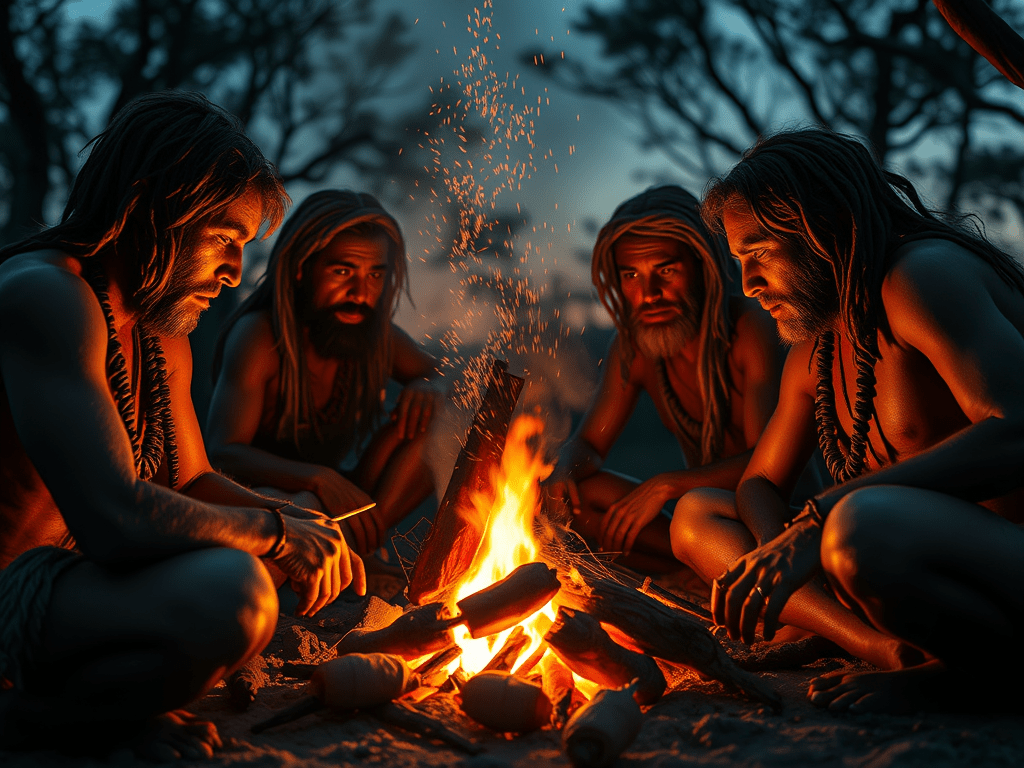
The text explores the significance of the hearth in human evolution, linking it to cooking, energy consumption, and social structure. The control of fire allowed early humans to cook food, improving energy yield and enabling larger brains and smaller guts. Archaeological evidence shows that fire usage became commonplace about 300,000 to 400,000 years ago, shaping daily life and social interactions around central hearths. It argues that the hearth served as a proto-altar, merging practical and ritualistic elements, fostering community through shared meals and storytelling, and reinforcing a sense of sacred space. Ultimately, the hearth transformed not just sustenance but the very essence of humanity.
Tag Archives: anthropology
The Cultural Remix: Neanderthals and Denisovans in Conversation
Imagine a cave somewhere in Ice Age Eurasia. A fire smolders low, smoke curling upward into the darkness. A group of Neanderthals huddles close, trading stories, sharpening tools. Suddenly, a stranger appears — stockier, broader-jawed, carrying something unfamiliar: a greenstone bead, maybe, or a tool chipped in a style just slightly different. What happens next?Continue reading “The Cultural Remix: Neanderthals and Denisovans in Conversation”
A Day in the Life of a Neanderthal, 50,000 Years Ago
Listen to a podcast version of this post! Reconstructing the daily life of a Neanderthal is more than an exercise in imagination—it is an endeavor grounded in decades of archaeological research, paleoenvironmental reconstruction, and microscopic analyses of artifacts and remains. From isotope studies that reveal dietary preferences to wear patterns on tools that show howContinue reading “A Day in the Life of a Neanderthal, 50,000 Years Ago”
Father Time: Rediscovering the Essential Roles of Fathers Through Human History
Reframing the Narrative of Fatherhood The concept of fatherhood has often been simplified and overshadowed by societal archetypes emphasizing masculinity primarily through the lens of the hunter or provider. However, recent anthropological, psychological, and sociological research—most notably encapsulated in the seminal work Father Time by Sarah Blaffer Hrdy (2024)—reveals a far richer and more nuancedContinue reading “Father Time: Rediscovering the Essential Roles of Fathers Through Human History”
When did we become Human?

The exploration of what it means to be human reveals a complex evolution marked by gradual adaptations rather than a singular event. Key milestones include bipedalism that freed our hands, the development of tool making, and the mastery of fire, which enhanced cognitive growth. Symbolic thinking is evidenced through art and social structures, not only in Homo sapiens but also in Neanderthals. Our humanity is shaped through ongoing innovation and connections, continually influenced by discoveries that deepen our understanding of our shared past.
Mothers of Humanity: The Profound Role of Mothers in Human Evolution and Culture
Mother’s Day is an opportunity to pause and reflect deeply on the incredible journey mothers have undertaken throughout human history. In paleoanthropology—the scientific study of ancient humans—we discover that motherhood has profoundly shaped not only individual lives but also the evolution of our species. In celebrating mothers, we honor the essential architects of humanity’s past,Continue reading “Mothers of Humanity: The Profound Role of Mothers in Human Evolution and Culture”
At the Dawn of Parenting: An Evolutionary Tale of Love and Survival
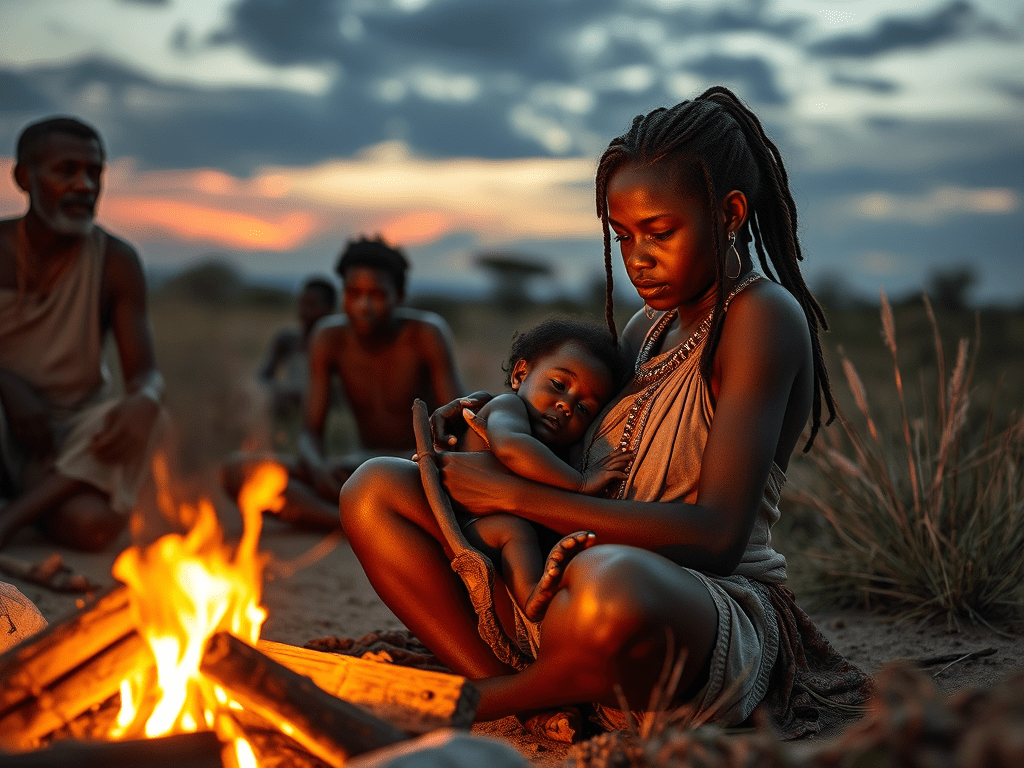
Imagine a small band of early humans huddled around a flickering fire on the African savanna 1.8 million years ago. In the dim glow, a young mother cradles her infant, who fusses quietly. There are no cribs or strollers, no formula or diapers – only the tools nature endowed and the ingenuity of a resourceful species.Continue reading “At the Dawn of Parenting: An Evolutionary Tale of Love and Survival”
Parenting Across the Ages: What Early Hominins Can Teach Us About Raising Children Today

Imagine what it might have been like to be a parent 1.8 million years ago. There were no cribs, no baby monitors, and no parenting books. Yet, the task of caring for and raising children was just as important then as it is today. While we often think of things like stone tools, fire, andContinue reading “Parenting Across the Ages: What Early Hominins Can Teach Us About Raising Children Today”
Decolonizing Anthropology: Reclaiming Narratives and Building a More Inclusive Future

A brief Introduction Anthropology, the study of human societies, cultures, and their development, has a complex history that intertwines deeply with colonialism. While anthropology seeks to understand human diversity, its origins and practices have often been rooted in colonial mindsets and frameworks. This article explores the importance of decolonizing anthropology, particularly in Africa and globally,Continue reading “Decolonizing Anthropology: Reclaiming Narratives and Building a More Inclusive Future”
Exploring the Untapped Potential of West African Paleoanthropology
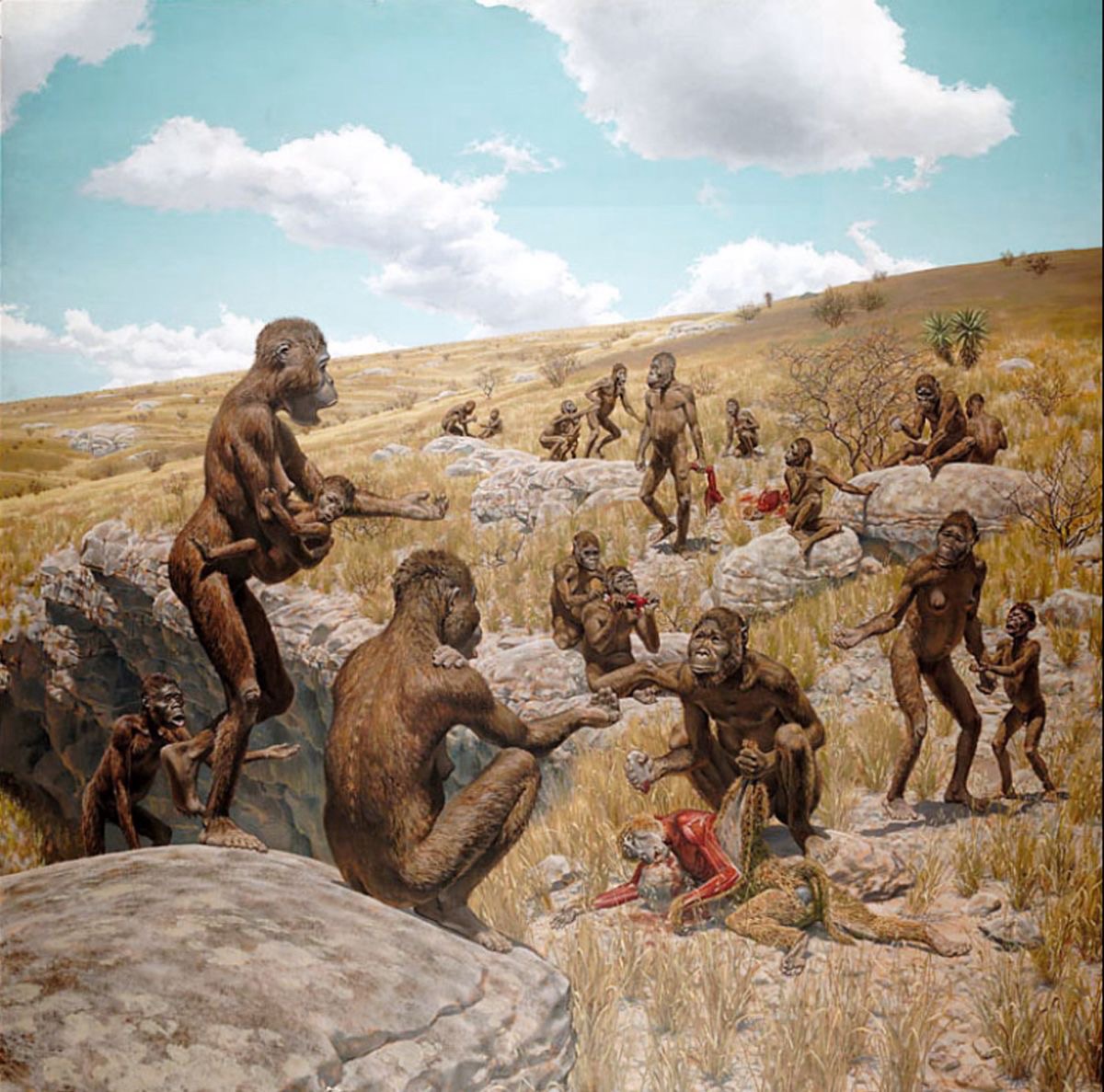
When we think about the origins of humankind, our minds often travel to the iconic sites of East and South Africa. Places like the Great Rift Valley, Olduvai Gorge, and Sterkfontein have given us the majority of our understanding of early hominins—those distant ancestors who walked the Earth millions of years ago. But what ifContinue reading “Exploring the Untapped Potential of West African Paleoanthropology”
 World of Paleoanthropology