Upcoming Skulls with Seth!

Coauthored with the New Bing.

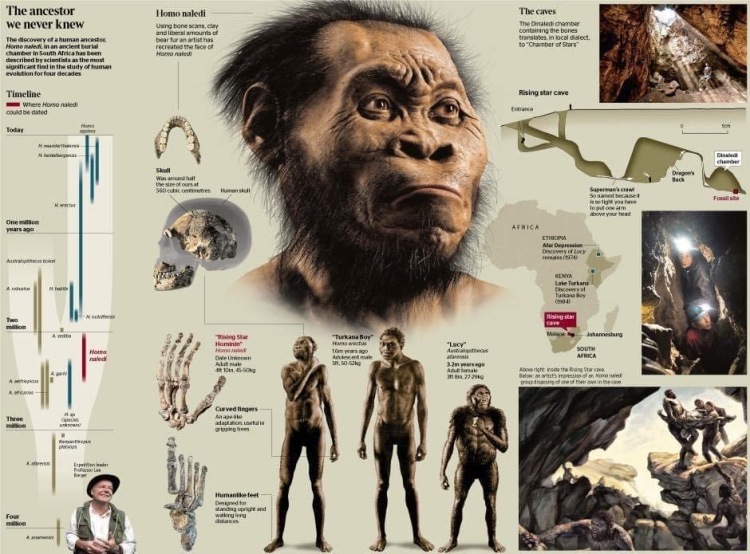
Coming up soon is the next #episode of #SkullswithSeth! On this episode we are going to be examining an extremely precious, and rare fossil, the first partial juvenile skull of H. #naledi yet found! #Leti! The name “Leti” was given to the first partial skull of a #Homo #naledi child that was found in the depths of the #RisingStarCaveSystem, located in the #CradleofHumankind, a #UNESCO World Heritage Site in South Africa’s #Gauteng province1. The researchers have named the child “#Leti” (pronounced Let-e) after the #Setswana word ‘letimela’ meaning ‘#thelostone’1.

Source: https://www.nature.com/articles/d44148-021-00109-x

It’s going to be great!

Youtube Milestone!

Hey everyone, I have some exciting news to share with you! I’m close to reaching 2,000 subscribers on my YouTube channel, and I need your help. I’m less than 100 away from this fantastic milestone, and I would really appreciate it if you could show some love and support by subscribing to my channel. Trust me, you won’t regret it!

Subscribe here:

Why? Because I have some great new content on the way that you want to take advantage of. I’m talking about fun events, giveaways, collaborations, and more as I expand and grow my channel. You’ll be the first to know about all the awesome things that are coming up, and you’ll also get access to exclusive perks and benefits as a loyal subscriber!

But wait, there’s more! If you subscribe to my channel, you’ll also enjoy my various video series covering all things Paleoanthropology. You know how much I love anthropology, right? I want to share that passion with you and show you how fascinating and fun it can be.

For example, you can watch “The Story of Us,” where I interview famous anthropologists and learn about their research, insights, and stories. You’ll hear from some of the most influential and inspiring people in the field and discover how they got into anthropology and what they love about it.

Or you can watch “Skulls with Seth,” where we examine hominin skulls and learn about their features, evolution, and significance. You’ll get to see some of the most amazing fossils ever found and know how to identify them and what they tell us about our ancestors.

Or you can watch “PaleoFridays,” where we tackle a topic-specific challenge related to Paleoanthropology. Whether making stone tools, recreating ancient art, or testing our survival skills, we’ll have a blast exploring the past and learning new things.

And that’s not all! There are so many more video series that I have planned for you, and I can’t wait to share them with you. Please subscribe to my channel today and help me reach 2,000 subscribers. It would mean the world to me, and I promise you won’t regret it.

Thank you so much for your support and for being part of this fantastic community. You are awesome! And remember: stay curious, stay adventurous, and stay tuned!

Did Homo naledi “Bury” their Dead?

Coauthored with the New Bing.

Did Homo naledi bury their dead? This question has fascinated paleoanthropologists since discovering this new human species in 2013. The fossils of Homo naledi were found in a hidden chamber of the infamous Rising Star Cave System in South Africa, where no other animals or sediments were present. The researchers who made the discovery suggested that this could be evidence of deliberate disposal of the dead by Homo naledi. This behavior is usually associated with complex cognition and symbolism.

However, not everyone agrees with this interpretation. Some critics have argued that alternative explanations exist for how the fossils ended up in the cave, such as accidental falls, floods, or predation. Others have questioned whether Homo naledi had the cognitive abilities to perform such a ritual, given their small brain size and primitive anatomy. (Does Brain Size Relate to intelligence or the ability to form a society?- Learn more).

One of the keywords that has sparked debate is “burial”. This term implies intentionality, respect, and possibly belief in an afterlife. But can we use this word to describe what Homo naledi did? Or is it too soon to make such a claim? What evidence is there to support the use of the word burial?

One way to approach this question is to compare Homo naledi with other hominins known or suspected to have buried their dead. The most obvious example is Neanderthals, who lived alongside modern humans for hundreds of thousands of years and left behind numerous burial sites across Europe and the Middle East. The oldest confirmed burial by Neanderthals dates back to about 100,000 years ago, but some researchers have suggested that they may have practiced this behavior as early as 250,000 years ago. Neanderthal burials often include grave goods, such as animal bones, tools, or flowers, which indicate some form of symbolism and ritual.

Another example is Homo sapiens, our species, who buried their dead in various ways and places throughout history. The oldest known burial by modern humans dates back about 120,000 years in Israel. Still, some researchers have argued that they may have started this practice even earlier, around 160,000 years ago in Ethiopia. Modern human burials also show evidence of symbolism and ritual, such as ochre pigments, ornaments, or art.

A third example is Homo heidelbergensis, a possible ancestor of Neanderthals and modern humans, who lived between 700,000 and 200,000 years ago. There is only one possible burial site attributed to this species, in Atapuerca, Spain, where several skulls were found in a pit with stone tools. However, this site is controversial, and some researchers have suggested that it could be a result of cannibalism or natural accumulation rather than intentional burial.(Some, such as Prof. Chris Stringer argue the H. heidelbergensis should be now referred to as a “Basal Neanderthal”, or the species that eventually turned into Neanderthals, and shared extremely similar features.)

Based on these examples, we can see that burial is not a simple or straightforward concept. It can vary in location, frequency, style, and meaning. It can also evolve within the same species or culture over time and space. Therefore, it may not be appropriate to apply the same criteria or expectations to Homo naledi as we do to other hominins. Instead, we should try to understand their behavior in context and perspective.

What significance does this have for Paleoanthropology? The discovery of Homo naledi has challenged many assumptions and stereotypes about human evolution. It has shown more diversity and complexity among our ancestors than previously thought. It has also raised new questions about the origins and development of human cognition and culture. By studying Homo naledi and their possible burial practices, we can learn more about what makes us human and how we became who we are today.

What is the future of Exploration in the Field of Paleoanthropology…according to a chatbot?

Hello everyone! This is me, Seth, a human, I want to make that clear, and I want to make it clear you will always know when it is I, the human, versus one of the many new chatbots that the worlds tech companies are pushing to the market well before they are ready. But, the reason I bring it up, is because I will be using AI to write some content, but only for contents sake. Any real research, coverage, or meaningful content will be created by me, as it always has.

For the fun of it though, I will sometimes do what I am about to, and that is ask Chatbots, in this case Googles “Bard”, and Microsoft’s “New Bing”.

The question that I posed was simple, “Write me a 1000-1500 word blog post on the future of exploration within the field of Paleoanthropology”

Here is what Bard had to say:

“Paleoanthropology is the study of human evolution through the analysis of ancient fossils and artifacts. It is a fascinating and ever-evolving field, with new discoveries being made all the time.

In recent years, there has been a renewed focus on the exploration of the human past. This is due in part to the rapid pace of technological advancement, which has made it possible to extract more information from ancient remains. However, it is also due to the growing awareness of the importance of understanding our evolutionary history.

There are many challenges that need to be addressed in order to continue to make progress in the field of Paleoanthropology. One challenge is the lack of funding. Paleoanthropological research is often expensive, and it can be difficult to secure funding from government agencies or private donors. Another challenge is the lack of trained personnel. There are not enough people with the skills and knowledge necessary to conduct Paleoanthropological research.

Despite these challenges, there are many reasons to be optimistic about the future of Paleoanthropology. New technologies are being developed that will allow us to study ancient remains in even more detail. And more people are becoming interested in learning about our evolutionary history.

The future of Paleoanthropology is bright. With continued research and exploration, we will learn even more about the human past and our place in the universe.

Here are some specific areas where future exploration is likely to focus:

  • The exploration of new sites. There are still many parts of the world where Paleoanthropological research has not been conducted. Exploration of these areas will likely lead to the discovery of new fossils and artifacts that will help us to better understand human evolution.
  • The development of new technologies. New technologies are constantly being developed that can be used to study ancient remains. For example, CT scans can be used to create 3D models of fossils, which can provide valuable information about the anatomy of ancient humans.
  • The study of ancient DNA. Ancient DNA can be extracted from fossils and used to study the genetic makeup of ancient humans. This information can help us to understand how different populations of humans evolved and how they interacted with each other.
  • The study of ancient microbiomes. The microbiomes of ancient humans can be studied by extracting DNA from fossils and analyzing it. This information can help us to understand how the diets of ancient humans affected their health and how they interacted with their environment.
  • The study of ancient cultures. The artifacts that are found in Paleoanthropological sites can be used to study the cultures of ancient humans. For example, tools can be used to learn about how ancient humans made a living, and art can be used to learn about their beliefs and values.

The future of Paleoanthropology is exciting. With continued research and exploration, we will learn even more about the human past and our place in the universe.”

Pretty cool, and interesting huh? But can you see where some of the dangers lay in relying completely on AI generated content for your information?

Here is what Bing had to say,

“Paleoanthropology is a fascinating field of study that has been around for centuries. It is the study of human evolution and the development of early humans. The field has come a long way since the early days of discovery, and it continues to evolve as new technologies and techniques are developed. In this blog post, we will explore the future of exploration within the field of Paleoanthropology.

One of the most exciting developments in the field of Paleoanthropology is the use of 3-D scanning technology. This technology has revolutionized the way that fossils are studied and analyzed. With 3-D scanning, researchers can create highly detailed digital models of fossils that can be studied in great detail. This technology has allowed researchers to study fossils in ways that were previously impossible, and it has opened up new avenues of research.

Another exciting development in the field of Paleoanthropology is the use of DNA analysis. DNA analysis has allowed researchers to study the genetic makeup of early humans and to better understand how humans evolved over time. This technology has also allowed researchers to study the relationships between different species of early humans and to better understand how they are related.

In addition to these technological developments, there are also many other exciting developments in the field of Paleoanthropology. For example, researchers are constantly discovering new fossils that shed light on the evolution of early humans. These discoveries are helping researchers to better understand how humans evolved and how they adapted to different environments.

Another exciting development in the field of Paleoanthropology is the use of new techniques for dating fossils. These techniques are allowing researchers to more accurately date fossils and to better understand the timeline of human evolution. This is helping researchers to better understand how humans evolved and how they adapted to different environments.

Overall, the future of exploration within the field of Paleoanthropology is very exciting. With new technologies and techniques being developed all the time, researchers are constantly discovering new things about the evolution of early humans. As these discoveries continue to be made, we will gain a better understanding of our own evolutionary history and how we came to be the way we are today.

I hope this blog post has been informative and has given you a better understanding of the future of exploration within the field of Paleoanthropology. If you have any questions or comments, please feel free to ask!”

And there you have it! That is what the current iteration of chatbots think about the future of exploration within our field. But is it correct?

Where do you think think the field is going?

Are Neanderthals our Ancestors? A Quick ChatGPT Analysis

Here is what ChatGPT says about “Are Neanderthals our Direct Ancestors?”

I need to write a paper about how Neanderthals are not our direct ancestors

Many people have a misconception that Neanderthals are our direct ancestors or early members of our own species Homo sapiens. However, this is not true. Neanderthals are actually our cousins, who evolved from a common ancestor with us about 600,000 to 800,000 years ago.

Neanderthals were a distinct species of human, known as Homo neanderthalensis, who lived in Europe and Asia from over 200,000 years ago until less than 30,000 years ago. They had some unique features that adapted them to cold climates, such as a large nose, a robust body and a large brain.

Neanderthals were also capable of making tools, using fire and burying their dead. Some evidence suggests that they may have had some form of culture and religion as well. They were not primitive or stupid as some stereotypes suggest.

However, Neanderthals did not give rise to modern humans. Our species Homo sapiens originated in Africa during the last 250,000 years from non-Neanderthal ancestors. We spread from Africa during the last 60,000 years and replaced other human lines such as the Neanderthals.

How this replacement happened is still unclear. It could have been due to conflict or competition for resources. It could also have been due to environmental changes or diseases that favored us over them.

What is clear is that Neanderthals and modern humans did interact and interbreed on some occasions. This is evident from the fact that some people today (particularly in Eurasia) have traces of Neanderthal DNA in their genomes.

However, this does not mean that we are descended from Neanderthals. The amount of Neanderthal DNA in modern humans is very small (less than 4%) and does not affect our physical appearance or behavior significantly.

Therefore, we can conclude that Neanderthals are not our direct ancestors but rather our distant relatives who shared a common history with us for a brief period of time.

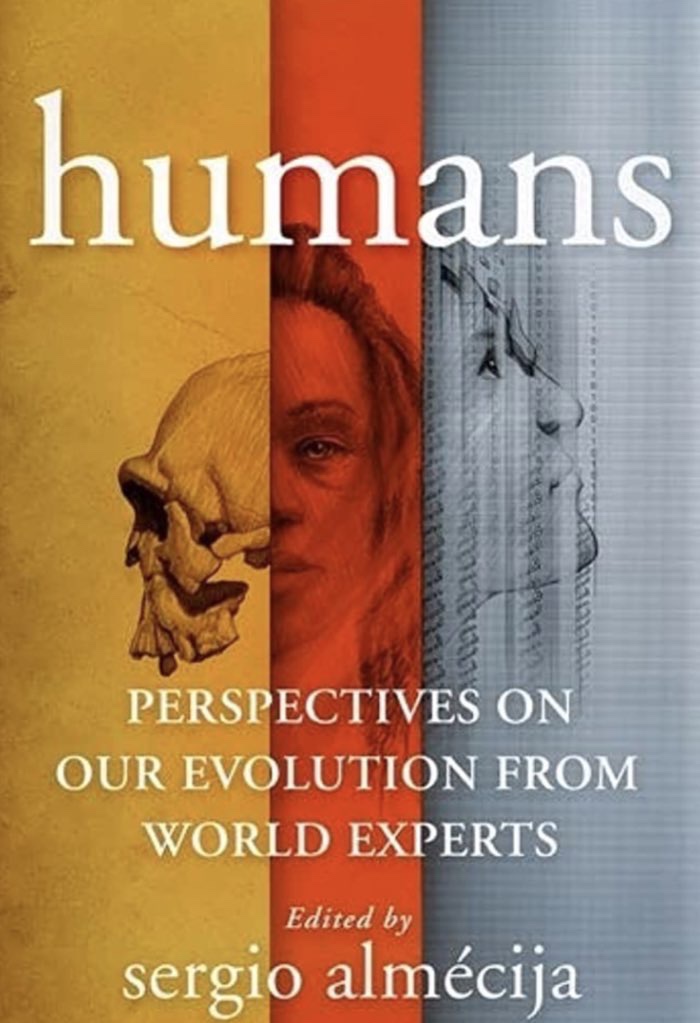
Humans, edited by Sergio Almécija-A Review!

Join me in my interview with the author! To be posted later today!

When I heard about this book, I did not truly understand what it would be and how profoundly it would affect my view and understanding of topics from religious beliefs to how and why Anthropology is for me. Humans: Perspectives on our Evolution from World Experts by Sergio Almécija is an amalgamation of sage advice from over one hundred anthropologists worldwide. I may be a little biased when I say this, but I do not think there is a better group of people to learn life lessons from. But who am I to say? This is not a storybook; there is no happy ending or climax. It is a book of advice on how Anthropologists have discovered and viewed our evolution—the lessons our ancestors have imparted upon them and the constant search for our origins.

In Humans, the author has interviewed 103 Biological Anthropologists to obtain their thoughts on various subjects. He asked the anthropologists a series of questions to prompt them to discuss a topic, such as their beginnings, views on religion, driving factors, inspirations, and so much more. We get insider views on these people that many views as untouchable in the ivory tower. I think that this book does many great things. Still, the most critical thing that it accomplishes is that it brings the scientists and researchers down to a level that other humans can understand and feel that they can, hopefully, on some level relate. Humans get humanity back into the science that, for so long, has been askew. This science is about people; Anthropology is the study of human beings and our ancestors. It would be unfortunate if those who contributed to science were too hard to relate to modern humans. This book gives us the insight that they are not as separate from the rest of us as we once thought. Knowing this, the average Jane and Joe can participate in science in a whole new way, not feeling that they do not belong and that there is a place for them and their ways of thinking.

Anthropology is a science of welcoming differences, competitive spirits, and more questions than answers. It is good to hear some of our questions cause these great minds to pause and think, and their solutions, while sometimes abrasive, give us different ways to think about these issues than we may have prior. For many, they will be able to find solace in knowing they are not the only ones to believe in such ways. Big questions like, ‘can one be an anthropologist and still believe in god?” This is a question tackled by many of the participants. You will expect some of the answers, but you will be pretty surprised by others.

The wide range and diverse group of anthropologists that the author brought in for these interviews provide a healthy look at the anthropological community. If you want to know who anthropologists are and how they think, this will be a fun and excellent read for you!

Grab your copy here starting May 9th

Call for Undergraduate Submissions: Cambridge Journal of Human Behaviour

Dear whomever it may concern,

I am writing to you as the Biological Anthropology Outreach Officer of the Cambridge Journal of Human Behaviour. Please may you forward the following to relevant email lists:

****

The Cambridge Journal of Human Behaviour is now calling for submissions for its next issue. (Deadline: May 15th, 2023). 

CJHB is an interdisciplinary, ISSN-registered, and peer-reviewed journal, publishing undergraduate work from across the world. We are excited to invite you, your students, and your colleagues to participate in the publication of its next issue. For many undergraduates, this proves to be a rare and excellent opportunity for their work to undergo peer-reviewing and publishing!

Submissions can include dissertations, projects, and extended essays (max. 5000 words) and must have been completed during undergraduate study. Topics range from (but are not limited to) Natural Sciences, Biological Anthropology, Social Anthropology, Psychological/Behavioural Sciences, Economics, and Philosophy.  Interdisciplinary manuscripts are strongly encouraged. 

More detail can be found on our website here: www.cjhumanbehaviour.com 

Our publications can be accessed here: www.cjhumanbehaviour.com/publications 

We are also calling for new, incoming reviewers and editors. See our full statement here.

For specific inquiries, please email ec750@cam.ac.uk.

We look forward to receiving some of your work soon! 

Kind regards,

Seth Chagi

Biological Anthropology Outreach Officer

Cambridge Journal of Human Behaviour

The Toba Eruption-Almost Wiping Humanity Off the Map!

*Premiering at 6pm PST*

Hello everyone, and welcome to this episode of#PaleoFridays! 

In this episode, we will learn about the Super Volcanic Eruption of Mt. Toba, located in what is now known as Lake Toba, Sumatra, Indonesia. 

One of the largest volcanic eruptions in Earth’s history, it had a major impact on our ancestors, how they moved about the land and everything they did. This eruption, in fact, almost caused the extinction of our entire species, possibly the closest that we have ever been to that dark door! 

Watch, learn, and if you enjoy, subscribe and like! 

Enjoy! 

Want to “Buy me a Book”? 

Now you can!