The Interplay of Ontogeny and Phylogeny: A Journey Through Development and Evolution
Naledi (300,000, L) Taung Child (2.5 million R)
Co Written with AI
Ontogeny and phylogeny are two fundamental concepts in biology that describe different aspects of life’s complexity. Ontogeny refers to the development of an individual organism from embryo to adult, while phylogeny traces the evolutionary history of a species. The relationship between these two processes has fascinated scientists for centuries, giving rise to the idea that “ontogeny recapitulates phylogeny.” Although this notion is outdated, the interplay between individual development and evolutionary history remains a vibrant field of study.
Ontogeny: The Path of Individual Development
Ontogeny is the study of an organism’s development from the earliest stages of fertilization to its mature form. This process involves a series of tightly regulated steps that ensure the proper formation and function of various tissues and organs.
1. Embryonic Development:
• The journey begins with a single fertilized egg, or zygote, which undergoes rapid cell division and differentiation.
• Cells specialize into various types, forming tissues and organs through processes such as gastrulation, neurulation, and organogenesis.
2. Growth and Differentiation:
• Post-embryonic development includes the growth and further specialization of tissues.
• This stage encompasses significant changes, such as the development of secondary sexual characteristics during puberty.
3. Maturation and Aging:
• As the organism reaches maturity, it continues to undergo changes, albeit more slowly.
• Aging, or senescence, marks the final phase of ontogeny, characterized by a gradual decline in physiological function.
Phylogeny: The Evolutionary Tapestry
Phylogeny explores the evolutionary history and relationships among species. It seeks to reconstruct the tree of life, illustrating how diverse organisms are connected through common ancestry.
1. Fossil Record and Comparative Anatomy:
• Phylogenetic studies often begin with the fossil record, which provides snapshots of evolutionary history.
• Comparative anatomy examines similarities and differences in the structures of living and extinct species, revealing evolutionary relationships.
2. Genetic Evidence:
• Advances in molecular biology have revolutionized phylogenetics. DNA sequencing allows scientists to compare genetic material across species, providing insights into evolutionary divergence and common ancestry.
• Molecular clocks estimate the timing of evolutionary events based on genetic mutations.
• These trees are constantly refined as new evidence emerges, enhancing our understanding of the evolutionary connections among species.
The Interplay Between Ontogeny and Phylogeny
The relationship between ontogeny and phylogeny is complex and multifaceted. While the idea that ontogeny recapitulates phylogeny has been largely discredited, developmental processes still offer valuable insights into evolutionary history.
1. Heterochrony:
• Heterochrony refers to changes in the timing of developmental events, which can lead to evolutionary changes.
• For example, paedomorphosis, the retention of juvenile features in the adult form, can result in significant morphological differences between related species.
2. Developmental Constraints:
• Developmental processes can constrain evolutionary pathways. Certain structures and functions may be difficult to alter without disrupting other aspects of development.
• These constraints help explain the conservation of certain features across diverse species.
3. Evo-Devo:
• Evolutionary developmental biology, or evo-devo, is a field that integrates ontogeny and phylogeny to understand the genetic and developmental mechanisms underlying evolutionary change.
• Evo-devo studies reveal how small genetic changes can lead to significant morphological diversity, shedding light on the processes that drive evolution.
Conclusion
Understanding the interplay between ontogeny and phylogeny enhances our comprehension of both individual development and evolutionary history. Ontogeny provides a window into the processes that shape an organism from embryo to adult, while phylogeny uncovers the connections that link diverse species through common ancestry. By studying these concepts together, we gain a richer, more nuanced understanding of the biological world. The ongoing dialogue between developmental biology and evolutionary theory continues to reveal the intricate tapestry of life, from the earliest stages of development to the grand sweep of evolutionary history.
Some thigns in Anthropology need to change, such as how we refer to our relatives, genetically, and where we stand amongst the other homininins. The Family Tree must go!
Anthropology is a constantly evolving field. One day, we may feel confident in our understanding of human origins, and the next, a new discovery can turn our knowledge upside down. Each new find not only expands our understanding but also ignites our curiosity, raising more questions than ever before.
Today, let’s focus on a topic that challenges traditional views: the “Human Family Tree.” For centuries, human evolution has been depicted as a tree, with branching stems merging into larger branches, ultimately forming a single, unified trunk. This concept, first described by Charles Darwin in the late 1800s, revolutionized our understanding of humanity’s place in the natural world.
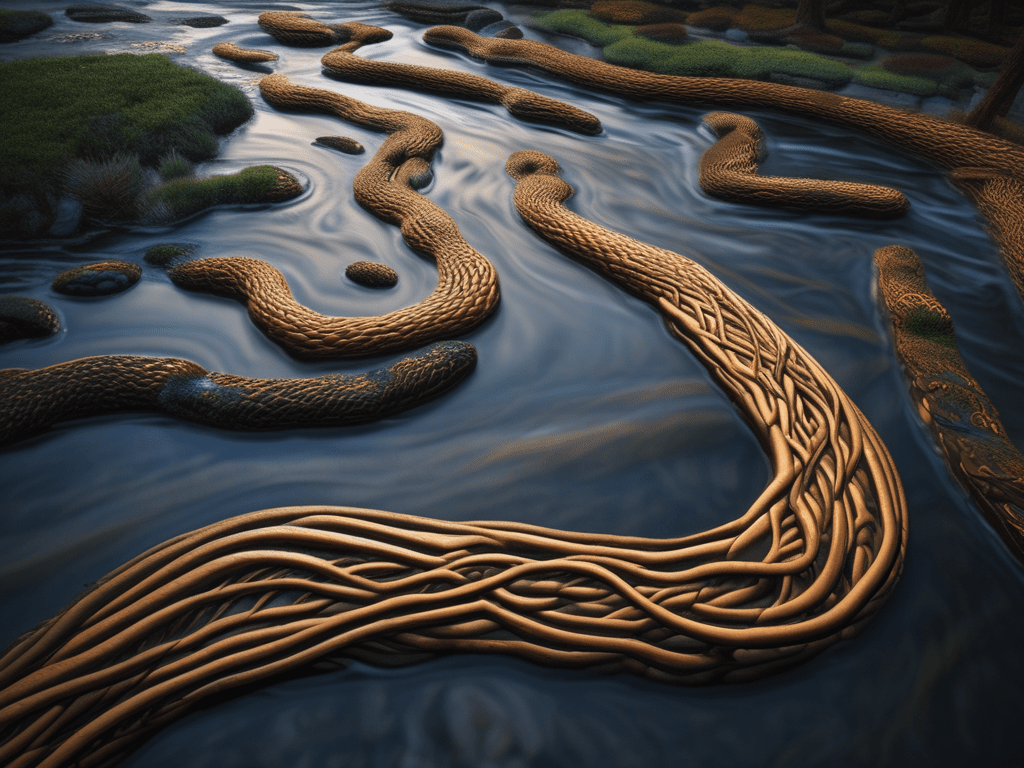
However, recent discoveries have reshaped our perspective. Human evolution is no longer seen as a linear process or even a branching tree. Instead, it resembles a braided stream flowing into an estuary. This model, supported by fossil and genetic evidence, provides a more accurate representation of our evolutionary history.
The Limitations of the Tree Model
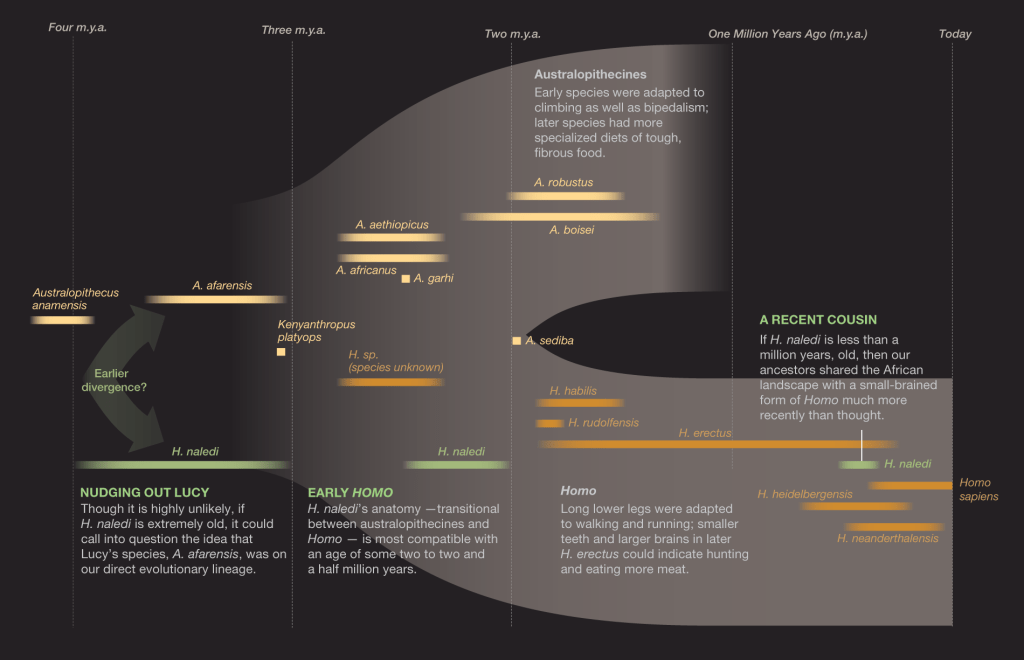
The traditional tree model suggests a straightforward progression from one species to another. For example, it might imply that Australopithecus afarensis evolved directly into Homo habilis, which then evolved into Homo erectus. This linear view oversimplifies the complex and dynamic nature of evolution.
The Braided Stream: A More Accurate Metaphor
The braided stream model offers a more nuanced view of human evolution. It recognizes that multiple hominin species coexisted and interbred, contributing to a rich tapestry of genetic exchange. This model reflects the continuous flow of genes and traits among various hominin populations, akin to the interconnected channels of a braided stream.
Key Points of the Braided Stream Model:
1. Coexistence and Interbreeding: Multiple hominin species lived at the same time, interbreeding and sharing genetic material. This gene flow contributed to the diversity of traits observed in ancient populations.
2. Gradual Changes: Evolution was not a series of abrupt transitions from one species to another. Instead, it involved gradual changes, with species gaining and losing traits over time.
3. Complex Relationships: The relationships between different hominin species were complex and dynamic, shaped by environmental changes and migration patterns.
Why the Braided Stream Model Matters
Understanding human evolution as a braided stream rather than a tree has significant implications for anthropology:
• Greater Accuracy: This model more accurately reflects the fossil and genetic evidence, providing a clearer picture of our evolutionary past.
• Enhanced Understanding: It helps us appreciate the complexity and fluidity of human evolution, highlighting the interconnectedness of different hominin species.
• Educational Value: Teaching this model alongside or instead of the traditional tree model can foster a deeper understanding of evolutionary processes among students.
Embracing the New Paradigm
While the tree model has been a useful metaphor, it’s time to embrace the braided stream as the most accurate representation of hominin evolution. This shift in perspective can enrich our understanding of human origins and inspire future generations of anthropologists.
Your Thoughts
What are your views on the braided stream model of human evolution? Do you still prefer the linear family tree? Why or why not? Share your thoughts in the comments below.
In today’s digital age, social media is indispensable for academics seeking to disseminate their research and insights. Platforms like Twitter have been instrumental in connecting scholars, sharing findings, and engaging with broader audiences. However, recent developments necessitate an urgent reassessment of where academics choose to share their knowledge. This article explores the critical importance of social media for academics and why it is imperative to transition from Twitter to emerging platforms like Bluesky and Threads immediately.
The Role of Social Media in Academia
Social media has transformed academic communication, offering numerous benefits:
1. Increased Visibility and Impact: Sharing research on social media allows academics to reach a wider audience beyond academic journals, leading to more citations, collaborations, and greater societal impact.
2. Networking Opportunities: Platforms like Twitter enable global connections with peers, policymakers, and industry professionals, fostering collaborations, funding opportunities, and interdisciplinary research.
3. Public Engagement: Academics can engage with the public, policymakers, and media, making their research accessible and understandable, raising awareness about important issues, and influencing public policy.
4. Real-Time Feedback: Social media facilitates immediate feedback and discussions, helping researchers refine their ideas based on diverse perspectives.
The Urgent Need to Abandon Twitter
Despite its benefits, Twitter has become a problematic platform for academics. One of the primary concerns is Elon Musk’s involvement, whose funding has been linked to misinformation and anti-science movements. This association has created an environment that undermines the very foundation of academic research and integrity.
1. Misinformation and Anti-Science Movements: Elon Musk’s funding of misinformation campaigns and support for anti-science rhetoric directly contradicts the values of academic research. By continuing to use Twitter, academics inadvertently endorse a platform that spreads falsehoods and erodes public trust in science.
2. Ethical Concerns: The ethical implications of using a platform associated with such funding are too significant to ignore. It is imperative for the academic community to uphold its values by choosing platforms that align with scientific integrity.
3. Toxic Environment: Twitter has become notorious for its toxic environment, with harassment, trolling, and divisive discourse becoming commonplace. This environment is detrimental to meaningful academic discussions and collaborations.
Embracing New Platforms: Bluesky and Threads
Given these concerns, it is time for academics to make an urgent shift to alternative platforms that support the dissemination of research and uphold scientific values. Two such platforms are Bluesky and Threads.
Bluesky
Bluesky is an emerging decentralized social network initiative supported by Twitter’s former CEO, Jack Dorsey. It aims to create a more open and user-controlled social media ecosystem. The decentralized nature of Bluesky offers several advantages:
1. Control and Ownership: Users have more control over their data and interactions, reducing the risk of misinformation and manipulation by centralized entities.
2. Transparency: The open-source approach promotes transparency, making it easier to identify and mitigate misinformation.
3. Community Governance: Bluesky’s decentralized model encourages community governance, allowing academics to create and enforce standards that align with scientific integrity.
Threads
Threads, developed by Meta (formerly Facebook), is another promising platform designed to enhance academic networking and collaboration. With a focus on professional and academic communities, Threads offers:
1. Focused Networking: Threads is designed for more meaningful interactions, reducing the noise and distractions common on broader social media platforms.
2. Enhanced Collaboration Tools: Features such as group discussions, document sharing, and project management tools facilitate collaboration among scholars.
3. Secure Environment: Meta’s commitment to user privacy and security ensures a safer environment for academic discourse.
The Immediate Call to Action
For the academic community, the choice of platform is not just about convenience; it is about upholding the principles of scientific inquiry and integrity. By urgently transitioning from Twitter to platforms like Bluesky and Threads, academics can continue to share their research and insights while distancing themselves from the ethical concerns associated with Twitter.
In conclusion, the power of social media in academia is undeniable. However, scholars must choose platforms that support their values and contribute positively to the dissemination of knowledge. Bluesky and Threads offer viable alternatives that align with the ethical and professional standards of the academic community. It is time for academics to make a conscious and immediate shift, ensuring that their valuable contributions to science and society are shared on platforms that reflect the true spirit of research and discovery. The integrity of our work depends on it.
The Mystery of Autism and Neanderthals: A Journey Through Time
Have you ever wondered where certain things about us come from? Imagine going on an exciting adventure back in time, about 40,000 years ago, to meet our ancient cousins, the Neanderthals. This adventure will help us understand something about autism and how it might be connected to the past.
Who Were the Neanderthals?
Neanderthals were humans, just like us, but they lived a very long time ago. They had strong bodies, big brains, and they knew how to make tools and build shelters. Neanderthals lived in Europe and parts of Asia, surviving in cold climates and hunting animals for food. Even though they were different from us, they were also very similar. Scientists study Neanderthal bones and tools to learn more about them and how they lived.
What is Autism?
Autism is a condition that affects how a person thinks, feels, and interacts with others. People with autism might find it hard to talk and play with others, but they often have amazing abilities in other areas, like remembering lots of details or being very good at certain activities. Autism is called a “spectrum” because it affects everyone differently, like a rainbow with many colors.
The Connection Between Neanderthals and Autism Genes
Now, let’s connect the dots between Neanderthals and autism. Scientists have discovered that some of the genes (tiny parts of our DNA that make us who we are) linked to autism might have been passed down from our ancient Neanderthal cousins. But wait! This doesn’t mean that Neanderthals had autism or gave it to us directly. It’s more like sharing a family recipe that has been changed and passed down over many generations.
Genes: The Recipe of Life
Imagine that our DNA is like a giant recipe book, and genes are the individual recipes that tell our bodies how to grow, function, and look. We inherit these genes from our parents. Some of these genes affect how our brains develop and work. Long ago, when our human ancestors met and had children with Neanderthals, they mixed their recipe books together. This mixing is called interbreeding.
The Role of Neanderthal DNA
When scientists look at our DNA today, they find little bits of Neanderthal DNA mixed in with ours. Some of these Neanderthal genes might have helped our ancestors survive better in different environments. For example, they might have been useful for living in colder climates or fighting off diseases. Interestingly, some of these genes are also linked to how our brains develop.
Understanding Autism Genes
Researchers have found that certain genes linked to autism in modern humans are also found in Neanderthal DNA. These genes might influence how our brains form connections and how we process information. However, having these genes doesn’t mean a person will definitely have autism. It’s more like having an ingredient in a recipe; it can make a difference, but it’s not the whole story.
The Puzzle of Autism
Autism is like a complex puzzle with many pieces. Genes are just one part of this puzzle. Other pieces include things like our environment (where we live and what we experience) and how our brains develop over time. The fact that some genes linked to autism are also found in Neanderthals helps scientists understand more about how our brains evolved and developed over thousands of years.
How Science Helps Us Understand
Scientists use special tools and techniques to study DNA and find out how it affects us. By comparing the DNA of modern humans and Neanderthals, they can see which genes we share and what those genes do. This helps them understand the history of our genes and how they might influence conditions like autism.
The Big Picture
It’s important to remember that while some genes linked to autism come from Neanderthals, it doesn’t mean Neanderthals had autism or that they passed it directly to us. Genes are just one small part of the big picture. Autism is influenced by many factors, and everyone with autism is unique.
Why This Matters
Understanding the connection between autism genes and Neanderthal DNA helps scientists learn more about our past and how our brains work. It also shows us that we are all connected through history, sharing pieces of our DNA with ancient humans who lived long ago.
Learning From the Past
By studying our ancient relatives, we learn more about ourselves. Neanderthals were amazing survivors, and their genes helped shape who we are today. The fact that we carry a little bit of Neanderthal DNA in us is a reminder of our shared history and the incredible journey of human evolution.
Conclusion
The story of autism and Neanderthal genes is like a fascinating adventure through time. It teaches us about the connections between our ancient ancestors and ourselves. Remember, having a few Neanderthal genes doesn’t mean we are Neanderthals or that we inherited specific conditions from them. It’s just one piece of the puzzle that makes us who we are. By exploring these connections, scientists can uncover more about our past and help us understand the complexities of the human brain.
So, next time you think about autism or hear about Neanderthals, remember the incredible journey of our genes and how we are all part of an amazing story that spans thousands of years. The more we learn about our past, the better we can understand ourselves and the world around us.
Ancient DNA and how we can learn so much from so little
Written by Emily Masterson
Ancient DNA is becoming a powerful tool in the story of human evolution. Never before have we been able to gather so much information from seemingly so little evidence. This microscopic part of an organism holds so much within its tiny coils, and now that we are able to unravel and examine it, our perception of ancient hominins can only grow and expand in new and unexpected ways.
Collecting ancient DNA is currently limited to samples only a few hundred thousand years old. While this does allow scientists to take a closer look at our more recent ancestors and relatives, the chance to explore the genetic makeup of our more ancient ancestors may be lost forever. A combination of contextual clues, radiocarbon dating and DNA analysis work together to build the whole picture of what one small bone fragment can tell us.
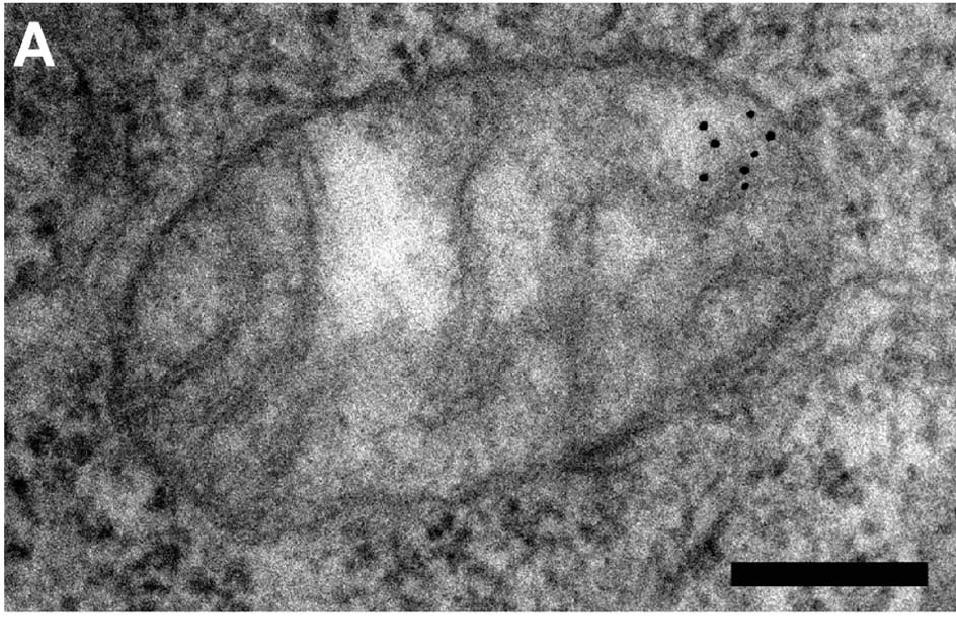
DNA is extracted from samples and then replicated using a technique called PCR so scientists have as much to work with as possible. Due to the degradation of ancient DNA, the sections recovered are often much shorter than scientists would be able to extract from a living specimen. However, DNA from the mitochondria (mtDNA) degrades at half the speed of nuclear DNA. There are also around 1000 mitochondria in each cell, and 2-10 copies of the mtDNA in each of these. The odds of there being mtDNA available and of high enough quality for study is much higher than DNA found in the nucleus of cells.
A mitochondria with DNA appearing in this photo as blacks dots. Iborra et al 2004
This technique of using mtDNA has been used in several cases of Denisovan and Neanderthal explorations. We have been able to tell a huge part of the Denisovan story, with only a few very tiny samples thanks to this DNA. But just the isolated DNA can’t tell us much, it requires a library of genetic samples, which only start to tell a story once we compare them.
The human genome has been mapped and scientists have a pretty good idea of what codes for what, and can see shared trends across populations. By comparing the DNA of ancient hominins to human genomes, we can start to reveal surprising data.
When neanderthal DNA was analysed and compared to the human genome, we learnt that our last common ancestor with them was 800,000 years ago, but because of the way mitochondrial DNA is inherited, we actually share a common mitochondrial ancestor only 500,000 years ago. While nuclear DNA is shared and combined during reproduction, allowing for more gene flow and changes to a population, mitochondrial DNA is passed down, unchanged, though the matrilineal line.
Between the information of human genomes and that which we have learnt from neanderthals, it places scientists in an excellent position to understand the DNA of new hominin samples when they become available.
In the Altai Mountains of southern Siberia, a site was excavated and a single important phalanx, or finger bone, was discovered in layer 11. The phalanx was too small to radiocarbon date, so using other samples found in the layer, such as a rib with regular incisions (indicating that it was associated with human occupation) the layer was determined to be more than 50,000 years old.
The entire internal structure of the phalanx was used to gather DNA, and this single bone proved to be an exceptional sample. Whereas previous neanderthal studies have only been able to retrieve up to 5% of endogenous neanderthal DNA and 95% microbial DNA, this phalanx provided a massive 70% endogenous DNA. Not only this, but neanderthal studies had retrieved DNA which was 50 base pairs long, and this phalanx, even after processing and treatment, managed to extract samples with 58 base pairs. This meant that the samples were incredibly well preserved and scientists had a lot more to work with. It’s not known why this was preserved so well in a temperate environment, but it is similar to what is expected from samples retrieved from permafrost.
Once the DNA had been extracted and read, the real fun began. When compared to human and previously studied neanderthal mtDNA, it was determined that this was a new species which split from present day Africans 804,000 years ago and Vindija neanderthals 640,000 years ago. From just one bone, we were able to place this new species on the map of human evolution, and determine that it split from neanderthals after they branched off from the human line. We can then examine in a lot of detail, where exactly their DNA shows up in modern populations and learn how they might have spread across the globe.
It seems that there is very little evidence that Denisovans made their way into the genes of the Eurasian population, but much stronger evidence that they are present in modern Melanesian populations. It is estimated that these populations share 4.86% of their DNA (plus or minus 0.5%) with Denisovans compared to 0% in African populations. Whereas Neanderthal DNA can be seen across all non-African populations, this gives us a good understanding of where Denisovans may have ranged.
Already, so much had been learnt from such a small sample. But more was to come when in layer 11.1 of the same cave, a single molar was discovered. It is most likely an upper third molar (but the possibility exists that it could be a second molar), and almost completely intact. If it is a third molar, then from morphology alone we can see that it is an unusual size for the Homo genus (except for H. habilis and H. rudolfensis) and more like the third molar of Australopithecines.
Reich et al, 2010
15,094 mtDNA sequences were extracted from 50mg of dentin from the root of this molar, and while 380 are different from that of humans and neanderthals, only 2 differ from the mtDNA collected from the phalanx. This proved that these two fossils found in the cave were from the same population, but from two different individuals. The time since the last common ancestor for these two individuals is estimated to be around 7,500 years.
The mtDNA from the molar supported the previous conclusion that denisovans are distinct from neanderthals and modern humans, something which may have been more tricky to prove on morphology alone. But the morphology combined with the DNA can help us work out the solutions to more questions about this population. Questions such as “Why is the molar so primitive if they share lineage with humans and neanderthals?” One answer is that these features were retained in denisovans while they were lost in modern humans and neanderthals, or that there was a reversal to ancestral traits after the split.
One interesting answer is that these archaic traits arrived through gene flow from another hominin which has not been DNA sequenced yet. If this hominin’s genome is ever found, it could expand our knowledge of Denisovans so much.
One last bone fragment was discovered and analysed from this cave recently, but this time it was much older. The layer was dated to 200,000 years ago, but with DNA analysis, we also know that this individual was a male who had inherited 5% of his genome from a population of neanderthals we had not yet sequenced. He also came from a different population of denisovans than the others found previously. Lastly, and perhaps most interestingly, the DNA found in the phalanx contained unknown portions, DNA not found in the samples from humans or neanderthals, which hinted at an unknown (or un-analysed) hominin, and this DNA was also present in the older male individual. Thanks to DNA, as we expand the libraries, we can begin to construct more detailed timelines of who might have lived in the caves, and what their relationship to other hominins might have been.
We can learn so much from DNA analysis, and the libraries are only expanding with more information to help our understanding grow. As we have seen, it could only take one tiny bone fragment to completely change the course of history!
Iborra, F.J., Kimura, H. & Cook, P.R. (2004) The functional organization of mitochondrial genomes in human cells . BMC Biol 2, 9 . https://doi.org/10.1186/1741-7007-2-9
Krause J, Fu Q, Good JM, Viola B, Shunkov MV, Derevianko AP, Pääbo S. (2010) The complete mitochondrial DNA genome of an unknown hominin from southern Siberia. Nature. Apr 8;464(7290):894-7.
Merheb M, Matar R, Hodeify R, Siddiqui SS, Vazhappilly CG, Marton J, Azharuddin S, Al Zouabi H. (2019) Mitochondrial DNA, a Powerful Tool to Decipher Ancient Human Civilization from Domestication to Music, and to Uncover Historical Murder Cases. Cells. May 9;8(5):433.
Meyer, M.; Kircher, M.; Gansauge, M.-T.; et al. (2012). “A High-Coverage Genome Sequence from an Archaic Denisovan Individual”. Science. 338 (6104): 222–226.
Ever since humanity first began to think, we have always had an interest in where we first began as a species. Cultures throughout the entire world invented myths and legends to explain our origins, while science has steadily gathered evidence to address the question in an objective and provisional way.
During the Enlightenment Period, early scientists had a number of different ideas based on the evidence available at the time. Carolus Linnaeus invented his taxonomic system to organize life in a systematic way, presenting certain patterns of biodiversity that he struggled to explain at the time. Charles Darwin and some of his contemporaries used biogeography to explain Linnaeus’ patterns, postulating that human beings must have evolved from Africa, based on where the other primates are most concentrated in. Today, there are numerous lines of evidence that all point to Africa as the birthplace of mankind, and three of those lines will be discussed in this article: linguistic diversity, fossils, and genetics.
Written by — Gabriel Stroup (updated: 12 July 2024)
LinguisticDiversity
Linguistics, the study of human languages, is one area in the humanities that benefits from an understanding of evolutionary theory, and in this case, it can be used to highlight the linguistic diversity in Africa, which may help to collaborate other lines of evidence later on.
Africa is among the most linguistically diverse continents. Its ~3,000 known indigenous languages fall into many different categories (language families), such as Niger-Congo, Afro-Asiatic, and smaller families unique to Africa. This is in addition to a good number of language isolates (languages not believed to be related to any other languages), including some of the “click” languages that were once classified together. Clicks, tones, and other linguistic features are not necessarily unique to Africa, but nonetheless contribute to Africa’s unique lingual diversity.
These languages are spoken by various cultures across Africa, some representing pre-ploughing agriculture, making them among the oldest, continuously-spoken languages. Linguistic methods unfortunately do not provide strong dates or timelines over a certain time period; languages in any area would have changed over time due to both common ancestry and close-contact borrowing, leaving little traces of their ancestral forms, especially without writing systems. Even so, linguistic diversity can be a decent starting point for assessing Africa as the origin of humankind, and it lends itself well to be corroborated by archaeological/paleontological/genetic data, as we shall see.
Distribution of language groups across Africa (Felicia et al, 2014)
Fossils
Since the rise of paleoanthropology, fossil material has been incredibly important in hypothesizing the origin of human beings, controversy notwithstanding. At the time of this writing, there is an innumerable amount of fossil material that have been scrutinized for what they can tell us about human evolution and migration. Amid a wide variety of fossil primates that show transitions from basal primates to basal apes, Sahelanthropus and Ardipithecus show the earliest signs of habitual bipedalism. Australopithecus, a genus that contains many distinct species, shows even more prevalent signs of not habitual, but obligate, bipedalism. These two ape groups are exclusive to Africa, and so are the earliest species of Homo. Homo habilis and similar species show an increased use of tools and a gradually-increased braincase as they diversified into later Homo species.
Homo erectus, a later species of Homo, was among the first to venture out of Africa, leaving fossils as far east as Indonesia. Throughout its temporal and geographic ranges, it exhibited a suite of characteristics that show an adapted lifestyle on the ground, compared to the arboreal lifestyle that prior species indicated. These characteristics varied to a degree; a degree that has led to scientists believing that several later Homo species evolved from different H. erectus populations at different times and areas, and even coexisting with these species at some point.
Despite H. erectus‘ presence across the Old World, the earliest Homo sapiens fossils occur in Africa, while neanderthals (Homo neanderthalensis) are believed to have evolved from H. erectus in Europe. This would indicate not just that our own species originated in Africa, but also that humans have migrated out of Africa more than once! As we approach modern times, human fossils become more widespread and homogenous, which reduces their ability to tell us about our evolutionary history. Genetics, thankfully, continues to reveal so many details about both our prehistoric history and our recent history alike.
Simplified cladogram of Homini (all apes more related to humans than to chimpanzees), using species known from cranial remains (Facebook.com/HereIsTheEvolution)
Genetics
Genetics alone provides a strong case for an African origin for all human beings, as if the previous sections didn’t already do so. Indigenous African people show the most diversity in their genomes compared to the rest of humanity, which would imply that if humans had any evolutionary history at all, Africa would be the place to start.
Indeed, genetics can elucidate evolutionary changes in the human genome over time, based on established rates of mutation. Specific mutations in specific parts of the genome are shared only by people who share a common lineage. These lineages are typically called “haplogroups.” By tracking how these haplogroups diversify into others, we can learn patterns of human migrations.
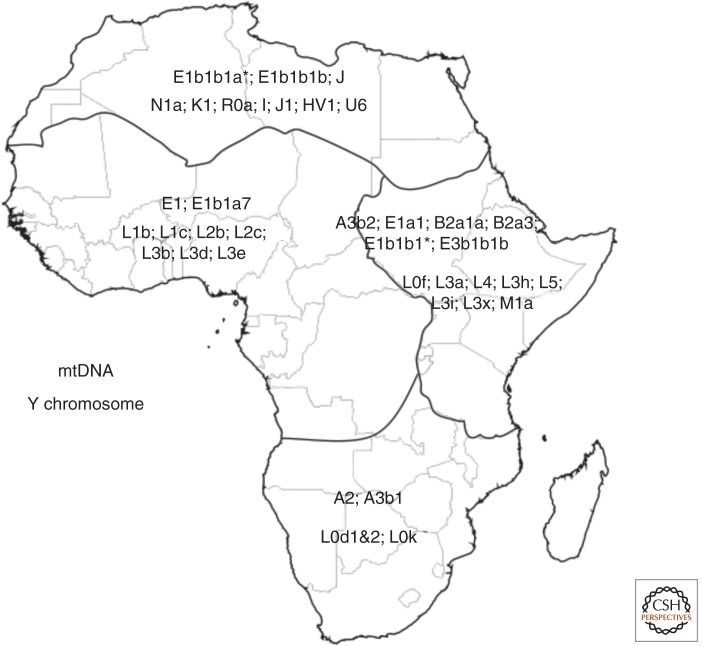
There are different haplogroups for different types of lineages, particularly depending on which DNA sequences are being considered. Mitochondrial DNA, for example, has different haplogroups from Y-chromosomal DNA. Mitochondrial DNA is DNA passed down from mother to child, while Y-chromosomal DNA is passed from father to son. As it happens, both DNA groups can be traced to an origin in Africa (referred to as “mitochondrial Eve” or “Y-chromosomal Adam”), although not simultaneously with each other. Looking at both show interesting patterns over time, tracing how an individual’s maternal and paternal lineages evolved over time and space.
Indigenous Africans in various areas appear to have unique mitochondrial and Y-chromosomal haplogroups that are not shared by humans outside of Africa. This would indicate that 1) all non-African humans share a common ancestor from a specific region in Africa (East Africa), and 2) that indigenous Africans from East Africa have more genetic similarities with non-Africans than they do with Africans from other regions! This could overall only indicate that the height of human genetic diversity (and therefore the most likely place of origin for humans as a whole) occurs squarely within Africa.
A general overview of the mitochondrial and Y-chromosomal haplogroups that all originate in Africa (Felicia et al, 2014).
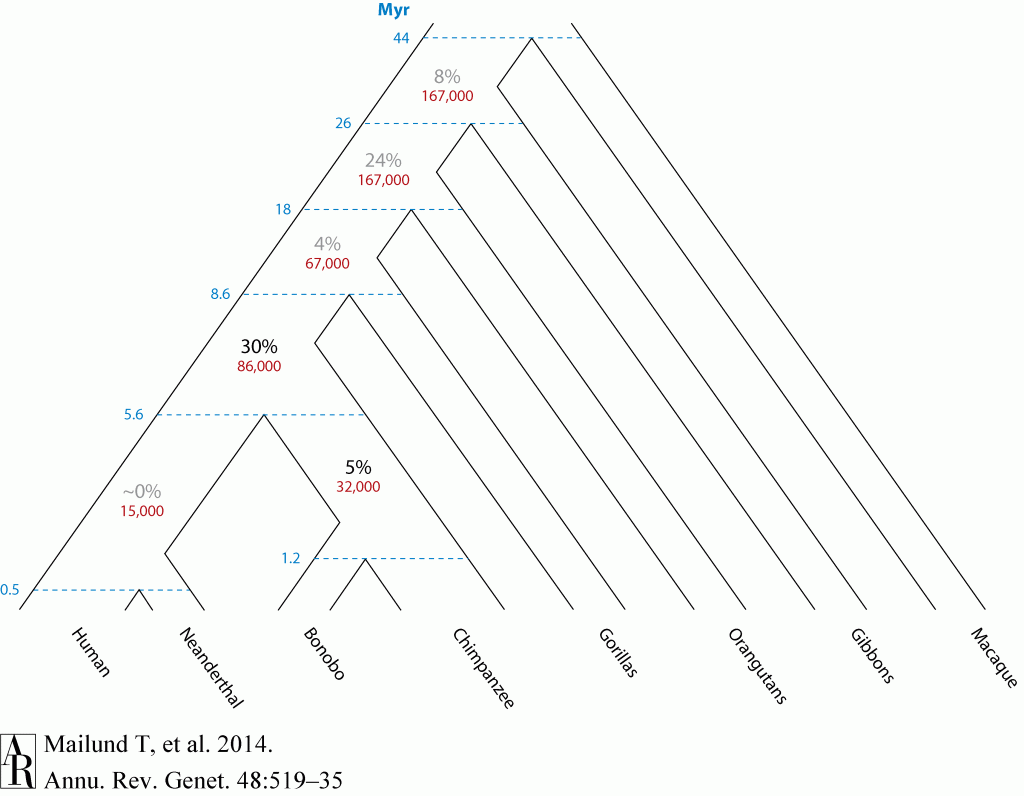
Looking beyond modern human genomes, genetics has also confirmed that humans are nestled among the great apes (Hominidae), sharing about 98% of our genetic material with chimpanzees. Beyond this, the other great apes not only share a high fraction of genetic material among each other compared to other mammals, but they also show a tendency for “incomplete lineage sorting (ILS).” This is a genetic phenomenon where certain gene sequences are conserved in their ancestral states, despite the species holding them having already speciated. This is the reason why, for example, a certain percentage of human genes share more commonality with gorillas than with chimps; the common ancestor between humans and chimps had speciated so quickly that the gene sequences between humans and gorillas hadn’t had the time to establish changes in their respective populations. Why this speciation occurred quickly is not yet known, but it would indicate a quick establishment of these species squarely within Africa.
Species tree with estimated speciation times (blue numbers), population sizes (red numbers), calculated percentage of incomplete lineage sorting (black numbers), and theoretical percentage of incomplete lineage sorting (gray numbers). Adapted from Mailund et al, 2014.
All this to say, the fact that the majority of great apes (gorillas, chimps and humans) likely arose in Africa, would corroborate all the prior lines of evidence from separate scientific fields, which all indicate that Africa is most likely the cradle of humankind. Studying human evolution from numerous different angles provides the clearest picture of where humans came from, and the picture becomes ever-more clear as new evidence is constantly discovered and old ideas constantly being updated, which is what makes science a self-correcting process.
Bibliography
Gomez, Felicia, Jibril Hirbo, and Sarah A. Tishkoff. “Genetic variation and adaptation in Africa: implications for human evolution and disease.” Cold Spring Harbor perspectives in biology 6.7 (2014): a008524.
Mailund, Thomas, Kasper Munch, and Mikkel Heide Schierup. “Lineage sorting in apes.” Annual review of genetics 48 (2014): 519-535.
Pereira, Luisa, et al. “African genetic diversity and adaptation inform a precision medicine agenda.” Nature Reviews Genetics 22.5 (2021): 284-306.
Join us for an enlightening episode of “The Story of Us” YouTube series as we sit down with Dr. Emily Casanova, an assistant professor of neuroscience at Loyola University New Orleans. Dr. Casanova’s groundbreaking research delves into the intricate connections between brain evolution, Neanderthal DNA, and autism in modern humans.
In this interview, Dr. Casanova shares her insights on: • How Neanderthal genetic variants influence autism susceptibility in contemporary populations. • The evolutionary impact of ancient human hybridization on brain development and function. • The significance of her findings for understanding the complexity of autism and related conditions.
Discover how the legacy of our ancient ancestors continues to shape human health and development today. This episode is a must-watch for anyone interested in genetics, anthropology, and the cutting-edge intersections of neuroscience and evolutionary biology.
Hello, I’m Seth Chagi, the founder of the World of Paleoanthropology. As a dedicated science educator and communicator, my mission is to make the study of human origins accessible, engaging, and inspiring for people of all ages. With a background in paleoanthropology and a passion for education, I have spent years developing interactive and educational content to help students and the general public understand the fascinating journey of human evolution. My work is supported by reputable organizations, including the American Association of Biological Anthropologists (AABA), ensuring that the information I provide is accurate and up-to-date. Through my platform, I aim to ignite curiosity, foster critical thinking, and promote scientific literacy.
Goals and Aspirations for the Next Generation
My primary goal is to spread education about human evolution, helping students understand the fascinating journey of our species. By bringing these lessons into classrooms, I hope to:
• Ignite Curiosity: Spark an interest in science and human history.
• Foster Critical Thinking: Encourage students to ask questions and think critically about the world around them.
• Promote Scientific Literacy: Equip students with knowledge that will help them understand and appreciate scientific concepts.
Tailored Lesson Plans for Each Group
Every class is unique, and I believe that lesson plans should reflect that diversity. My presentations are ever-adapting and tailored to meet the needs of each group. Whether it’s a group of enthusiastic elementary school students or inquisitive high schoolers, I ensure that the content is:
• Age-Appropriate: Simplified for younger audiences or more detailed for older students.
• Interactive: Hands-on activities and visual aids to make learning engaging and fun.
• Aligned with Curriculum: Designed to complement existing curriculum and enhance students’ learning experiences.
Negotiable and Affordable Pricing
Education should be accessible to everyone. That’s why I offer negotiable and affordable pricing for my presentations. My goal is to ensure that schools and classrooms of all sizes and budgets can benefit from these educational experiences. I am committed to working with educators to find a pricing plan that fits their needs.
Comprehensive and Supported by Experts
I bring all the necessary supplies for an engaging presentation, including visual aids, fossil replicas, and interactive tools. My work is supported by reputable organizations such as the American Association of Biological Anthropologists (AABA), ensuring that the information provided is accurate and up-to-date.
Flexible Scheduling and Easy Integration
Understanding the busy schedules of schools, I offer flexible scheduling to fit seamlessly into your class timetable. My presentations are designed to be easily integrated into your existing lesson plans without causing disruption.
Join Me in Spreading Education
I invite you to join me in this exciting journey to educate the next generation about human evolution. By bringing these presentations to your classroom, we can inspire young minds and foster a lifelong love for science and discovery.
If you are interested in scheduling a visit or have any questions, please contact me. Together, we can make learning about human evolution a fun and enriching experience for your students.
Contact Information:
• Email: worldofpaleoanthropology@gmail.com
Thank you for considering this opportunity to enrich your students’ learning experience. I look forward to working with you to inspire the next generation of scientists and thinkers.
Over the last few years, there have been some inspiring books that have come out regarding our ancient cousins, or ancestors depending on how you look at them; the Neanderthals, or Homo neanderthalensis. What may come to many peoples mind, is Kindred by Dr. Rebecca Wray Sykes, which brought the world of the Neanderthals to the public for the first time in a way that made them not seem so distant from us. In her book she argues the case that the archaeological evidence that is present, is enough to represent a human culture so like our own, that if they were alive today, we could even imagine them in a suit and tie.
Many people quite enjoyed this perception, from the public to those in the field and researchers as well. From what we know, Neanderthals were a very advanced branch of the hominin family bush, the braided stream that makes up our ancestry. They had weapons, most of which have been found were thrusting weapons, for close combat. But there has been evidence of throwing weapons as well. We have evidence of advanced burial practices, such as those highlighted in the recent documentary collaboration between BBC and Netflix, Secrets of the Neanderthals, featuring the team working at Shanidar, a cave in Iraq where multiple bodies of Neanderthals have been found in what can only be described as buried together. With one of them potentially being the home of an out lay of flowers over time.
Silmak however, in his book the Naked Neanderthal does not agree with many of the ideas out forward separating the Neanderthals from the dumb brutes that they had always been known. He seems to want to take the new theories and hypotheses about them, and well, throw them out the window. He presents his ideas, and he is a very experienced researcher, working on a site that has had a small amount of archaeology, for twenty five years, at the Madrin Cave, and doing some work elsewhere in Siberia. He does know what he is talking about when it comes to Neanderthals, but his ideas on who they were, how we can understand them, and even where they went, vary quite much from other experts on the topic, and he beautifully explains these points in his books. I will not spoil for you what those views are, and how they differ from he convention knowledge of what we now accept Neanderthals to be, but I do think it is worth to the read. For I will completely agree with him on this, we cannot know the Neanderthal, it is a creature, a human, an ape, whatever you want to call them, that is gone from this earth. With so little evidence of them left behind, we will never truly know them. As my good fiend Genevieve says, “It is like we are trying to rebuild the past by looking into a room through a keyhole for a couple of seconds, and then having to draw everything that we see. There are going to be many missing items and gaps”.
And that is how it is with the fossil record, whether it comes to Neanderthals or any other hominin species. We know oh so very little, so much has been lost to the millennia.
So at this point you may be wondering, is this a good book to read? Yes, but with a caveat. It should not be the first book that someone picks up on Neanderthals. The ideas expressed in the book are not the consensus on many topics when it comes to interpretations of archaeological finds and data. His ideas are a worthy of note however, as we should always keep our minds open, as again, we can never truly know. So seeing things from a different perspective can do nothing but benefit our general understanding of this human creature.
The paleo diet is a term which has been thrown around for years as a way to eat cleaner and achieve better health. Its core principles are to only eat food items which would also be available during the palaeolithic, that period in time where we were anatomically modern humans, but before we started farming and cultivating crops. At a glance, this essentially means eating more fruit and vegetables, and no processed food, which is hard to argue against.
But delving further into the specifics can reveal interesting concepts and plenty of flaws. Our ancestors across the globe would have eaten wildly different diets to each other. Should we eat just like our own ancestors, or any human from that time period? Is that a healthy way to live?
To create the initial paleo diet, its creator Dr Cordain studied the diet of modern day hunter gatherers. In some ways, this is as close as we can get to real samples, as diets in the fossil record are patchy, and hunter-gatherer societies are often used to fill in the blanks. But these modern hunter-gatherers live a lot further from the equator than our ancestors, meaning their diets and specific foods they consumed will be different. But it did give the creators an idea of the balance of macronutrients that our ancestors might have consumed. The answer was a lot more fibre and protein to match the game and gathered plants which would have made up most of a palaeolithic diet.
However, there are inconsistencies and flaws within the messaging and marketing of this diet. One of the main messages from the instigators of the paleo diet is that we should eat as our ancestors did because we are not “adapted” to eat like we do today; that we have only evolved to be able to eat what was available before 10,000 years ago.
From thepaleodiet.com May 2024
There are a couple of issues with this.
The main issue with this statement, is that it assumes evolution is complete, and we will never move beyond this final form. As anyone who studies evolution will know, this will never be the case, and we can still see the evolution of man and his diet through the iron and bronze ages. Dairy is an ideal example of how we are still evolving to process new foods.
Like all mammals, for thousands of years humans could not process lactose after childhood. The lactase which breaks down the lactose in dairy products is no longer produced past the age of weaning.
However, tapping into the supply from a separate species, and using these new large brains to come up with an innovative solution, became a new way to increase our nutrition. We can’t eat the scrubby grass present in the arid environments of the middle east, but we can process it through cattle or sheep and consume their by-product. As we started to cultivate these animals, their milk provided a great new food supply, for those that could process it that is.
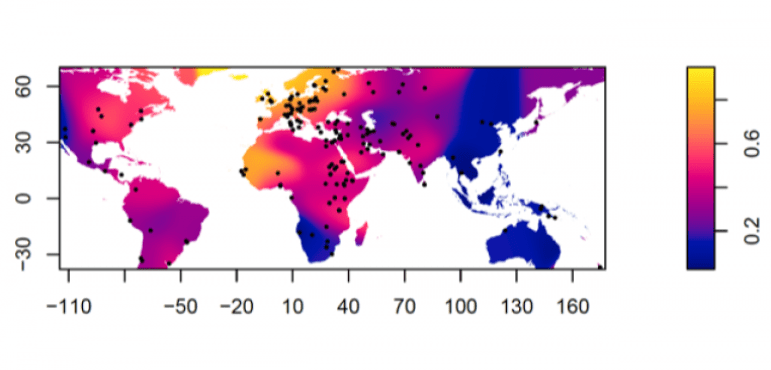
It became such an important part of a person’s diet in that area of the world, that soon it was strongly selected for, and now four separate gene sites can code for lactase persistence. It is a dominant trait, which made it easier for populations to develop higher instances of this ability to produce lactase and break down lactose. Now, 35% of the world is lactose tolerant, and this is centred around populations who historically used sheep or cattle for dairy.
From Ingram et. al., 2022
This was only 10kya – 9kya years ago, and we now have populations which are genetically adapted to be able to eat this new food. The story of dairy is a clear example of how we as a population can evolve in response to new diets in a relatively short amount of time.
The claim that we are not “adapted” to eat certain foods also negates the idea of gut plasticity, especially around the consumption of high fibre. Those who eat high fibre diets as children will be much better at digesting a diet of fibre rich foods when they are an adult, compared to someone who did not experience this when they were young.
A second issue with the messaging around the paleo diet is that it assumes nutrients derived from one food are superior over the same nutrient derived from another source, which is mostly thought to not be the case. For instance, dietician Sophie Medlin speaking to the BBC says that “Nutritionally speaking, sugar is sugar, no matter whether it has come from a maple tree, a coconut, sugar cane or beets”. While people may use coconut sugar instead of cane sugar, because it is “uncultivated”, not many ancestors would have had access to coconuts regardless unless they lived in very specific regions.
Related to this question of food vs nutrition, is that several processed foods, like oils, make it onto the paleo approved list, just because they contain a lot of nutritional value. The lists provided by thepaleodiet.com and eatingwell.com are full of inconsistencies in the name of nutrition.
Red wine is fine because it contains resveratrol, but white wine is off the list. Cultivated crops, primarily grains and legumes, are off the table, but domesticated animals are fair game (grass fed of course). Flaxseed oil is defined as a processed food, but it’s ok because of its content of high alpha-linolenic acid.
On the other hand, the paleo diet promotes eating red meat, which while it does contain key nutrients, have been proven to cause other issues like heart disease, diabetes and certain types of cancer. It seems to be a case of concept over health in this instance.
These inconsistencies become irritating when it sometimes becomes less about eating like our ancestors and more about eating healthily, and at other times more about the catchy name and buzzwords to sell a concept. Especially when you take a closer look at what humans from different parts of the world were eating during the paleolithic period.
There is evidence that as early as 80kya, humans and neanderthals were consuming grains and other starches, something which staunch supporters of the paleo diet would never allow. Analysis of dental calculus gathered from the teeth of ancient humans in the Fuyan cave in South China revealed that acorns, roots, tubers, grass seeds, and more made up their diet. In this case, the eating of grains and starch is assumed to have actually helped these early humans to eat enough to support the energy requirements of their increasingly large brains.
However, all this boils down to one key fact picked up by the paleo diet’s founder Dr Cordain, that once communities settled and began farming, eating more grains and starches, there is evidence that health actually declined. And there is. Poorer stature, bone deformities and susception to pathogens can be seen in the fossil record, coinciding with this dietary development around 10kya.
This may come as a surprise, as thoughts of farming bring thoughts of consistency, storage, contingency plans and continued health. But it seems that these early communities, and communities throughout the next few thousand years, moved from a varied diet of meat and seasonally gathered plants, to only 20% of their diet coming from gathered plants, and the remaining 80% from cultivated grains.
But to look at this data and claim increasing cultivated grain consumption declined the overall health of a population would be a wild oversimplification of the data. A better way to interpret it would be to look at this as more of a lack of diversity in the diet. Getting 80% of your energy from a single type of grain does not mean that these grains are “bad’, it’s that we are in need of a wider variety of nutrients than one crop can provide.
So is the paleo diet really a way to improve our health in the modern world? In some cases, cutting out the pop-tarts and replacing them with vegetables I would say absolutely. Are we only adapted to be able to eat certain foods? Well yes, but if we can retrieve enough nutrients without ill effects, then I’d say we are adapted to eat them. And is it healthier to increase your protein and fibre and cut out all grains? The jury is still out on the long term effects of this diet, but if you want to experience it and eat like a palaeolithic human for a day, why not give it a try?
Sources
The Paleo Diet. The strong and healthy diet (2024, April 19). . The Paleo Diet®. https://thepaleodiet.com/
Armelagos G.J. , Cohen M.N. Paleopathology at the origins of agriculture, Academic Press, Orlando, FL (1984)
Cordain L, Miller JB, Eaton SB, Mann N, Holt SH, Speth JD., Plant-animal subsistence ratios and macronutrient energy estimations in worldwide hunter-gatherer diets. Am J Clin Nutr. 2000 Mar;71(3):682-92.
Cordain L Cereal grains: Humanity s double-edged sword Evolutionary Aspects of Nutrition and Health, Vol. 84, Karger Publishers (1999), pp. 19-73
Eaton, S.B. and Konner, M.J., 1997. Review paleolithic nutrition revisited: a twelve-year retrospective on its nature and implications. European journal of clinical nutrition, 51(4), pp.207-216.
Henry, A. G., Brooks, A. S., and Piperno, D. R. (2014). Plant foods and the dietary ecology of neanderthals and early modern humans. J. Hum. Evol. 69, 44–54. doi: 10.1016/j.jhevol.2013.12.014
Ingram C.J., C.A. Mulcare, Y. Itan, M.G. Thomas, D.M. Swallow Lactose digestion and the evolutionary genetics of lactase persistence Human Genetics, 124 (6) (2009), pp. 579-591
Ingram C.J. , T.O. Raga, A. Tarekegn, S.L. Browning, M.F. Elamin, E. Bekele, D.M. Swallow Multiple rare variants as a cause of a common phenotype: Several different lactase persistence associated alleles in a single ethnic group Journal of Molecular Evolution, 69 (6) (2009), p. 579
Ingram,C.I, Montalva, N and Swallow, D.M. 2022 ‘Lactose Malabsorption’, in Advanced Dairy Chemistry, Volume 3: Lactose, Water, Salts and Minor Constituents McSweeney et al eds. ISBN 978-3-030-92584-0
Paques, M., & Lindner, C. (n.d.). Lactose: Evolutionary Role, Health Effects, and Applications. Academic Press.
Revedin A, Aranguren B, Becattini R, Longo L, Marconi E, Lippi MM, Skakun N, Sinitsyn A, Spiridonova E, Svoboda J., Thirty thousand-year-old evidence of plant food processing. Proc Natl Acad Sci U S A. 2010 Nov
Walker, C. and Thomas, M.G., 2019. The evolution of lactose digestion. In Lactose (pp. 1-48). Academic Press.
Wu Y, Tao D, Wu X, Liu W, Cai Y. Diet of the earliest modern humans in East Asia. Front Plant Sci. 2022;13:1–10.:







 World of Paleoanthropology