Coauthored with the New Bing.
Who was the first “Homo”? Was it Kenyanthropus platyops? Was it the maker of the Lomekwian tools? Is it the ancestor of the 1470 fossil? They seem to share many features, so is it possible that this fossil belongs to that species? What others species are potential contenders? Why? Why not?
These are some of the intriguing questions that paleoanthropologists are trying to answer by studying the fossil and archaeological evidence of our early ancestors and relatives. The origin of the genus Homo is one of the most debated topics in human evolution, as different lines of evidence may suggest different scenarios. In this blog post, I will review some of the main hypotheses and arguments based on current knowledge.
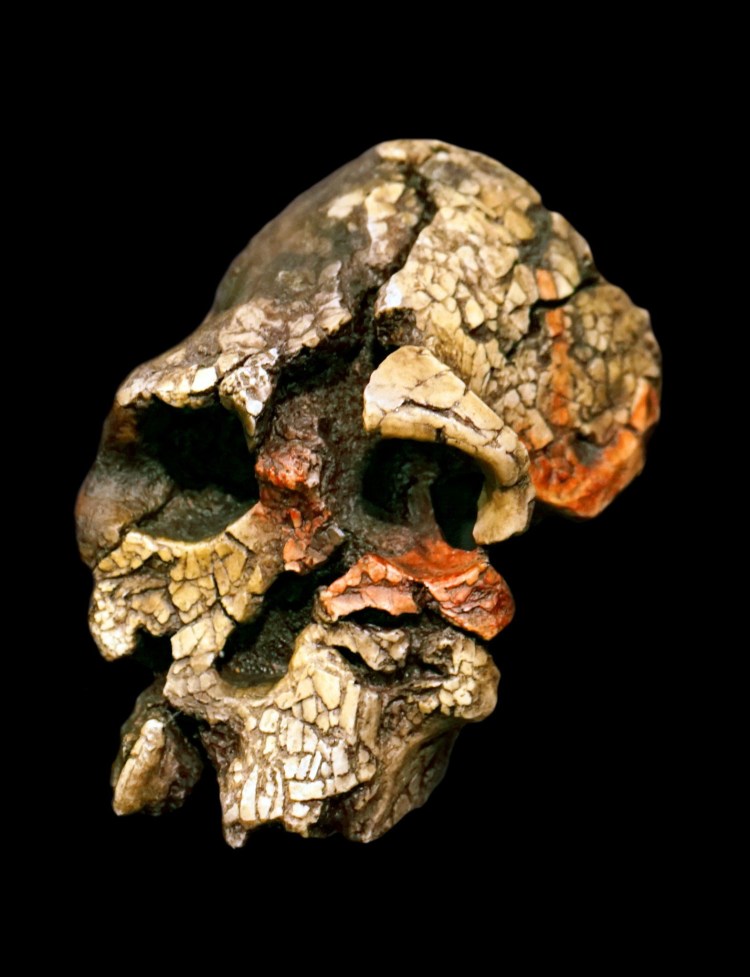
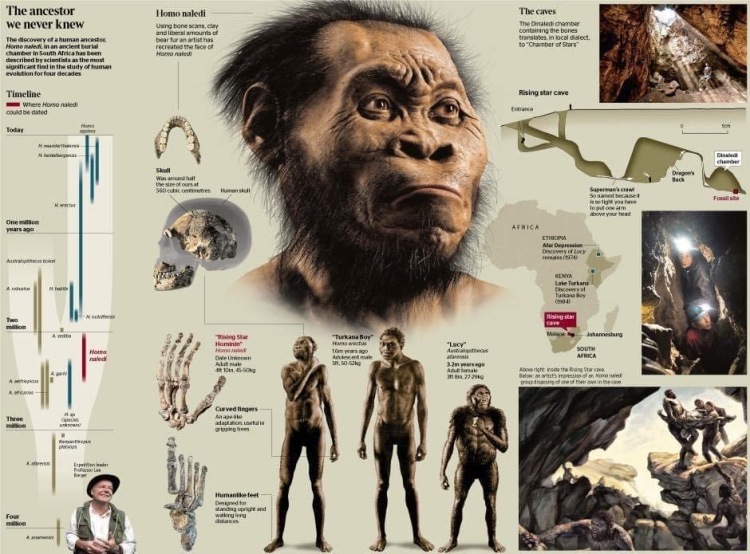
The first “Homo” is usually defined as a hominin (a member of the human lineage after it split from the chimpanzee lineage) that has a larger brain size, a more rounded skull, a flatter face, smaller teeth and jaws, and a more advanced stone tool technology than earlier hominins. However, these features did not appear all at once or in a single species, but rather evolved gradually and variably in different populations over time. Therefore, identifying the first “Homo” is not straightforward, as different criteria may lead to different conclusions.
One of the oldest fossils that has been assigned to the genus Homo is a lower jawbone (LD 350-1) found in Ethiopia and dated to about 2.8 million years ago. This specimen has some features that are similar to later Homo species, such as smaller molars and a more symmetrical shape, but it also retains some primitive traits, such as a large canine tooth and a thin enamel. Some researchers have suggested that this jawbone belongs to an early form of Homo habilis, the earliest widely accepted Homo species. In contrast, others have argued that it represents a transitional form between Australopithecus and Homo or even a separate genus altogether.
Another contender for the first “Homo” is Kenyanthropus platyops, a species known from a single skull (KNM-WT 40000) and some fragments found in Kenya and dated to about 3.5 million years ago. This species has a flat face and small molars, considered derived features in Homo, but it also has a small brain size and a long upper face, which are primitive features shared with Australopithecus. Some researchers have proposed that Kenyanthropus platyops is more closely related to Homo than Australopithecus and may represent an early branch of the Homo lineage. Others have challenged this view, suggesting that Kenyanthropus platyops is either a distorted specimen of Australopithecus afarensis (the same species as Lucy), or a variant of Australopithecus africanus.
A third candidate for the first “Homo” is the maker of the Lomekwian tools, a type of stone tools that are older and larger than the Oldowan tools traditionally associated with Homo. The Lomekwian tools were discovered in Kenya and dated to about 3.3 million years ago. They consist of flakes, cores and hammer stones, which indicate that their makers had some degree of manual dexterity and cognitive ability. However, the identity of the Lomekwian toolmakers is unknown, as no hominin fossils have been found in direct association with the tools. Some possibilities include Kenyanthropus platyops, Australopithecus afarensis, or an unknown hominin species. The Lomekwian tools suggest that stone tool technology may have evolved independently in multiple hominin lineages, or that it may have originated earlier than previously thought.
A fourth option for the first “Homo” is the ancestor of the 1470 fossil (KNM-ER 1470), a skull found in Kenya and dated to about 1.9 million years ago. This skull has been attributed to various Homo species over time, such as Homo habilis, Homo rudolfensis or Homo erectus. It has a large brain size (about 750 cubic centimeters), a flat face and small molars, which are typical features of Homo. However, it also has a long and narrow skull shape and large incisors, which are unusual features for Homo.


 World of Paleoanthropology