Join me on a LIVE Q/A session on Zoom where we will all talk about Paleoanthropology and related topics.
Get your questions answered, or find out where you can get the answers and learn all about the fascinating world of our deep human past!
Get your questions ready, and prepare to ask them on December 3rd, 11 AM PST, 2022!
It’s going to be a great event, and the more people participating and asking questions, the better! So please invite your friends and colleagues and let us have a great time!
Today on this episode of Skulls with Seth, we will discuss the first of the Homo genus. Homo habilis! This is an enigmatic species that has caused a great deal of controversy surrounding it but has found itself safely nestled as the first of our genus.
We will be examining the skull of KNM-ER 1813, looking at its features, and talking a little bit about the species.
If you have any questions or comments (aside from my shaky hands), please let me know!
I am tired of seeing certain things, and it was time I had a word on it.
Racial terms in Anthropology.
Anthropology has a long and unfortunate history of using improper, unfair, and at its worst, racist and inhumane terms to define and separate different populations.
Anthropology is a slow-moving animal, these terms are slowly dying out, but that does not stop someone from being in “the old guard.” and saying something inappropriate.
So what can we do?
We must remain indignant, informed, and up to date on what the current science actually tells us, what we feel is right, and what we know is not wrong. There are no morals in science. There is doing, and not doing. Truth and soon to be or future truth. Change the story.
These individuals should be corrected with the correct, updated scientific terminology thoughtfully.
If they continue to use the hurtful and wrong terminology, I fear you may have something more than just an old scientist in front of you, but someone who views things more racially. Please do not listen to what these people espouse. Too many of our problems today come from people listening to others wishing to cause harm.
There is a specific case in Forensic Anthropology where certain terms are used because the legal industry moves even slower. By law, certain groups of people must be categorized in specific ways. Still, these anthropologists recognize that there is no biological meaning in their designations. They are regional, geographical, and most definitely not racial.
Today we are joined by Prof. Marc Kissel, a Professor of Anthropology, who has honored us by joining us for this episode of The Story of Us!
*Premiering at 2PM PST!*
Learn about why science education is essential, what we are doing about it, and new ideas that are constantly popping up around the world of anthropology.
It’s almost impossible to keep up with everything that is going on in this field, but we do try! Learn how the area is progressing, what is going on, and why it is essential to be excited about science!
I had a wonderful time the other day with the Cambridge University Biological Anthropology Society when we hosted Professors Lee Berger, John Hawks, and Agustin Fuentes. I hope you learn so much just like I did and have a great time enjoying this debate amongst intellectual giants!
From the President of CUBAS:
“The Rising Star cave system presents an unparalleled skeletal record of a nonhuman hominin species in the time and place most archaeologists thought that modern humans evolved. This paradox raises many questions about the nature of this species and our own and
possible interactions. We have come together to examine our understanding of the human niche and to share some of the insights from our more recent work in this cave system that may lead to a greater sense of the place of Homo naledi within our more excellent knowledge of hominins, and human, evolution.
In the Endless Forms Seminar Series, Professors Lee Berger, John Hawks, and Agustin Fuentes pose
thought-provoking questions about paleoanthropology, Homo naledi, exploration, open science, and taxonomy each other, showing that colleagues aren’t always in agreement when it comes to theory. The professors then take the time to engage with the next generation of researchers.
The CamBioAnthSoc thanks you for your interest and support.”
Here I will make it simple and easy for anyone to understand what is being discussed. This way, anyone, regardless of background, can enjoy and learn from this fantastic opportunity.
Once again, on behalf of the Cambridge University Biological Anthropology Society’s Committee, I would like to thank everyone who RSVPd, especially the esteemed professors, for giving us so much great information to digest.
So let’s dig right in!
This was not the regular lecture type that we would typically host; this was not a presentation but a debate between three massive brains in the field on the aspects surrounding a new mysterious species of Hominin, Homo naledi. We are joined by Dr. Lee Berger, the team leader in charge of everything naledi related. He was the team leader on the discovery and has made many more discoveries since surrounding this new hominin. There is so much to tell about Homo naledi to do it justice, and we would need an entire other section dedicated to them, which we may bring along at some point. But for now, I would refer you to other resources to learn the essential details and the fantastic discovery tale behind this new species.
We are joined by Dr. John Hawks, who has been a second in command regarding the naledi expedition. But far more than that, Dr. Hawks is a biological anthropologist who knows and is well-known all over the field. It is rare to see a Human Origins documentary without him in it. He’s not all flash and hard work to back up.
Finally but not least, we have Dr. Augustin Fuentes, who is a biological anthropologist but also a behavioralist and has done a tremendous amount of work with living primates. These three teams give us insights into who and what Homo naledi possibly was, but perhaps even more what naledi was not.
The three of them go on to debate specific points. We learned a lot about the cranial morphology or the shape and size of the skull of this new species; we heard about what it means to be human and whether or not naledi was on or was close to that path. You may be surprised by what you hear.
But mostly, there is a sense of upcoming excitement that you can tell is barely contained by Lee and his companions, something big is on the horizon that will change what it means to be Human all over again, and be sure we will be there to cover the news!
*Premiering at 5pm Pacific on the World of Paleoanthropology YouTube Channel; look for it earlier here:
I had a wonderful time this morning with the Cambridge University Biological Anthropology Society when we hosted Professors Lee Berger, John Hawks, and Agustin Fuentes; here is a description written by the student president:
I hope you learn so much just like I did and have a great time enjoying this debate amongst intellectual giants!
The Rising Star cave system presents an unparalleled skeletal record of a nonhuman hominin species in exactly the time and place most archaeologists thought that modern humans evolved. This paradox raises many questions about the nature of this species and our own, and our possible interactions. We have come together to examine our understanding of the human niche and to share some of the insights from our more recent work in this cave system that may lead to greater understanding of the place of Homo naledi within our greater understanding of hominin, and human, evolution.
In the Endless Forms Seminar Series, Professors Lee Berger, John Hawks, and Agustin Fuentes take turns posing thought provoking questions about paleoanthropology, Homo naledi, exploration, open science, and taxonomy to each other, showing that colleagues aren’t always in agreement when it comes to theory. The professors then take the time to engage with the next generation of researchers.
The CamBioAnthSoc thanks you for your interest and support, and we look forward to seeing you here again!
Check out this new article I wrote for the Cambridge University Biological Anthropology Society about their first seminar! Unfortunately, we had issues and couldn’t record it (seminar 2 is being uploaded to view right now) I did an excellent write-up for you to know what happened.
So please head on over to their website, and take a read! It was a great seminar!
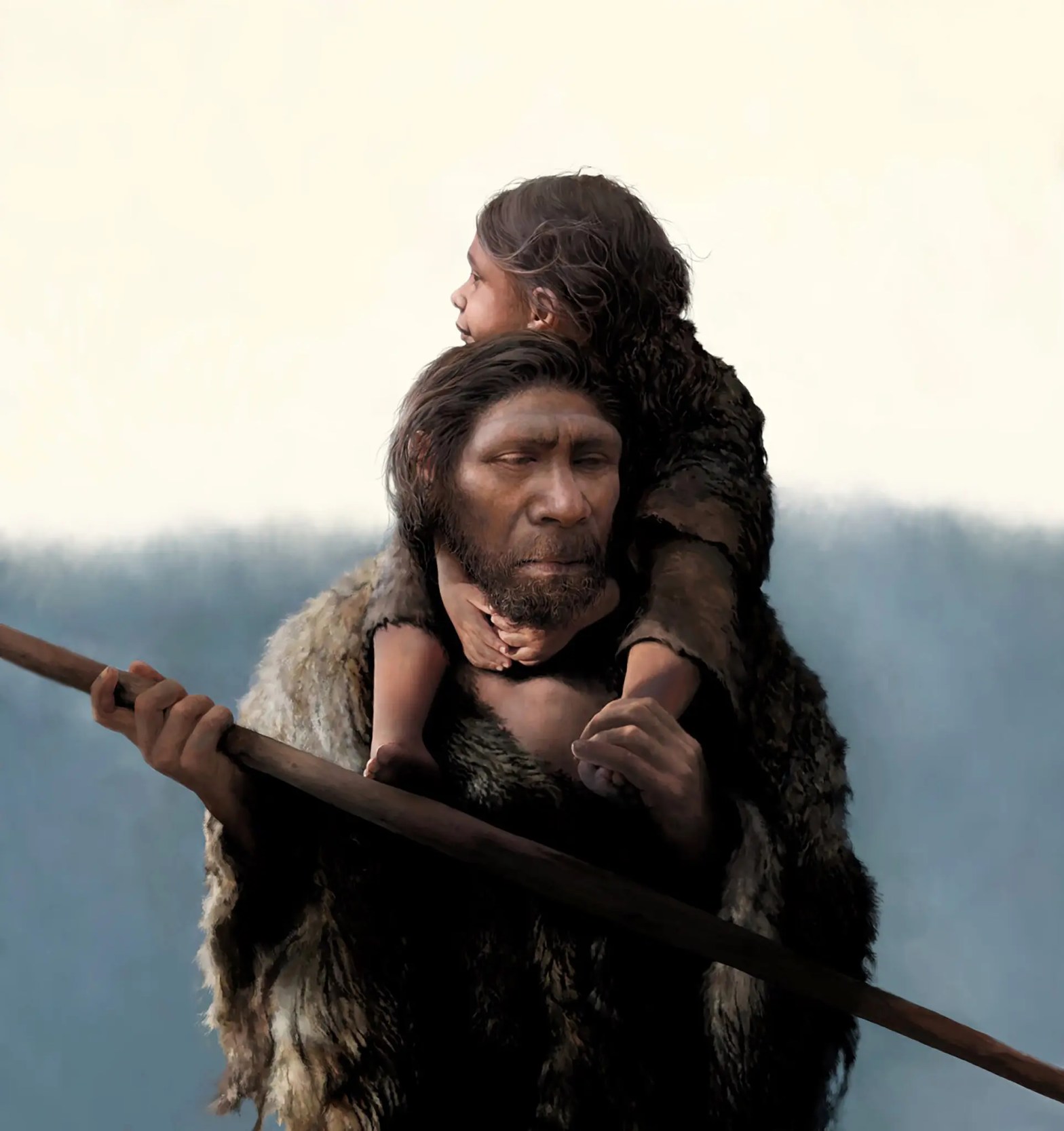
There is so much about the past that we do not know, but every day, we learn more. Shining lights on dark places where no modern human has been. Many of us have heard of Neanderthals, and I am sure that many of us still have a grave misunderstanding of these humanoids. Neanderthals were not the brutish imbeciles as they are so often portrayed in popular culture, but intelligent survivors who were on this planet far longer than we have. While it is true they died out as a morphological species; their DNA lives on in us, around 2-4% of all non-Africans. Then, of course, there is the mysterious group of people we know nearly nothing about, the Denisovans. Still, they do not come into this story, at least not in the current research.
Today we will be talking about the genetic evidence that was collected from 17 different individuals found within two other caves just 100km from Denisova Cave in Siberia. Chagyrskaya and Okladnikov Caves have been rich archaeological sites over the past 14 years. But today, published in Nature by Lauris Skov et al., we have the first genetic evidence of a Neanderthal family. This extraordinary evidence will lead to many insights into how Neanderthals lived, gathered socially, spread out from their localities, and so much more. So let’s dig in! (Pun intended).
So what was found? Between the Chagyrskaya and Okladnikov Caves, 17 individuals were found, seven men, six women, and five children. All of them, in some way or another related to each other. Either biologically or socially. This is astonishing as this is the first time we have seen so many Neanderthals together, at the same time, living in the same place. We can tell from the remains that they lived and died around the same time, proving they were all together. Now we know they were related because of something called Heteroplasmy, which is “Having two or more mitochondrial DNA sources within a person, cell, or mitochondrion.” So what this means is that we can tell who is someone’s mother or father. It is about telling who is related to whom. And while, of course, not everyone was related to everyone else, we could also tell how groups of Neanderthals migrated with each other.
The transfer of mitochondrial DNA shows that in Neanderthal groups, at least this one, which seemed to be more European cultured, vs. Eastern Neanderthals despite their location, is that females are the ones who travel between groups. Knowing this is such an essential piece of information that we could never have known for sure. But now we do. Another thing that we could tell from the DNA is that this population, which was around 54,000 years ago (late for Neanderthals who went extinct about 40-45kya), was that we could see a lack of diversity in the DNA and the genome. Meaning that they were indeed on the brink of extinction already at this time and location. Knowing their end was near, we can see this clearly in the DNA. This gives us insights into what happened to the Neanderthals and why only some of their DNA exists in us today, rather than them walking the Earth themselves. This an intrepid question that only more research will uncover. With the arrival of modern humans in France already by 55kya, we know that they coexisted for tens of thousands of years; could our interactions have led to their end? We may never know, but it is fun to speculate. But one myth I will shoot down right now, we did not go to war with the Neanderthals; there is no evidence of it or violence of that type for many thousand years.
This new paper has uncovered a great deal for us about the lives of Neanderthals, whom they lived with, how they integrated with different groups, and possibly why their end came within the next ten thousand years. The Neanderthals will remain a massive enigma among us. We will always be drawn to the curiosity of who they were, our ancestral cousins that no longer walk the Earth. But each day, we learn more and more to make the picture more complete. Stay tuned for the following updates out of the world of paleoanthropology!
Check out this interview I did with the author of “Kindred” Dr. Rebecca Wragg Sykes where we talk all about the daily lives of Neanderthals!
The mysterious skull of the now well-known “Dragon Man” was discovered in China in the 1930s and hidden in a well until it was rediscovered and shown to scientists in 2018.
There is so much mystery and so many things that we need to learn about this skull, and we are just beginning.
Could it be a possible Denisovan? Or something else entirely?
Catch this week’s episode of #PaleoFridays and you will find out quite a bit about “Dragon Man”, and if you want more, check out the in depth interview I did with Dr. Chris Stringer, where you will actually be able to see a cast of the skull being manipulated and looked at.
*First Posted on the Cambridge University’s Biological Anthropology Society by Seth Chagi”
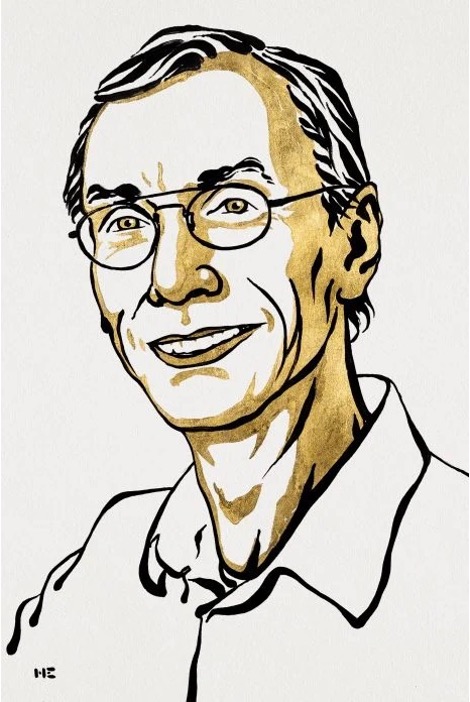
Born to who would become a Nobel Prize Winner for Physiology and Medicine in 1955, in Stockholm, Sweden, Svante Paabo would live a life filled with scientific excellence. Excellence has touched every aspect of the work, teams, and projects that he has been involved with.
Doing most of his studies, and graduating from the University of Uppsala, Sweden, Dr. Paabo would go on to work for various consortiums and organizations, bringing his expertise with him wherever he went; currently, and for a reasonable amount of time now, the Director of Evolutionary Sciences at the Max Plank Institute for Evolutionary Studies, we are all very excited and proud for Svante that he has been named the 2022 Physiology and Medicine Nobel Prize winner.
If it has ever occurred, it is not often that a paleontologist has won a Nobel prize. There is not even an appropriate category for his work, so he has won the award for Medicine and Physiology as his father did. A fact that has only happened eight times in all of Nobel history.
Possibly what Dr. Paabo is known best for is the discovery of the Neanderthal genome and the presence of ancient DNA. Opening up a whole new world of molecular studies into early hominins has led to significant insights into modern-day medicine.
We have learned much from Dr. Paabo’s labs about ourselves and our closest relatives, the Neanderthals. Even more than this, Svante is the first paleontologist to discover a new hominin species entirely from DNA and near no fossil evidence, the Denisovans. There are not enough fossils to declare it a separate species, but we have been able to map out their genome, telling us so much about this enigmatic species.
I could go on about the outstanding achievements of this man, and for good measure, you should look into some of the other papers and work that he has done, for there is just so much. What this means for science and the paleontological community is staggering. It forwards our place in the fields and will hopefully lead to the inspiration of so many more.
While I have not had the pleasure of talking to Dr. Paabo yet, I plan to get him on my web show, “The Story of Us,” at some point or another. I look forward to it, for I hear a humble, fun, and inspiring individual.
Congratulations to Dr. Paabo and all of the fantastic work he has done and is yet to do.




 World of Paleoanthropology